Trump Says India Adopting a US-Indonesia Style Trade Approach

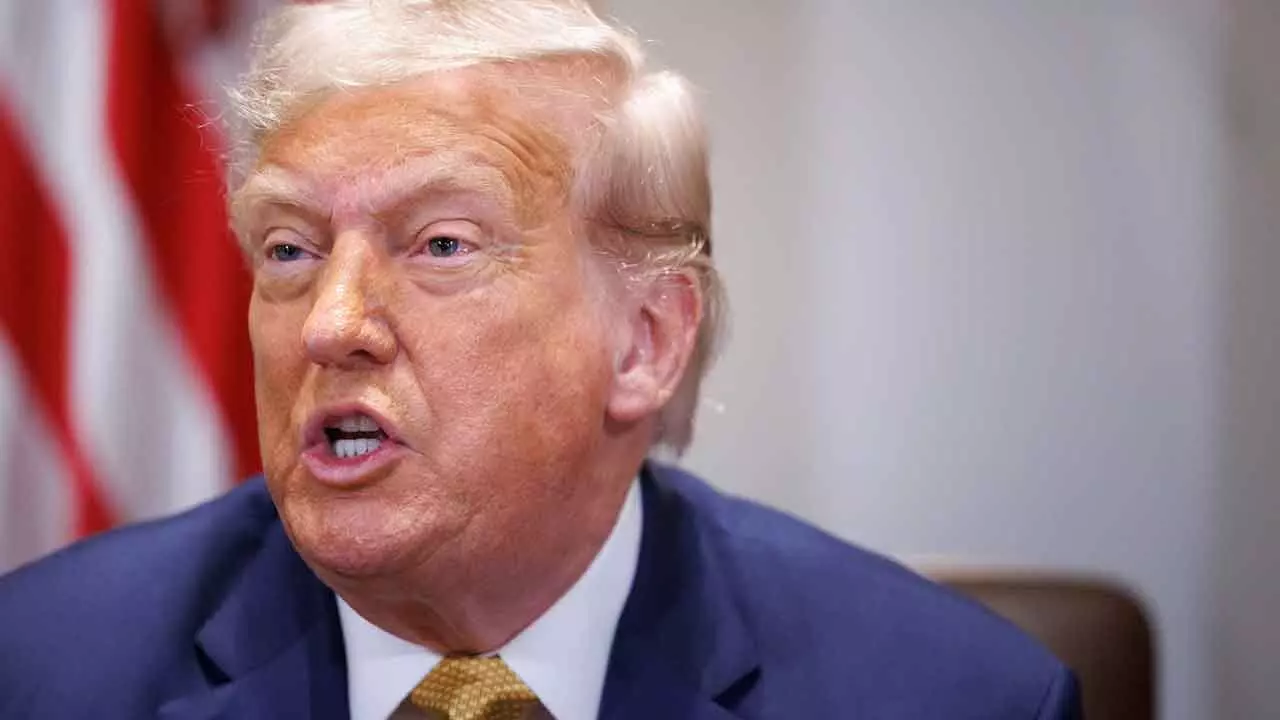
The pact will see goods from Indonesia entering the US market subject to a 19 per cent tariff, and those from the US to Indonesia will be exempt from duties, he told reporters in a briefing in Washington.
US President Donald Trump on Tuesday said that India is working on a trade deal with the United States on the same lines as the one he announced recently with Indonesia.
The pact will see goods from Indonesia entering the US market subject to a 19 per cent tariff, and those from the US to Indonesia will be exempt from duties, he told reporters in a briefing in Washington.
“India basically is working along that same line. We're going to have access into India,” he said.
Indian and US officials are racing to reach a US India Trade deal by an August 1 deadline set by the US President as the two sides seek to avert tariffs in the absence of a pact.
Countries, including the EU, have been warned of tariffs as high as 35 per cent from him and this message has been sent to India as well.
It was not clear if he was talking of a US Indonesia trade deal exactly the same as that with Indonesia — something that India could find difficult to accept — or a tweaked version with tariffs and concessions dialed down.
On those lines, if the US-India bilateral trade deal is similar to US-Indonesia pact, India’s exports to the US could face a 19 per cent tariff while US products will come into India duty-free.
Donald Trump said he thinks there can be a peace agreement between Russia and Ukraine within 50 days of him negotiating the deal. If this comes to pass, it may help countries like India to escape the brunt of a proposed 100% tariff on energy imports from Russia.
Asked if the September 2 deadline was set in stone, he said, “50 days is not a lot of time, it may happen much sooner than that.”
Trump said on Tuesday that the US will take “strong measures” against Russia after it refused to stop fighting in Ukraine.
One such move is to impose a 100 per cent secondary levy on countries that continue to import energy from Russia, which indirectly hurts non-combatant countries like India.