Vice President Radhakrishnan Expresses Optimism For India-US Relations Despite Trump's Trade Tariffs

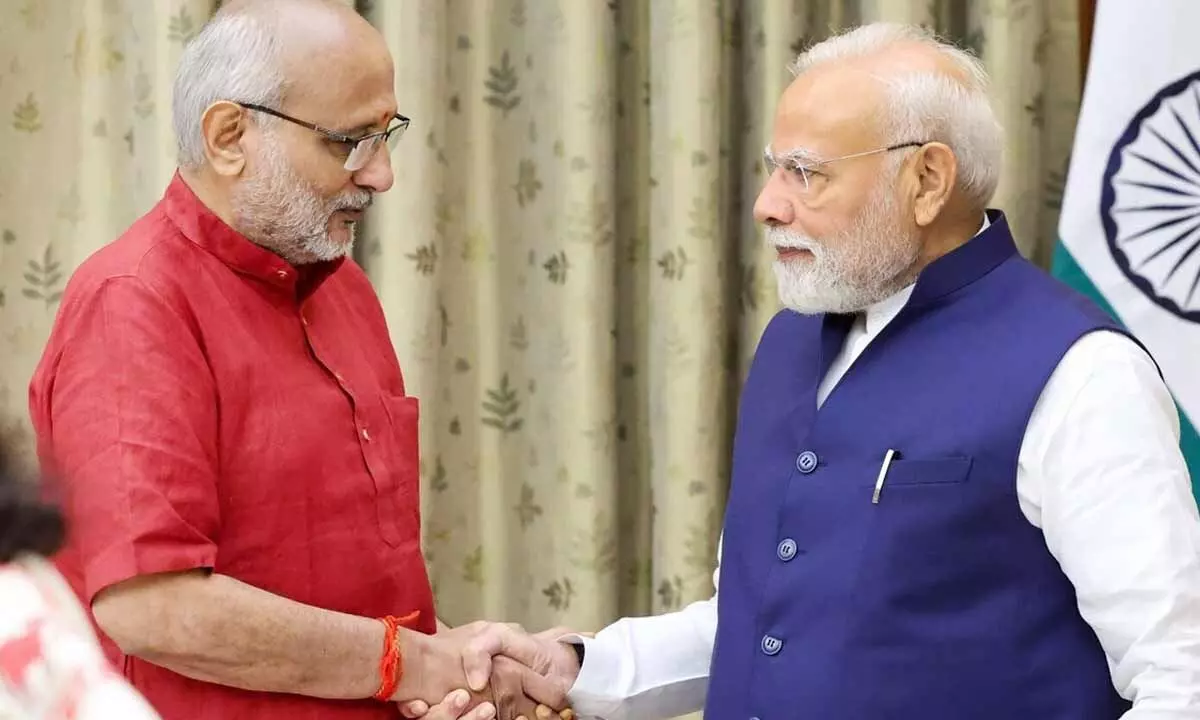
New Vice President CP Radhakrishnan cites PM Modi's personal friendships with global leaders including Trump, Putin, and Xi Jinping as key to navigating international challenges and improving bilateral relations despite recent US tariff impositions.
In his inaugural public appearance since assuming office, India's newly appointed Vice President CP Radhakrishnan expressed confidence in strengthening India-US relations despite the significant trade challenges posed by the Trump administration's recent tariff impositions. Speaking at a book release event on Monday, Radhakrishnan highlighted Prime Minister Narendra Modi's unique diplomatic relationships with world leaders as a crucial asset for navigating complex international dynamics.
The Vice President emphasized that despite the United States imposing a substantial 50% import duty on Indian goods, President Trump continues to publicly acknowledge his friendship with Modi. Radhakrishnan noted that even amid these trade tensions, Trump has not expressed any personal opposition to the Indian Prime Minister, suggesting that their relationship remains intact despite policy disagreements.
During the event where he released four compilations of PM Modi's selected speeches focused on the theme of 'Sabka Saath, Sabka Vikas' (inclusive development) from the 2022-2024 period, Radhakrishnan elaborated on Modi's exceptional diplomatic capabilities. He pointed out that the Prime Minister maintains strong personal relationships with diverse global leaders, including Russian President Vladimir Putin and Chinese President Xi Jinping, despite the complex web of international political differences that exist between these nations.
The Vice President characterized Modi's ability to maintain these friendships across ideological and geopolitical divides as potentially transformative for international relations. He suggested that Modi's approach to leadership, driven by a genuine desire to serve humanity without personal expectations, could enable him to achieve what might seem impossible in conventional diplomatic terms.
Radhakrishnan's comments come at a particularly challenging time for India-US relations, with the Trump administration implementing aggressive trade policies that significantly impact Indian businesses and workers. The recent introduction of a substantial $100,000 fee for H-1B visas, which primarily affects Indian professionals seeking employment in American technology sectors, has created additional strain in bilateral relations.
The book release event also featured insights into Modi's leadership philosophy and approach to global governance. Radhakrishnan explained that the speeches compiled in the four volumes provide valuable understanding of the Prime Minister's thinking process and his deep comprehension of public sentiment, qualities essential for effective leadership.
Speaking about India's global aspirations, the Vice President articulated the nation's vision of emerging as a world power driven not by dominance but by the principle of universal welfare. He emphasized that India's desire for increased international influence stems from a commitment to advancing humanity as a whole rather than imposing its will on other nations.
The event also featured remarks from other senior officials who praised Modi's achievements. Rajya Sabha Deputy Chairman Harivansh identified India's historical dependence on other countries as a significant challenge that required Modi's visionary leadership to address through the ambitious goal of becoming a developed nation by 2047.
Information and Broadcasting Minister Ashwani Vaishnaw highlighted specific accomplishments under Modi's leadership, noting that India now has more toilet facilities than Japan's entire population, provides uninterrupted food distribution to 800 million people, and operates the world's largest food security program.
Radhakrishnan, who became India's 15th Vice President after defeating opposition candidate B Sudershan Reddy on September 9 and taking oath on September 12, follows a tradition established by his predecessors M Venkaiah Naidu and Jagdeep Dhankhar of releasing books about the Prime Minister during their tenure. His predecessor Dhankhar had resigned mid-term in July citing health concerns.
The RSS-BJP veteran from Tamil Nadu's comments reflect the government's strategy of leveraging personal diplomatic relationships to navigate increasingly complex international trade and political challenges. His optimistic assessment suggests that despite formal policy disagreements between nations, personal relationships between leaders can serve as important channels for maintaining dialogue and potentially resolving disputes.
The emphasis on Modi's global friendships comes at a crucial juncture when India faces multiple international challenges, from trade wars with the United States to ongoing border tensions with China and the complex dynamics of the Russia-Ukraine conflict. Radhakrishnan's perspective suggests that the government views these personal diplomatic relationships as valuable assets for protecting India's interests while advancing its global ambitions.
His remarks underscore the Indian leadership's belief that Modi's unique position in international relations, characterized by personal rapport with leaders across different political systems and ideologies, provides India with strategic advantages in pursuing its development goals and maintaining its sovereignty in an increasingly multipolar world.