Will you allow Muslims on Hindu boards?: SC to govt

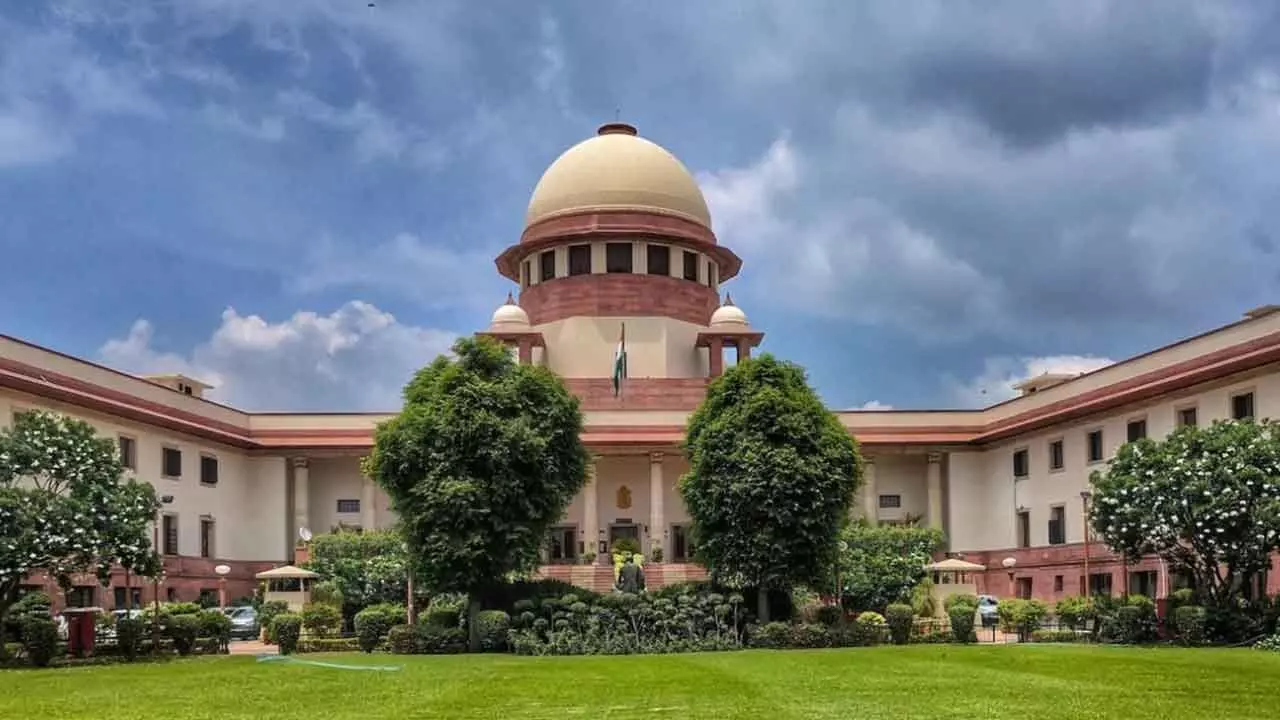
New Delhi: Hearing the bunch of petitions challenging the Waqf Amendment Act, the Supreme Court on Wednesday asked the Centre tough questions on multiple provisions of the new law, especially its provisions for 'Waqf by user' properties. The court also flagged the provision to include non-Muslims on the Central Waqf Council and asked the government if it would allow Muslims to be part of Hindu endowment boards.
The Apex court questioned the religious composition of Waqf board during the hearing. The inclusion of non-Muslim members in the Waqf board is one of the main points of contention, with petitioners arguing that the move dilutes the freedom of Muslims to manage their own religion.
Chief Justice of India Sanjiv Khanna asked Solicitor General Tushar Mehta, “Are you saying that from now on you will allow Muslims to be part of Hindu endowment boards? Say it openly.”
The Supreme Court was hearing a batch of petitions challenging the constitutional validity of the Waqf (Amendment) Act. The bench, led by Chief Justice Sanjiv Khanna, flagged concerns over the practicality of undoing waqf by user, especially for centuries-old masjids without registered sale deeds. The Court also questioned the composition of Waqf boards, which would include non-Muslim members following the amendment of Act. The Chief Justice pointed out that as per the Act, eight members of the board are Muslims, and possibly only two are not. “Why not have Muslims also on the advisory board of Hindu endowments then?” he said.
The Solicitor General then suggested that by the same logic “this bench also cannot hear the case”. The remark drew a fiery response from the Supreme Court bench.
"What! When we sit over here. We lose our religion. For us both sides are the same. How can you compare it with the judges?" the Chief Justice said.Justice Viswanathan also noted that there were practical issues such as ingress and outgress in mosques, which is why familiarity with the premises might be relevant.
The SG responded that such checks could be conducted by the Charity Commissioner. Senior Advocate Kapil Sibal, appearing for one of the petitioners, said many provisions in the new law violate Article 26 of the Constitution, which guarantees the freedom to manage religious affairs. Sibal also flagged the powers the new law gives to the Collector. He argued that the Collector is a part of the government and if he plays the role of a judge, it is unconstitutional.
Sibal said 'Waqf by user' is an integral part of Islam. "The problem is, if a waqf was created 3,000 years ago, they will ask for the deed," he said.
Senior Advocate Abhishek Singhvi, also appearing for a petitioner, said that 4 lakh Waqf properties out of the total 8 lakh properties in the country are 'Waqf by user'. At this point, the Chief Justice intervened, "We are told Delhi High Court is built on Waqf land. We are not saying all waqf by user is wrong, but there is genuine concern," he said. Singhvi then said they are seeking a stay on some provisions and not the entire Act. Appearing for the Centre, Solicitor General Tushar Mehta said the law was passed after detailed and elaborate debates in Parliament. He said a joint parliamentary committee examined it and it was passed by both Houses again.
The Chief Justice then asked Mehta to focus on the 'Waqf by user' provisions in the new law. "Are you saying that if a 'Waqf by user' was established by a (court) judgment or otherwise, today it stands void?" The Chief Justice mentioned that many mosques part of Waqf were built in the 13th, 14th and 15th centuries and it is impossible to present documents for them.
The bench then said that "there will be an issue" if the government is going to denotify 'Waqf by user'. "The legislature cannot declare a court's judgment would not be binding," it said, adding that while there are instances of "misuse", "there are genuine Waqf too". "How will you register such 'Waqfs by user' who have been there for long? What documents will they have? It will lead to undoing something. Yes, there is some misuse. But there are genuine ones too. I have gone through the Privy Council judgments. 'Waqf by user' is recognised. If you undo it, then it will be a problem," the Chief Justice said.The Chief Justice also noted that it was "very disturbing" that violence was taking place over the new law. Mehta then said "they think they can pressurise the system". To this, Sibal replied that it is not known "who is pressuring". The Chief Justice noted that the positive points in the law must be highlighted.
The three-judge bench comprising CJI Khanna, Justice Sanjay Kumar, and Justice KV Viswanathan will continue the hearing on Thursday.