Claude’s New Computer Control Feature Could Let AI Work While You’re Away

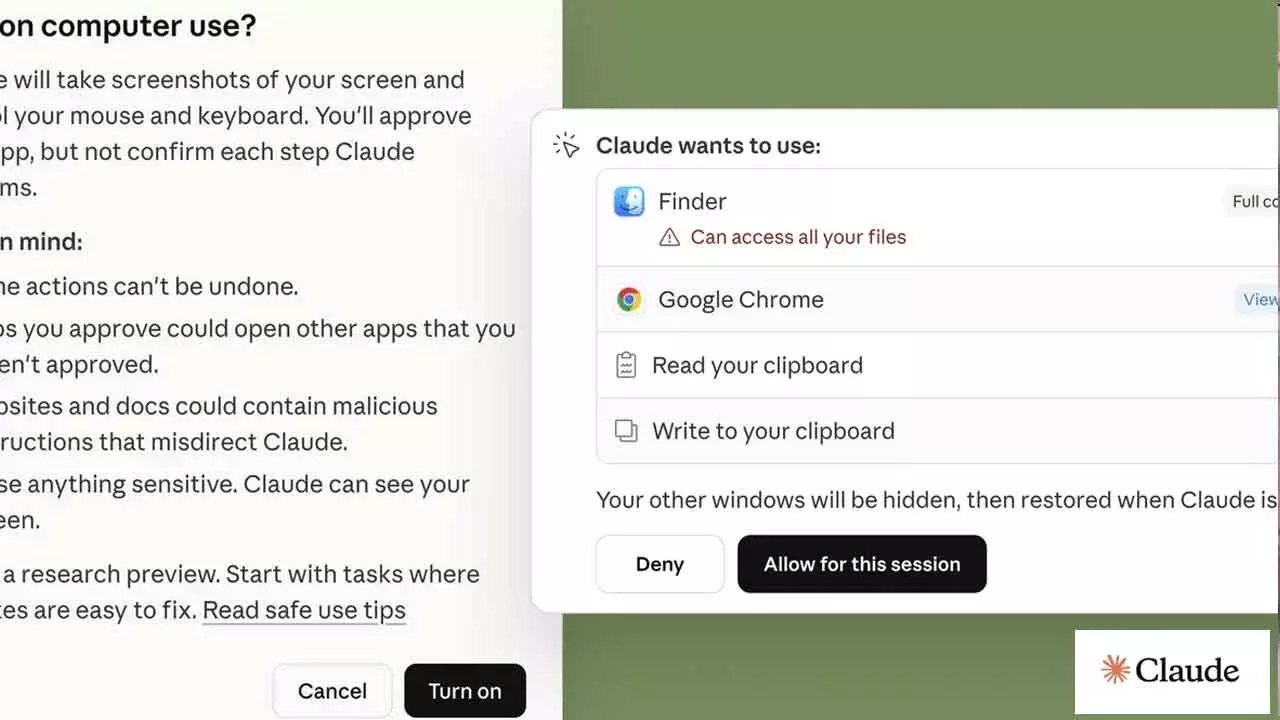
Anthropic unveils a powerful Claude upgrade enabling full computer control, letting users automate tasks remotely without touching their laptops.
Anthropic is redefining how people interact with artificial intelligence by giving its Claude assistant the ability to control a user’s computer directly. Instead of sitting at a desk and manually guiding the AI, users can now grant Claude full system access and let it complete tasks independently.
With this new capability, Claude can operate a computer much like a human would. It can move the cursor, type using the keyboard, view the screen, open applications, browse the web, manage spreadsheets, and handle everyday digital tasks. The goal is simple: allow work to continue even when the user is away.
The company announced the feature on X, describing it as a step toward turning Claude into a truly independent digital worker rather than just a responsive chatbot. By combining system access with task automation, Anthropic is positioning Claude as a personal AI agent that can execute real work on a user’s behalf.
Anthropic researcher Alex Albert highlighted the shift in how people may soon work with AI. He wrote on X, “The future where I never have to open up my laptop to get work done is becoming real very fast.”
The feature builds on Anthropic’s recently introduced “Dispatch” capability, which already allows users to control Claude remotely via mobile devices. Together, these tools enable a workflow where instructions can be sent from anywhere while Claude carries out tasks on a connected computer.
Explaining how the system functions, Anthropic’s Felix Rieseberg said Claude first connects to approved applications such as Slack or Calendar. If additional tools are needed, the assistant requests user permission before proceeding. Once access is granted, Claude can navigate software environments and complete assignments without further supervision.
This setup effectively turns Claude into a remote digital assistant. Users can issue prompts, step away from their devices, and return later to find their work completed. The experience resembles having an AI employee handling routine computer-based responsibilities in the background.
Felix Rieseberg emphasized the extent of system integration, stating that Claude can now access a laptop’s mouse, keyboard, and screen.
At present, the capability is being offered as a limited research preview. Access is restricted to paid users of Claude Cowork and Claude Code. Additionally, the feature currently supports only macOS devices.
To use it, both the Claude Desktop application and the Claude mobile app must be updated and paired. This ensures secure connectivity and full remote functionality.
Anthropic’s move reflects a larger industry push toward agentic AI systems that act autonomously rather than waiting for step-by-step human input. Automation, remote task execution, and intelligent workflow management are becoming central to next-generation AI products.
Competitive pressure is also mounting. AI agents similar to OpenClaw are gaining traction, and major technology companies are accelerating development in this space. Nvidia has introduced its own OpenClaw-style system called NemoClaw, while Meta and OpenAI are investing heavily in agent-based AI platforms.
By enabling direct computer control, Anthropic is betting that users want AI systems that do more than generate text — they want assistants that take action.