Musk Seeks Up to $134 Billion From OpenAI and Microsoft as Legal Feud Intensifies

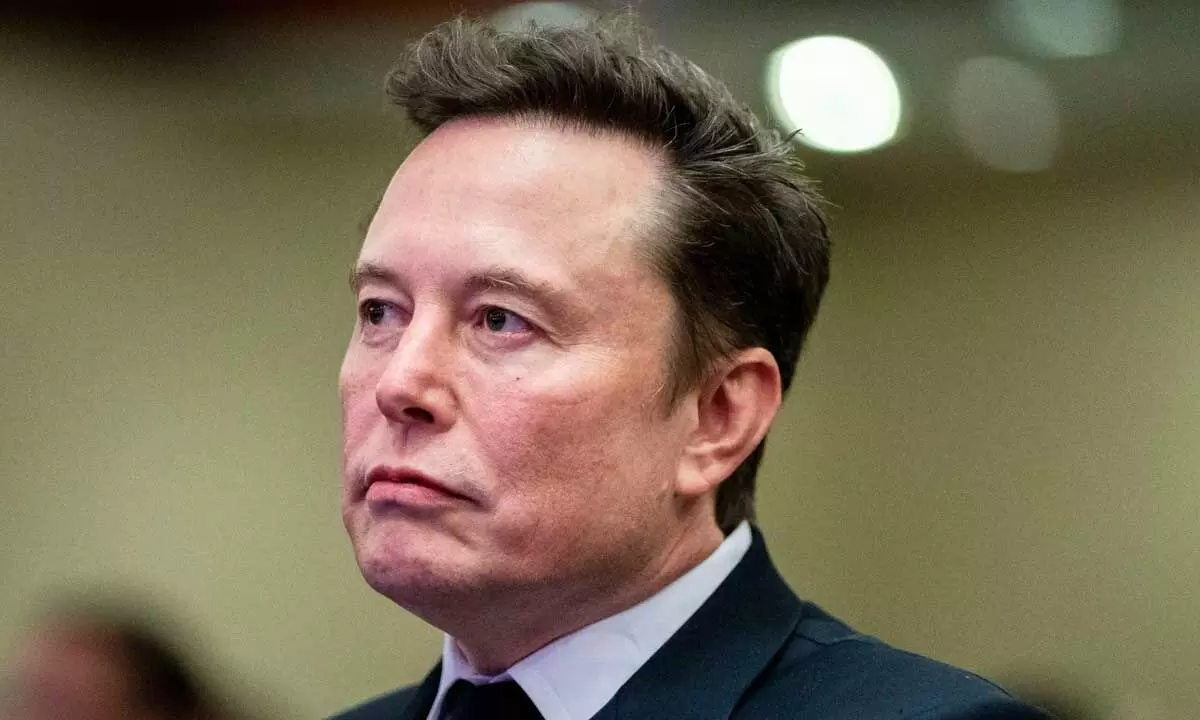
Elon Musk escalates his legal battle against OpenAI and Microsoft, demanding massive damages over claims the AI firm betrayed its founding mission.
Elon Musk has dramatically raised the stakes in his ongoing legal battle with OpenAI and Microsoft, demanding between $79 billion and $134 billion in damages. The billionaire alleges that the companies defrauded him by abandoning OpenAI’s original nonprofit mission and transforming it into a profit-driven enterprise closely aligned with Microsoft.
According to a report by Bloomberg, Musk’s legal team detailed the scale of damages in a court filing submitted Friday. The move came just one day after a federal judge rejected OpenAI and Microsoft’s final attempt to avoid a jury trial, which is now scheduled for late April. The decision clears the way for a courtroom showdown that could reshape the future of one of the world’s most influential AI companies.
At the heart of Musk’s claim is OpenAI’s soaring valuation, currently estimated at $500 billion. Musk argues that he is entitled to a share of this value because he was misled after contributing $38 million when he co-founded the organization in 2015. His lawyers say the company’s evolution into a powerful, commercially focused AI giant violates the principles on which it was originally built.
The damages calculation was prepared by financial economist C Paul Wazzan, an expert witness for Musk. The filing combines Musk’s financial contributions with what it describes as his non-monetary support, including technical insight and business guidance during OpenAI’s formative years. Based on this analysis, the alleged “wrongful gains” range from $65.50 billion to $109.43 billion for OpenAI, and $13.30 billion to $25.06 billion for Microsoft.
Musk’s attorney Steven Molo drew a parallel between Musk’s role and that of a startup investor, stating, “Just as an early investor in a startup company may realise gains many orders of magnitude greater than the investor’s initial investment, the wrongful gains that OpenAI and Microsoft have earned – and which Mr. Musk is now entitled to disgorge – are much larger than Mr. Musk’s initial contributions.”
Musk left OpenAI’s board in 2018. His relationship with the company deteriorated further after the launch of ChatGPT in late 2022, after which he became one of its most vocal critics. He later founded rival AI startup xAI, the company behind the Grok chatbot.
OpenAI has firmly rejected Musk’s claims. In a statement, the company said, “Mr Musk’s lawsuit continues to be baseless and part of his ongoing pattern of harassment, and we look forward to demonstrating this at trial… This latest unserious demand is aimed solely at furthering this harassment campaign.” The company also cautioned investors to expect more headline-grabbing allegations as the case unfolds.
Musk has repeatedly accused OpenAI of becoming a “closed source, maximum-profit company” under Microsoft’s influence and has publicly attacked CEO Sam Altman with personal insults. OpenAI counters that Musk left because he sought “absolute control” and even proposed merging OpenAI with Tesla.
Last year, OpenAI announced plans to restructure from a nonprofit into a public benefit corporation, granting Microsoft a 27% stake while keeping the nonprofit parent in control—an evolution now central to one of the most closely watched tech trials in years.