MGNREGA’s Integration with Agriculture Boosts Rural Economy

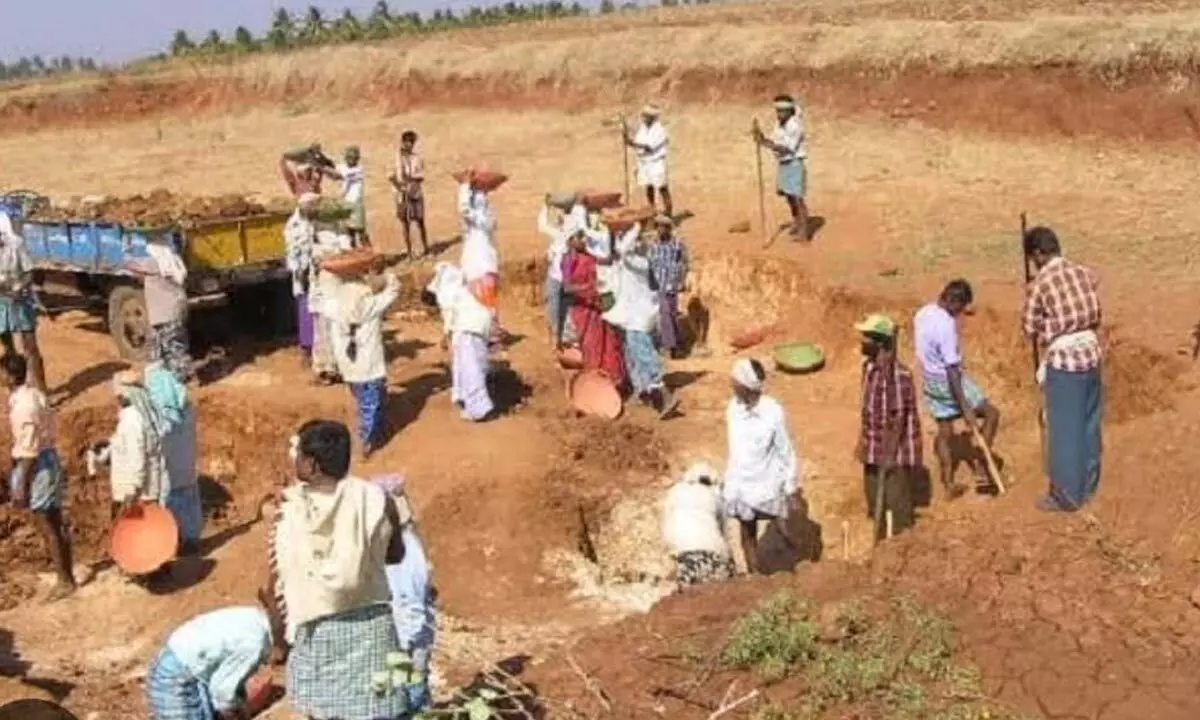
The integration of the Mahatma Gandhi National Rural Employment Guarantee Act (MGNREGA) with agricultural activities is proving to be a game-changer for farmers and rural laborers, offering a sustainable solution to labor shortages and boosting agricultural productivity.
Gawal: The integration of the Mahatma Gandhi National Rural Employment Guarantee Act (MGNREGA) with agricultural activities is proving to be a game-changer for farmers and rural laborers, offering a sustainable solution to labor shortages and boosting agricultural productivity.
By employing MGNREGA workers in farm-related tasks such as sowing, irrigation, and land development, the government is helping farmers reduce labor costs, while ensuring steady income opportunities for rural workers.
Farmers Benefit from Timely Labor and Lower Costs
For years, farmers have struggled with rising labor costs and worker shortages, especially during peak agricultural seasons. With MGNREGA labor being made available for farm work, critical farming activities are completed on time, ensuring better yields.
Additionally, government-supported wages help lower production costs, making farming more profitable and sustainable.
"Earlier, we couldn't find enough laborers during sowing season, and wages were too high. Now, with MGNREGA workers, our costs have come down, and our crops are planted on time," said Ramesh, a farmer from Alampur Mandal.
Water Conservation and Land Development Strengthen Agriculture
Under MGNREGA, several water conservation and irrigation projects are being implemented, including:
Check dams and farm ponds to store water for irrigation
Percolation tanks to improve groundwater levels
Soil conservation measures to enhance land fertility
These initiatives are helping farmers tackle drought conditions, ensuring consistent water supply for crops.
Employment Opportunities for Rural Workers
For rural laborers, MGNREGA provides a stable source of income, reducing the need for migration to cities in search of work. The scheme ensures timely wage payments and offers equal opportunities for men and women.
“Thanks to this scheme, I can earn a regular income while working in my village. I don’t have to leave my family and migrate to Hyderabad for work,” said Lakshmi, a daily wage worker from Gadwal district.
Boosting Rural Economy and Infrastructure
The impact of integrating MGNREGA with agriculture extends beyond farming, as it contributes to overall rural development by:
Strengthening irrigation systems to ensure year-round farming
Developing rural roads for better market access
Encouraging cooperative farming to improve efficiency
Challenges and the Way Forward
Despite its success, some challenges remain, including delayed wage payments and bureaucratic hurdles in approving projects. Experts suggest that faster digital payments, awareness campaigns, and skill development programs could further enhance the scheme’s impact.
Conclusion: A Win-Win for Farmers and Laborers
The MGNREGA-agriculture linkage is proving to be a transformative initiative, ensuring employment for rural laborers while improving agricultural productivity. Farmers are witnessing higher yields, while workers gain financial stability.
With continued government support and better implementation, this model can drive self-sufficiency in rural areas, making villages more resilient and economically prosperous.