Tiger spotted in Seshachalam Hills after nearly a century

- Trap cameras capture the big cat’s movements at Chitvel forest
- Forest dept is working with NSTR for safe passage for tigers from Chitvel to Seshachalam
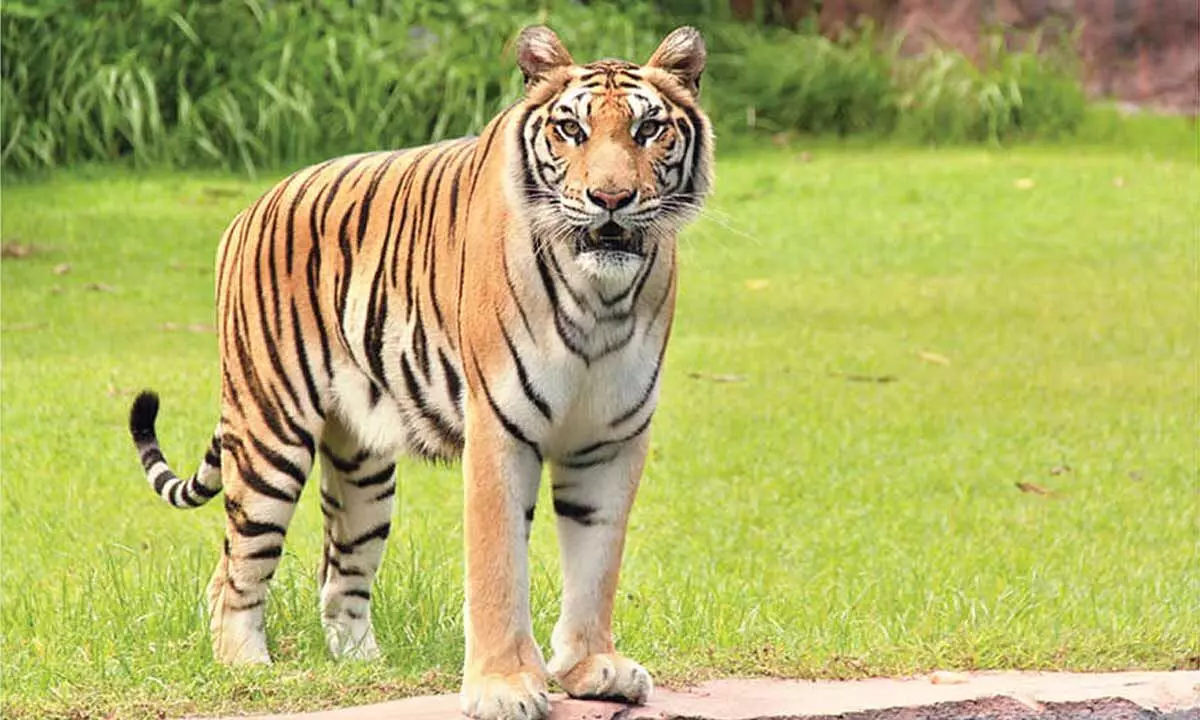
Tirupati: A set of trap cameras in Annamayya district’s Chitvel forest has brought rare good news for conservationists – the unmistakable image of a tiger roaming the Seshachalam hills. The sighting, backed by multiple photographs taken both in daylight and after dusk, has raised hopes that the predator is reclaiming a habitat it abandoned nearly a century ago.
Once home to the big cat, the Seshachalam forests had long lost their tiger population to the adjoining Nallamala range. Now, with steady conservation efforts and the creation of a tiger corridor, forest officials believe the animal is making a natural return. At least one tiger has been confirmed, and officials suspect a few more could be moving silently across the range.
District forest officer P Vivek said the department is working with the Nagarjunasagar–Srisailam Tiger Reserve (NSTR) to ensure safe passage for tigers from Chitvel to Seshachalam through routes like Badvelu, Siddavatam and Bhakarapet. Underpasses along the widening Renigunta–Kadapa highway are also being planned to facilitate safe crossings for elephants and tigers alike.
The idea of linking Nallamala and Seshachalam forests was floated five years ago, connecting Gundlabrahmeswaram, Lankamala and Sri Venkateswara sanctuaries across four districts. In recent years, tiger sightings have gradually spread from Nallamala to Lankamala, and now to the periphery of Seshachalam, a shift attributed to the population boom in NSTR.
Spanning 5,000 sq km across Andhra Pradesh and Telangana, NSTR is India’s largest tiger reserve. Its tiger numbers have steadily risen from 47 in 2018 to 77 in 2023, and fresh estimates suggest the figure may now be close to 90. This surge has created natural territorial pressure, forcing dispersal into adjoining corridors such as Seshachalam.
Officials, however, are cautious. They warn that the growing presence of tigers should not translate into conflict with communities living along forest fringes. Speeding vehicles have already caused multiple wildlife casualties on roads cutting through habitats. Plans are being finalised for elevated corridors and underpasses at 12 crucial points, besides strengthening surveillance with solar cameras and alert systems to keep animals away from human settlements.
The project enjoys political support as well. At a recent review, The measures taken to protect tiger movement drew praise from Deputy Chief Minister Pawan Kalyan recently. The state government has promised continued backing and coordination with the Centre for funds and clearances.
For conservationists, the tiger’s return to Seshachalam is more than symbolic. It signals that the forests are regaining balance. “Wherever a tiger lives, the ecosystem is healthy,” said an official. If current measures hold, Seshachalam may once again echo with the roar of its long-lost predator.