Anodized Aluminum vs Stainless Steel: Which One to Choose?

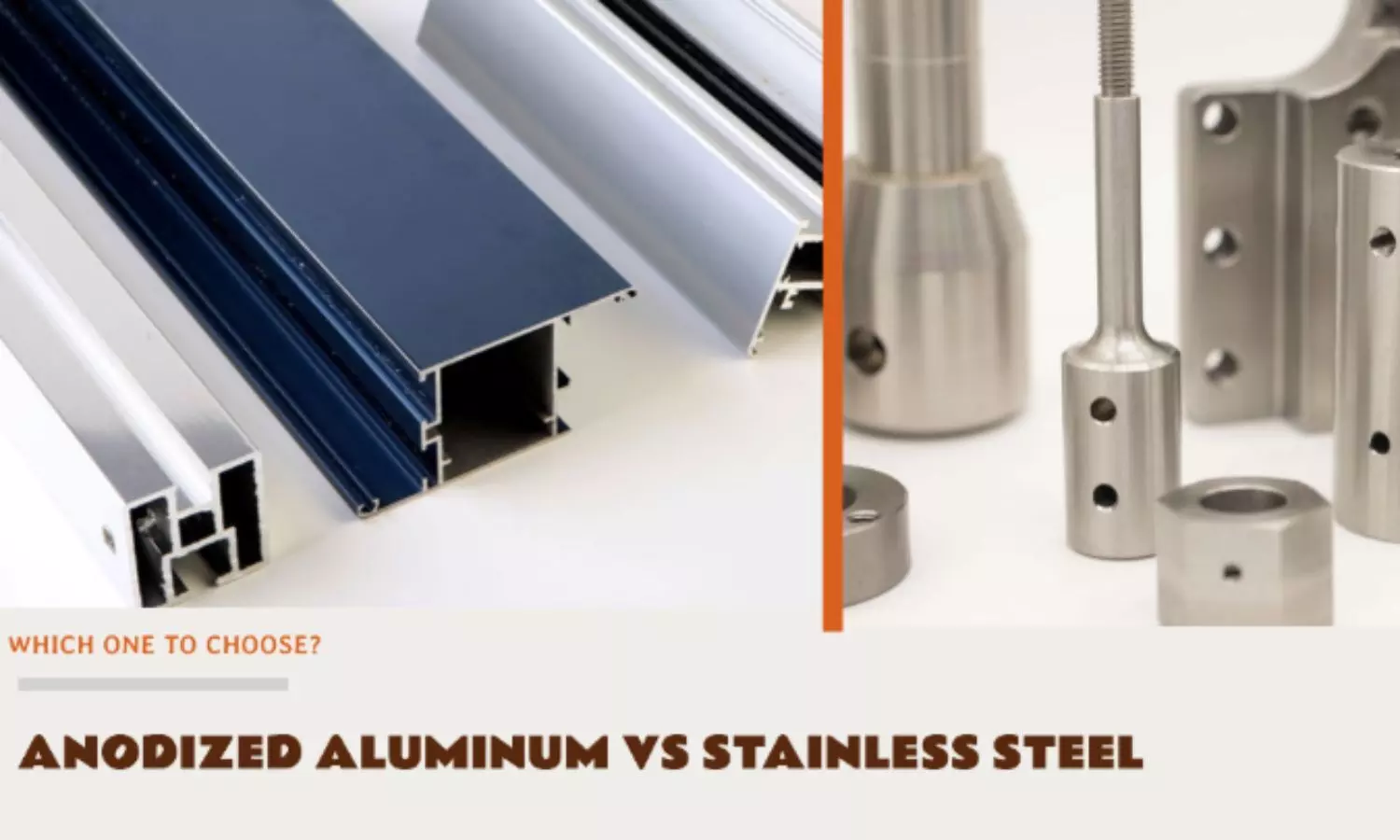
Anodized Aluminum vs Stainless Steel: Which One to Choose?
Confused between anodized aluminum and stainless steel? Discover the key differences in strength, durability, weight, corrosion resistance, and cost to choose the right material for your needs—whether it's for cookware, appliances, or construction.
As demand for high-performance and durable parts is evolving across all industries, material selection is also becoming more challenging. One such debate among manufacturers and engineers is “Anodized Aluminum vs. stainless Steel”, both are known for excellent corrosion resistance and strength-to-weight ratio. Consequently, they have differences in aesthetic options, strength, machinability, formability, and other various aspects.
This article will present a comparative overview of anodized aluminum and stainless steel, including their properties, grades, and uses.
What is Anodized Aluminum?
Anodized aluminum is a surface-treated engineering material with a natural oxide layer to protect underlying aluminum from corrosion and enhance its toughness. It is obtained by processing aluminum (or aluminum alloys) with an electrochemical process known as anodization or anodizing.
Anodized aluminum
Often, aluminum is considered a low-performance engineering material in harsh environments due to its corrosion and wear-prone surface properties. However, the anodizing not only enhances resistance but also enhances aesthetics. The porous oxide layer can absorb different dyes.
How to Anodize Aluminum?
Aluminum anodizing mechanism
To anodize aluminum, you need an electrolysis setup with a workpiece as anode, inert metals as cathode (like lead or stainless steel), and a sulphuric-acid electrolyte.
At Anode/Work (Oxidation): 2Al + 3H2O→Al2O3+6H+ + 6e−
At Cathode: 6H3O+ + 6e- → 3H2 + 6H2O
Once the desired thickness of the oxide layer is achieved, dyes and pigments are applied for aesthetics. Then, sealing agents fill the pores of the dyed-anodized surface.
The following are the key steps of aluminum anodization;
- Thorough Cleaning: First, remove any dirt, grease, rust, and oxides from the surface. You can use acidic cleaning, followed by rinsing.
- Etching: Smooth and prepare the surface for anodization.
- Electrolysis Setup: In an electrolyte tank, install your parts as anode(often in a metal hanger or clips).
- Anodizing: Immerse aluminum parts in the electrolyte solution and pass current for a specific time. Then, it forms a porous oxide layer.
- Coloring (Optional): Add dyes or metal salts into the oxide layer for color.
- Sealing: Close the pores with boiling water or chemicals like nickel acetate.
What is Stainless Steel?
Stainless steel
Stainless steel is a low-carbon alloy with less than 1.2% carbon, containing chromium as the main alloying component. Among different steel alloys, it is known for its high strength-to-weight ratio, toughness, machinability, and formability. Anodized aluminum vs stainless steel offers superior corrosion resistance, abrasion resistance, and durability. Moreover, this particular steel is comparable to anodized steel.
Furthermore, there are different grades of stainless steel with varying alloying compositions: 304, 316, 410, 420, 430, 201, 202, 321, 310, 309, etc.
How to Anodize Stainless Steel?
Stainless steel is inherently prodigy with excellent corrosion resistance, abrasion resistance, and durability in high-stress and harsh environments. However, it can be anodized with a hot caustic bath, resulting in a similar hard coating and giving different color options for aesthetics.
Head-to-head Comparison of Anodized Aluminum vs Stainless Steel
First, lightweight anodized aluminum offers a higher strength-to-weight ratio than stainless steel. On the other hand, stainless steel is more durable and withstands high-stress conditions without affecting the material's integrity.
Now, let’s look at the head-to-head comparison of anodized aluminum vs stainless steel;
Criteria | Anodized Aluminum | Stainless Steel |
Weight | Lightweight ( ~ 1/3rd of stainless steel) | Heavy steel alloy |
Strength | High strength and best for applications requiring lightweight | Higher tensile strength and durability. |
Corrosion Resistance | Good, but susceptible to pitting in saltwater | Excellent resistance, ideal for the marine and industrial parts |
Heat Conductivity | Excellent conductivity | Low thermal conductivity |
Durability | The anodized layer increases the surface hardness, and so the lifespan | Highly resistant to scratches, stains, and corrosion. |
Cost | More affordable than stainless steel | Relatively expensive |
Applications | Aerospace, automotive, electronics, cookware, etc. | Kitchenware, medical, automotive, construction, industrial machinery |
When to Choose Anodized Aluminum?
Anodized aluminum parts are favored in applications that require lightweight solutions with considerable mechanical performance. The anodized layer does not affect the thermal conductivity, making it suitable for thermal components and systems.
Another benefit of anodizing is that it allows you to choose your color options and provides aesthetic versatility. The sealed colors last for several years without maintenance. So, it is best to choose anodized aluminum vs stainless steel for decorative and architectural items.
When to Choose Stainless Steel?
Stainless steel is preferred over anodized aluminum in high-temperature and harsh environmental conditions. Consequently, it also performed better in applications where strength and durability are critical.
Stainless steel alloys like 304L/304 are stain-resistant and easy to clean, making them ideal for food-processing items. Furthermore, its polished appearance enhances high-end appliances and furniture.