Integrated Air Defence Weapon System: Another feather in DRDO cap

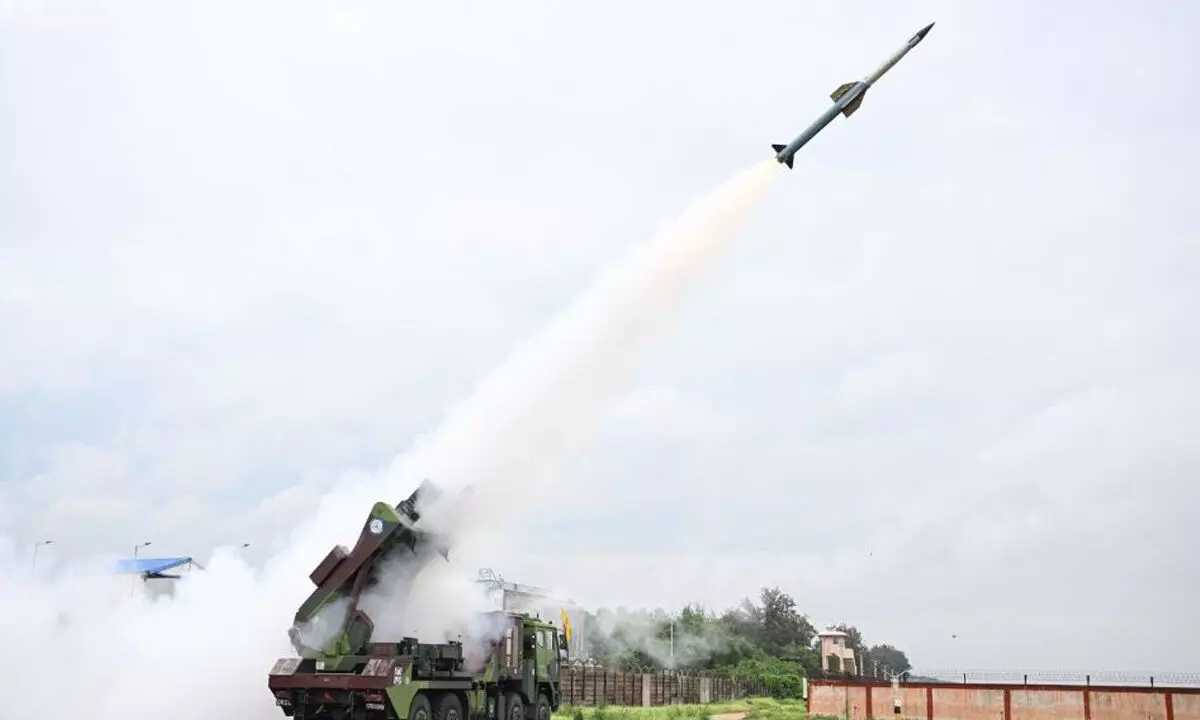
The successful maiden flight tests of the Integrated Air Defence Weapon System (IADWS), a multi-layered air defence platform, by the Defence Research and Development Organisation (DRDO), add another dimension to our military capability. Incidentally, this capability was made abundantly clear in the post-Pahalgam conflict with Pakistan when our armed forces were able to protect our territory from aerial attacks and degrade its air defence substantially. That episode underscored the pressing need for India to further indigenise its air defence capacity, reduce dependency on imports, and develop layered platforms that can counter a variety of threats simultaneously. IADWS is a natural extension of this strategic thinking. According to DRDO, IADWS is unique because it brings together three indigenous components into a single, integrated platform. The first is the Quick Reaction Surface-to-Air Missile (QRSAM), designed to engage multiple targets at medium ranges with high accuracy and reliability. The second is the advanced ‘Very Short-Range Air Defence System (VSHORADS)’ missile, which protects low-flying aircraft, helicopters, and drones at shorter distances. The third component is the high-power laser-based Directed Energy Weapon (DEW), which uses concentrated energy to neutralise aerial targets with unprecedented speed and precision.
The seamless integration of these three systems makes IADWS a formidable multi-layered shield capable of addressing both conventional and asymmetric aerial threats. Defence Minister Rajnath Singh highlighted the significance of this achievement, noting in a social media post that the successful test has established the country’s multi-layered air defence capability and will strengthen area defence for critical facilities against enemy aerial threats. His remarks reflect the confidence that India’s political and military leadership now repose in indigenous innovation, a shift from the past when dependence on foreign suppliers often left India vulnerable to delays, cost escalations, and geopolitical pressure. The broader message of the IADWS success is also about self-reliance. In the past decade, the Narendra Modi government has insisted on Atmanirbhar Bharat in defence production, encouraging public sector laboratories and private enterprises alike to innovate and deliver cutting-edge technologies. The IADWS flight test is therefore more than a military breakthrough—it is also an affirmation of the country’s scientific and industrial capacity to design and execute complex systems that were once thought to be beyond reach.
That said, India cannot afford complacency. While this achievement strengthens deterrence, the regional security environment remains fraught with challenges. China, despite a recent thaw in relations, continues to be an unpredictable neighbour. Its strategic embrace of Pakistan remains intact. With Field Marshal Asim Munir, Pakistan’s assertive and pugnacious army chief, consolidating power, the Beijing-Islamabad axis poses a dual threat to India’s security. Both countries have a history of coordinating strategies to keep India under pressure, and neither has given New Delhi reasons to extend unqualified trust. Therefore, even as India celebrates the IADWS milestone, policymakers must focus on the larger picture. It is vital to accelerate production, ensure rapid induction of these systems into the armed forces, and continue iterative upgrades in response to evolving technologies. Development of counter-drone systems, expansion of cyber resilience for air defence networks, and integration of artificial intelligence for real-time threat assessment are the pressing priorities. Towards this India must deepen cooperation with friendly powers to secure access to advanced sensors, surveillance tools, and satellite-based systems that can complement indigenous capabilities.