Kurnool mishap: Road safety should be a priority, not an afterthought

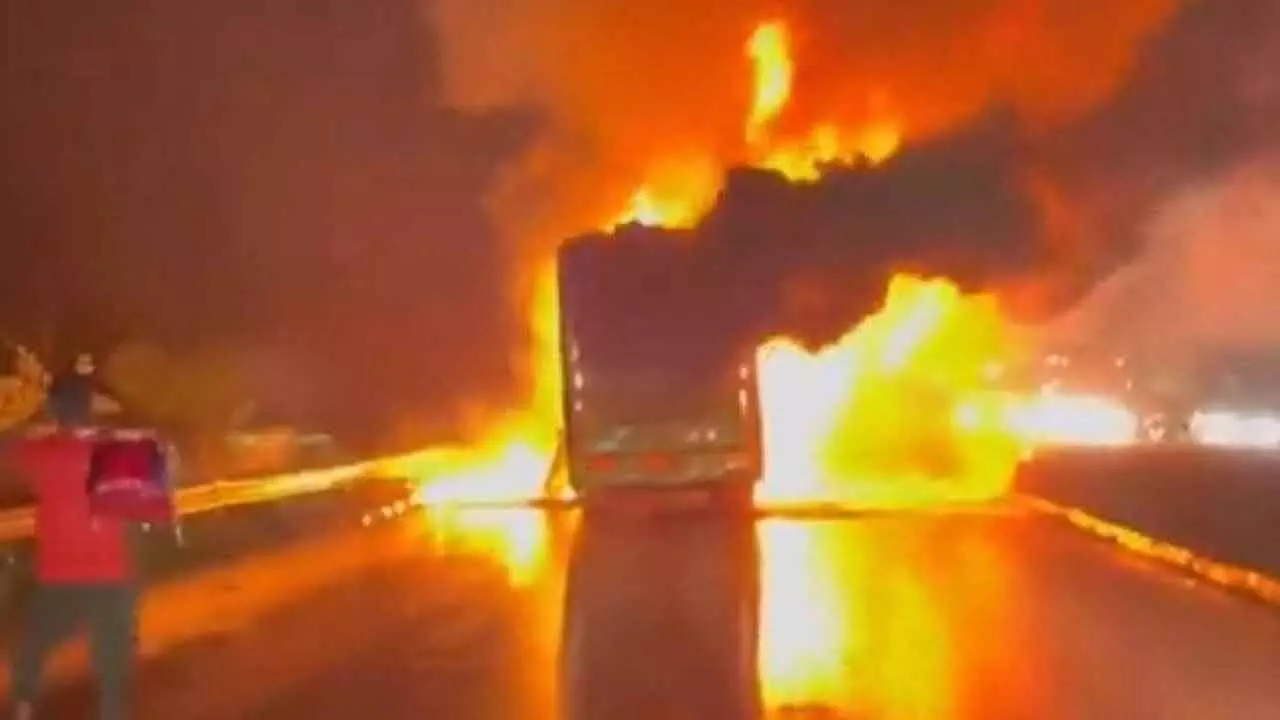
Full details of the horrific Kurnool bus mishap in Andhra Pradesh, in which 20 people died, are yet to come out, but the accident proves for the nth time that the authorities in our country are not proactive but reactive—and that too in a slow and slipshod manner. For a few days before this, a fire in a moving AC sleeper bus burned at least 20 passengers alive and wounded 15 on the Jaisalmer-Jodhpur Highway. Even the Rajasthan tragedy did not wake up the officials concerned in other states.
To be sure, intercity private buses are generally doing a good job by providing comfortable travel to passengers at reasonable prices; the entrepreneurs running these services are doing what the Railways has failed to do despite its massive resources and government support. It is a measure of government incompetence and apathy at all levels, Central as well as state, that the authorities havenot even been able to come up with realistic rules and regulations to ensure smooth and safe operations by private bus companies.
Despite the vital role these buses play, the regulatory framework governing them remains chaotic and outdated. Operators are required to obtain multiple clearances—from transport authorities, road safety departments, and local administrations—but these are often reduced to paperwork rather than meaningful checks. Vehicle fitness certifications, driver training standards, and fire safety inspections are either perfunctory or routinely bypassed through bribes and middlemen.
The Kurnool tragedy underlines the tragic consequences of this regulatory vacuum. Most intercity buses, particularly AC sleeper coaches, are not equipped with basic fire-suppression systems or emergency exits that meet modern safety standards. In many cases, buses are illegally modified—wooden interiors, non-standard electrical fittings, and extra berths are added to increase revenue, often at the cost of passenger safety. Drivers are overworked, maintenance schedules are ignored, and routes are extended beyond legal limits. Authorities, who are supposed to monitor and enforce the rules, remain invisible until an accident occurs. Equally troubling is the lack of coordination between state and Central agencies. Road transport is a shared responsibility, yet each level of government tends to pass the buck to the other. The Centre frames the Motor Vehicles Act, but implementation is left to the states. State transport departments, underfunded and understaffed, struggle to monitor thousands of buses running across districts and borders. The result is a patchwork of oversight, with no unified safety protocol, no centralized inspection system, and no real-time monitoring of bus operations.
When accidents occur, the official response follows a predictable script: expressions of condolence, a promise of compensation, an inquiry committee, and a few suspensions. Rarely does such outrage translate into lasting reform. The committees set up after each tragedy submit reports that are soon forgotten. Meanwhile, transport authorities continue to function with the same inefficiency and complacency. The problem is not that India lacks regulations—it is that the existing ones are outdated, poorly enforced, and riddled with loopholes that unscrupulous operators exploit with ease.
What India needs urgently is a comprehensive framework for intercity bus transport that emphasises safety as much as efficiency. This includes stricter (but not anti-business) vehicle design standards, periodic safety audits, fireproof materials in sleeper coaches, and mandatory driver rest intervals. Technology can help too. Road safety should be a governance priority, not an afterthought.