Pagis read the sand, Politicians read scripts
In the face of war, Pagi’s risk everything for India, while power-hungry leaders exploit the crisis for votes, weakening morale and aiding the enemy
When bullets fly and borders burn, some politicians retreat to the comfort of air-conditioned conference rooms, mouthing platitudes about “standing with our soldiers.” Yet, behind the scenes, they nitpick, undermine, and insult the government—even if it means lowering the morale of the armed forces. This is precisely what the Congress Party and the INDIA bloc, under Rahul Gandhi’s leadership, are doing in response to Operation Sindoor. All for the Bihar elections, no less. It’s a move that will backfire—spectacularly.
Here’s the truth that our political elite conveniently ignore: war isn’t fought by the army alone. It is a national endeavour, a test of collective willpower, where every citizen, every institution, and every leader must contribute. Instead of rallying the nation, these self-serving critics sow division, spread confusion, and paralyse resolve. This isn’t just irresponsible—it’s a betrayal of the very soldiers they claim to support.
In wartime, we need leaders who inspire courage, not cowards who crumble under the weight of their petty ambitions. The Indian Army’s firepower and courage are unmatched. But even the best army cannot win wars alone. Victory demands a united, determined population, ready to contribute—from conserving resources to maintaining civil order. Defeatist rhetoric and opportunistic criticism, in such times, play straight into the enemy’s hands. Every word against our soldiers and government weakens morale and emboldens our adversaries.
Our civilians, too, must recognise their role. Supporting the war effort isn’t optional; it’s a duty. When the nation faces an existential threat, comfort and convenience must give way to sacrifice and solidarity. Every act of support, no matter how small, fortifies the nation.
Consider the 1971 Indo-Pak War, when the Pakistan Air Force bombed Bhuj airbase in Gujarat, dropping 64 bombs and crippling the runway. Even contractors and workers fled. Yet, the women of nearby villages picked up whatever tools they had and rebuilt the runway in under 76 hours, enabling the Indian Air Force to strike back and dismantle enemy strongholds. That’s civilian patriotism—real, gritty, and unapologetic.
But courage and resilience aren’t limited to singular acts of defiance. In the harsh, arid expanses of Gujarat’s Kutch and Rajasthan’s desert districts, generations of unsung heroes have silently served the nation: the Pagi trackers. These “footprint readers,” armed with ancestral knowledge, have for centuries turned the treacherous sands into a canvas of national security.
The word Pagi—derived from Gujarati, meaning “one who reads footprints”—denotes a legacy of acute observation and intuitive tracking. Communities like the Banni and Rabari have passed down this craft for generations, turning it into a precise science. Pagi’s can decipher how many people or animals crossed a point, their direction, load, and even estimate how long ago the tracks were made. In the Rann of Kutch, where mirages and shifting sands deceive even the best surveillance technologies, Pagi’s can read the ground’s whispers like no machine ever could.
During British colonial rule, especially in Sindh, Kutch, and the Gujarat-Rajasthan borderlands, Pagi’s were invaluable to the colonial police, tracking dacoits, recovering stolen livestock, and solving crimes. While their skills were often exploited without due recognition, their reputation for accuracy and loyalty earned them begrudging respect.
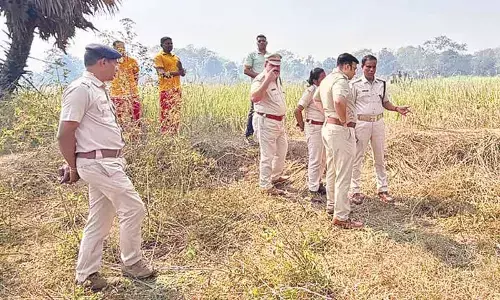
Post-Independence, the India-Pakistan border turned these desert regions into sensitive security zones. In the 1965 war, when the Rann of Kutch became a battleground, Pagi’s detected infiltrators, tracked enemy scouts, and helped the BSF lay ambushes. Even today, despite radars, drones, and satellite imagery, Pagi’s continue to be the unsung guardians of the nation’s frontiers. In terrains where technology falters, the human instinct and terrain wisdom of a pagi remain irreplaceable.
Yet, this proud legacy is fading. Young members of Pagi families are drifting into other professions. There is little formal training or institutional support to preserve their craft. Many Pagi’s work on daily wages or informal contracts, without proper recognition. Even though the BSF and other security agencies acknowledge their contributions, a systematic approach to preserving and professionalising this skill is sorely lacking.
Some initiatives—like formal Pagi training schools, incorporation into paramilitary ranks, and documentation of traditional knowledge—have been proposed, but they remain under-implemented. In an age where AI and indigenous skills can complement each other, the revival of Pagi expertise isn’t just desirable—it’s vital.
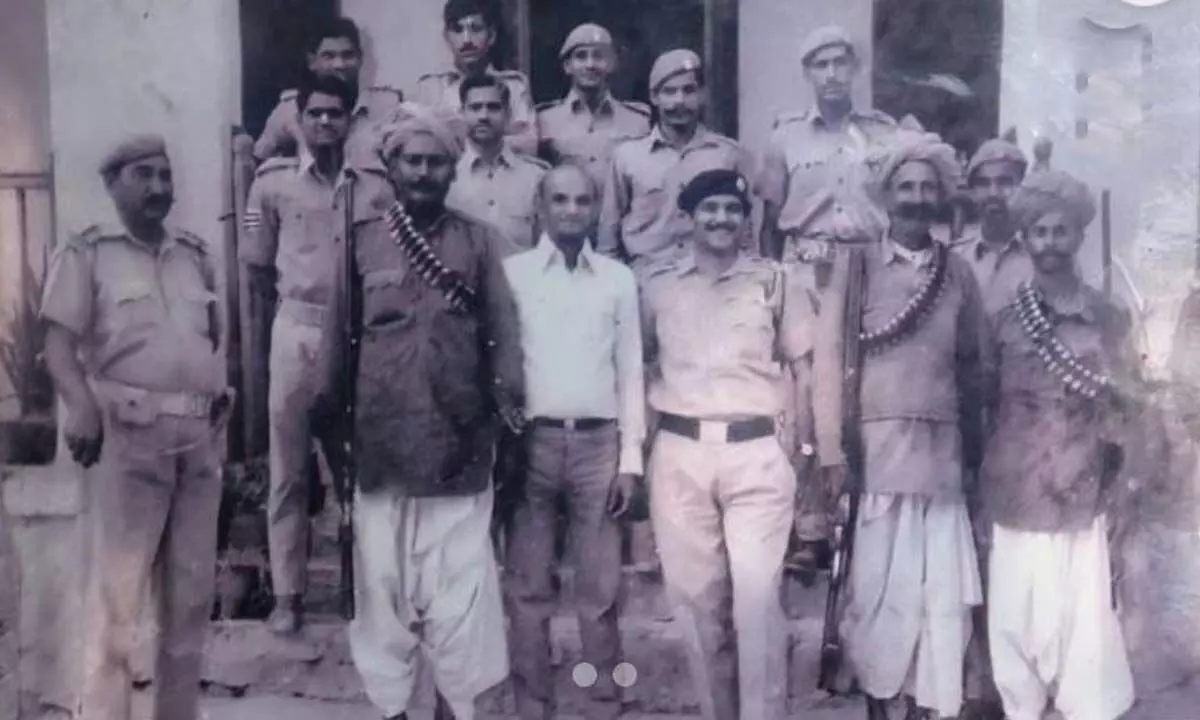
Consider the stories of legendary Pagi’s whose names are etched in Gujarat’s collective memory. Kesar Singhji Pagi, from Banaskantha district near the Gujarat-Rajasthan border, was a master tracker whose skills bordered on the supernatural. He could identify not only the number of people and animals who crossed an area but also their approximate weight and even their origin—just by studying footprints. His invaluable service to the BSF and police in tracking infiltrators, smugglers, and fugitives earned him the President’s Police Medal and the Indian Police Medal for Gallantry. His exploits are still shared in BSF training sessions as models of excellence.
Similarly, Jetha Pagi, though less nationally recognized, was a local hero whose tracking skills helped police solve murders, thefts, and smuggling cases. His grasp of desert terrain and human movement was legendary. Bhima Pagi, another master tracker, worked closely with the BSF to prevent cross-border smuggling and infiltration.
These men weren’t just border sentinels; they were living embodiments of India’s ancient knowledge systems, blending seamlessly with modern defense needs. Their stories remind us that the nation’s security is woven not just through steel and satellites but also through sand, footprints, and human instinct.
But where is the recognition today? Where is the effort to preserve this priceless knowledge? When pagis retire, their wisdom dies with them—unless we act. It’s time for a national revival of pagi tracking, with structured training, fair pay, and generational continuity.
And let’s not forget the symbolism. Pagi trackers stand for something larger than border security. They represent India’s unique blend of traditional wisdom and modern security architecture—a blend that politicians sitting in their echo chambers can neither understand nor replicate. When they undermine military efforts, when they nitpick and paralyse national resolve for political gains, they not only betray our soldiers but also insult the memory of these silent guardians of the frontier.
When the stakes are high, and India’s survival is at risk, victory doesn’t belong to the soldiers alone. It belongs to the villagers rebuilding runways under fire, the silent pagis reading enemy footprints in the sand, and the people who refuse to be divided by petty politics. Victory is national; defeat is collective.
Rahul Gandhi and his ilk should remember this: Operation Sindoor isn’t just a military campaign; it’s a test of national unity. Playing politics at a time like this isn’t just cowardice—it’s treachery. And history will not forgive it.