Parochialism: When power comes first, not the nation
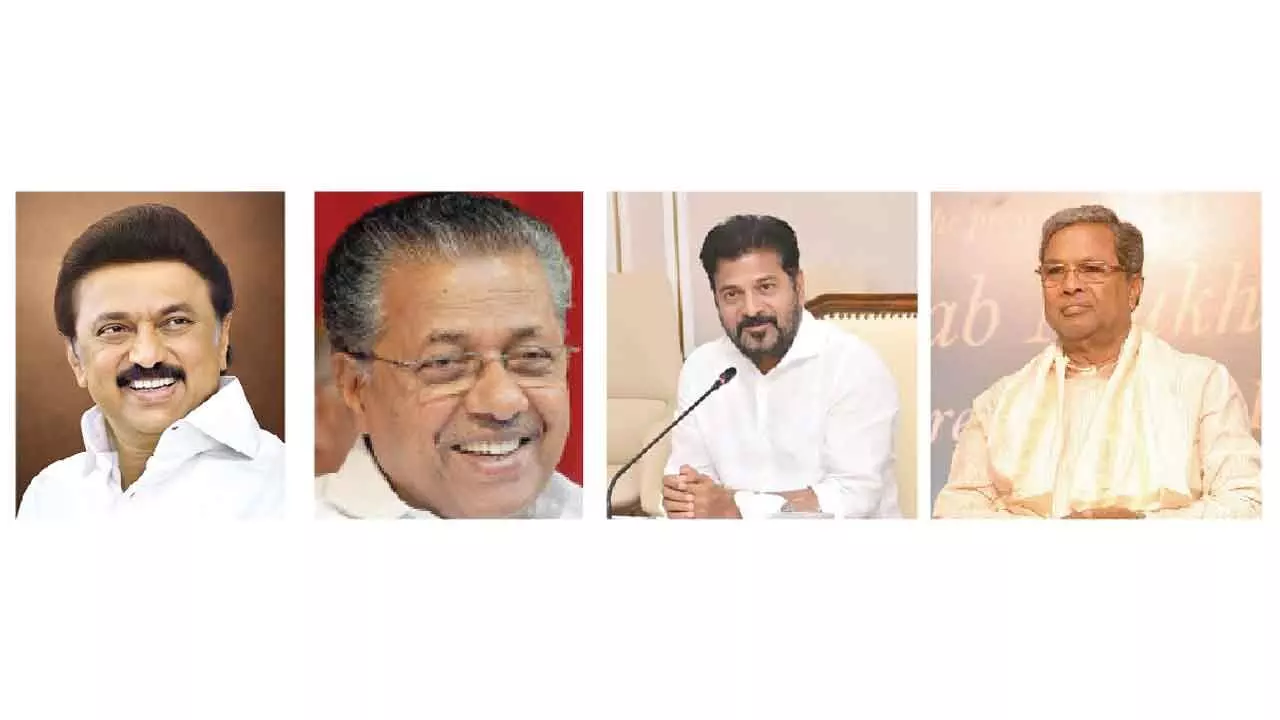
History stands as proof of the fact that “a parochial, selfish, narrow-minded nationalism has caused immense misery to the world.” A mad and exaggerated form of this cult is running rampant, as Indian revolutionary M N Roy noted way back in 1942, and this remains highly relevant today in Tamil Nadu. The founders of the Indian Constitution made every possible attempt to sweep away parochialism, but 75 years down the line, some states and leaders continue to display narrow-mindedness. Unless politicians stop vote-bank politics and sincerely strive to be game-changers in society, they have no right to talk about losses due to delimitation based on population criteria. What will happen if a state loses a few seats? Perhaps, a few politicians will lose their positions, but nothing more
Politics in some of the Southern states seem to be going haywire. While the political crisis in Karnataka is getting murkier, in Telangana, the main opposition party, the BRS is behaving in a manner that is not cutting much ice with the common man. The pink party has a good number of MLAs in the Assembly and holds the status of Leader of Opposition, but the party chief refuses to attend the Assembly. In neighboring Andhra Pradesh, the former CM says he will not go to the Assembly unless he is given the status of LoP and uninterrupted time to speak.
It is a normal practice for the President or the Governor to read the speech approved by the cabinet, whether it be in Parliament or state Assemblies when a joint address is delivered. The opposition may not agree with the content. They can tear into the government during the motion of thanks to the Governor’s address based on facts and figures. However, the new trend is that legislators accuse the Governor of speaking untruths and make uncharitable comments, likening the speech to a ChatGPT-generated one, as was witnessed in the Telangana Assembly on Thursday. How can they suffer from dementia within a year? Didn’t the Governor read the speech prepared and approved by the BRS cabinet when they were in power?
In neighboring Tamil Nadu, the situation is no better. Forgetting that India is a garden of blooming fragrance of different languages and cultures, the stench of parochialism is on the rise. History stands as proof of the fact that “a parochial, selfish, narrow-minded nationalism has caused immense misery to the world.” A mad and exaggerated form of this cult is running rampant, as Indian revolutionary M N Roy noted way back in 1942, and this remains highly relevant today in Tamil Nadu. The founders of the Indian Constitution made every possible attempt to sweep away parochialism, but 75 years down the line, some states and leaders continue to display narrow-mindedness.
The big question is: why can’t our politicians keep off Rashtra ahead of narrow parochial vote-bank politics? An overdose of parochialism is not good for the country. It would result in hate politics, agitations and even violence, which can disturb the ecosystem of the state.
Regionalism can take a radical form, as we saw in Punjab during the Khalistan movement. But who cares? Our politicians only want to remain glued to power, come what may. For them, it is power first, not the country. We have seen in the past how Bengalis were targeted in Assam due to cultural insecurity and how Biharis and Jharkhandis were targeted in Maharashtra.
There is no doubt that everyone should take pride in their own culture, tradition, and language, but that does not mean taking hasty decisions like insulting national symbols. That is no way to protect one’s regionalism. The Tamil Nadu government first rejected the National Education Policy and Hindi as Rashtra Bhasha, and now it has replaced the symbol of the rupee.
Look at the irony: the rupee symbol, which was accepted by the UPA government in 2010, was designed by a Tamilian, Udaya Kumar Dharmalingam. He currently works as a professor at IIT Guwahati and had been felicitated by P Chidambaram when M Karunanidhi of the DMK was Chief Minister. Udaya, who has a bachelor’s degree in architecture and a master’s degree in Design (Visual Communication), did his PhD in design from the Industrial Design Centre at IIT Bombay. The Indian rupee designer has also worked as a senior designer and then as a design head in the monthly magazine Intelligent Computing CHIP.
His design was chosen from 3,000 entries submitted nationwide, and he received an award of Rs 2.5 lakh. The symbol is a blend of Indian and Roman letters—capital ‘R’ and Devanagari ‘Ra’—which represents rupaiah. It has two horizontal stripes at the top, symbolizing the national flag and the “equal to” sign.
Now, let’s look at another issue that Tamil Nadu seems to be overtly upset about: delimitation. Tamil Nadu has strongly opposed any delimitation exercise, arguing that it would penalise states that have successfully controlled their population growth. The state fears that its representation in the Lok Sabha may be reduced while states with higher population growth gain more seats. This could marginalise Tamil Nadu’s voice in national policy decisions.
Tamil Nadu, like other southern states, contributes significantly to India’s GDP and tax revenue. A reduced political voice in Parliament may lead to an unfair distribution of central resources and policies that do not align with the state’s developmental needs, they claim. This sentiment is also being echoed by Telangana Chief Minister A Revanth Reddy, who has decided to join hands with the DMK and attend the all-party meeting convened by Stalin. He may be following the party line by participating in the meeting.
But one thing we need to understand is that population growth cannot happen “fatafat khatakhat.” It has to be a gradual process over at least a decade or so. While one cannot overlook the importance of demographic management, leaders should also blame themselves for failing to create an ecosystem where the common man can consider having more than one or two children even if the government gives some incentive to have more children.
The question is does he have income comfortable enough to support more than one child? Can he provide quality education under the present circumstances? Over the past 75 years, successive governments, both at the national and state levels, have failed to create a system where education is affordable. The same goes for healthcare. Those worried about political losses due to delimitation should first accept their failures. Unless they stop vote-bank politics and sincerely strive to be game-changers in society, they have no right to talk about losses due to delimitation based on population criteria. What will happen if a state loses a few seats? Perhaps, a few politicians will lose their positions, but nothing more.
Chief Ministers and political leaders of all parties should first conduct a serious introspection of what each public representative, from Parliament to the Village Panchayat, has done for their state and constituency.
Tamil Nadu argues that literacy rate and governance should be taken as alternative parameters for delimitation rather than population. But is there any party in India, including the DMK, that can claim their governance has always been impeccable? If the performance of all parties had been so good, why are we still not the world’s second-largest economy? Why are we still fighting over language issues, and why are political leaders not magnanimous enough to accept electoral defeat instead of blaming EVMs or the Election Commission and refusing to attend Assembly sessions?
The answers to these questions lie in the conduct of our politicians. Unless they prioritise the nation’s interests over their own, our democratic processes will continue to be marred by political opportunism, regional biases, and power struggles. The country deserves better leadership that unites rather than divides.