A blueprint for systemic reform in scientific temper across Telangana

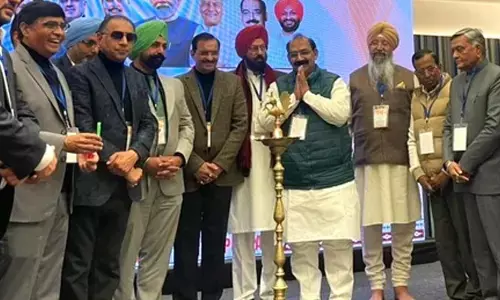
The Telangana Science Congress, hosted recently by the Telangana Academy of Sciences (TAS) at Kakatiya University, marks a pivotal moment. Originally founded as the Andhra Pradesh Academy of Sciences in 1963, this Congress must go beyond ceremony to catalyse systemic reform. TAS’s mandate is clear: foster scientific temper and advance original research. Yet today, superstition and irrationality persist across educational and research institutions, often with tacit acceptance.
India’s Constitution enshrines scientific temper as a fundamental duty (Article 51A(h)), and our history is rich with institutions committed to this ethos—from the Indian Academy of Sciences (1934) to Vigyan Prasar and the People’s Science Network. Yet many educated citizens remain unfamiliar with core scientific principles like falsifiability, reproducibility, and evidence-based reasoning. The prevalence of occult beliefs, black magic-linked crimes, and fraudulent godmen reflects systemic failures in science education—not just individual lapses.
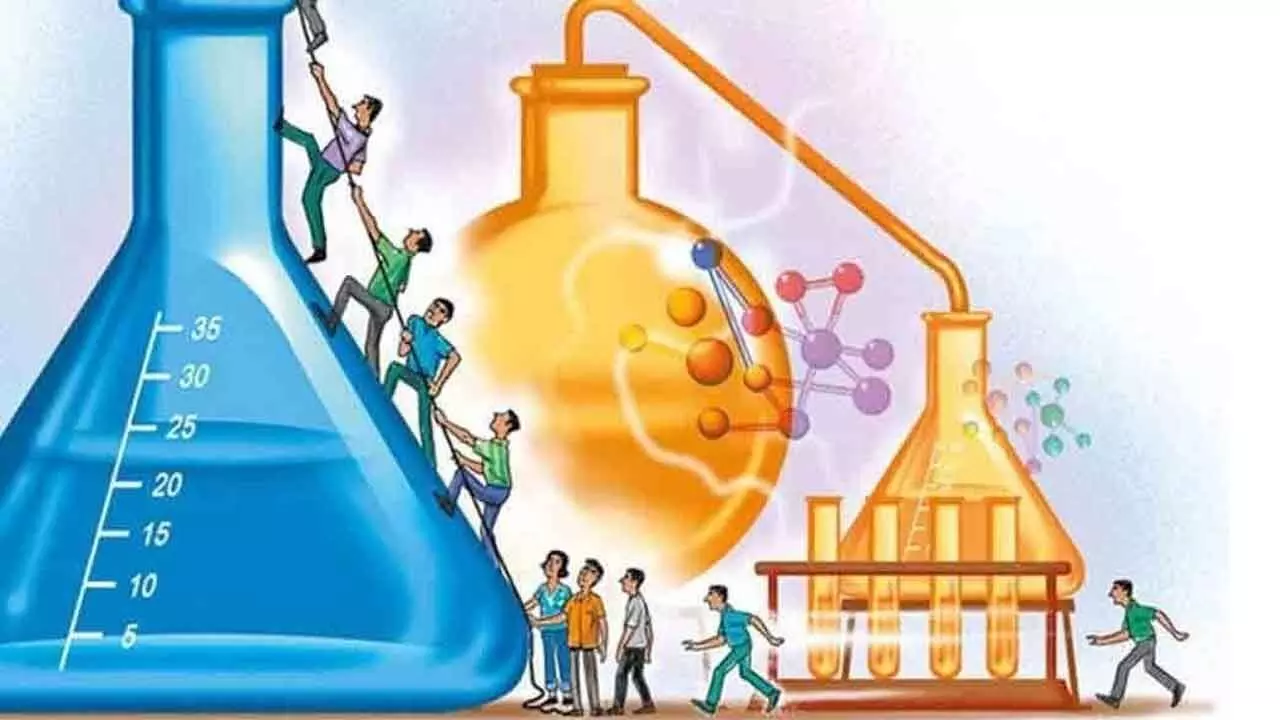
Schools should be the crucibles of scientific inquiry but many function as certificate factories. In the two Telugu states, an exam-centric marketplace has eclipsed authentic learning. Science education has shrunk to memorizing formulae and mastering MCQ strategies. We celebrate IIT and IAS ranks but ignore the erosion of conceptual understanding and scientific values.
The consequences are stark. A 2017 IIT Bombay review found many top-ranked entrants struggling with basic physics and math. IIT Delhi’s former director lamented students’ lack of independent thinking. At IIT Hyderabad, a 2021 survey revealed that first-year students could not perform unscripted experiments. The dropout rates and industry feedback across the nation point to a system that rewards speed and tricks over reasoning and problem-solving.
Globally, science academies have responded with bold reforms. The Royal Society (UK) and the US National Academy of Sciences have reoriented science education around inquiry, modelling, and argument from evidence. Germany’s Leopoldina invests in sustained teacher development. India’s own academies have defended research integrity and warned against predatory publishing. These institutions align curriculum, assessment, teacher learning, and research culture with ethics and inquiry.
The Telugu region has its own legacy of science popularisation. Osmania University and RR Labs (now IICT) contributed significantly. P M Bhargava, founding director of CCMB, along with leaders such as Satish Dhawan, founded the Society for the Promotion of Scientific Temper nationally and the Society for Communicating Science in Hyderabad, organizing impactful programs. Bhargava—credited, along with D D Kosambi, with helping shape the constitutional emphasis on scientific temper—famously wrote in Angels, Devil and Science that even India’s scientific community often lacks a scientific outlook.
His declaration for membership in the Society stated: “I believe that knowledge acquisition happens only through human effort, and all problems must be faced with human ethical and intellectual resources without relying on supernatural powers.”
Many scientists then were unwilling to sign—an unease that, arguably, still lingers. Ironically, the same Hyderabad that once championed scientific temper has become a hub of exam coaching, rote-driven corporate education, and dubious journals. Purposeful research in universities is rare; school and college laboratories are often on paper only.
In public life, evidence-based reasoning is scarce, critical thinking and questioning are subdued, and manufactured consent thrives on social media. Education is reduced to markets and metrics; historical memory fades; and imported ignorance erodes rights and institutions.
To reverse this decline, TAS must play a pivotal role in driving a genuine paradigm shift in science education.
As a means to catalyse a genuine paradigm shift in science education, it must assume a proactive and strategic role—pressuring institutions, influencing policy, and modelling reform. It should insist that 25–40 per cent of curriculum time from middle school to undergraduate levels should be reserved for authentic laboratory and field investigations apart from fostering practical education with open-ended problems that cultivate inquiry and reasoning. Assessment systems must be overhauled to prioritise understanding across segments. TAS can lead pilot programs in collaboration with SCERT, school boards, and universities to demonstrate feasibility and impact of such reforms.
To professionalise teaching, TAS should launch a year-long and all-encompassing science teachers fellowship, including spreading its reach to the district-level.
There is a need for a phased increase in education funding, urging the government to move toward global benchmarks and prioritise teacher development and laboratory infrastructure over superficial construction.
TAS should demand that AI be used as a thinking partner in classrooms—requiring students to critique model outputs, justify reasoning, and revise based on evidence. TAS must push for the replacement of answer-only submissions with annotated notebooks.
Beyond the classroom, TAS must engage the public to strengthen scientific temper. It should host regular town halls on pseudoscience and data literacy, featuring citizen experiments that invite community participation. Science communication bootcamps must be offered to help teachers and students translate research for lay audiences, bridging the gap between academic knowledge and public understanding.
These are not optional enhancements—they are urgent interventions. TAS must move beyond its ceremonial role and become a catalyst that rewires incentives, practices, and culture across the education ecosystem.
By setting bold but workable standards and relentlessly advocating for reform, TAS can help Telangana transition from rote to reason, from performativity to practice, and from fear of being wrong to the courage to learn.
(The writer is a Chemistry lecturer and General Secretary of Society for Change in Education Telangana)