Indraprastha is welcome but Dakshinprastha also essential

Hyderabad and Amaravati deserve a look in
The debate around renaming Delhi as Indraprastha may resonate with civilisational pride, but symbolism cannot erase structural vulnerabilities. A new name does not clean the air, reduce emissions, or make the city fit for human life. Delhi’s crisis demands not nostalgia but national foresight — and perhaps a new administrative future in the form of Dakshinprastha, a southern capital built on climate resilience.
Pollution as a structural crisis
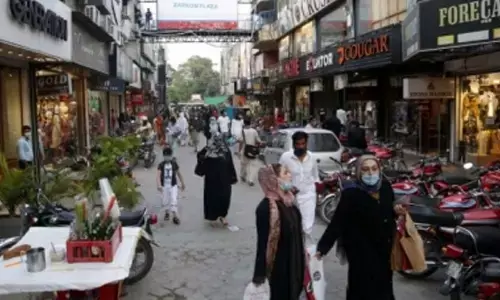
Delhi’s struggle is not temporary. Even the Supreme Court has termed the air “hazardous,” questioning whether masks offer any real protection. No capital can function effectively when its ecological baseline itself is hostile to life.
Judiciary sounds the alarm
The crisis has reached the courtroom. The Chief Justice of India, Surya Kant, has publicly expressed alarm about the deteriorating air quality after reporting health discomfort during a morning walk.
In recent hearings, Justice P S Narasimha cautioned that masks alone “may not be enough” and urged advocates to use virtual hearings where possible, warning of potential long-term damage from sustained exposure. The bench has signalled that ad-hoc judicial interventions cannot substitute for comprehensive policy action.
Historical global lessons
The idea of relocating capitals is neither new nor radical. Nations around the world have made bold choices, including Brazil, Nigeria and Kazakhstan. India, too, relocated its capital from Kolkata to Delhi in 1911. Historically, the Mughals, Marathas, Cholas, and Vijayanagara rulers shifted capitals for political, environmental, and strategic reasons.
In this context, imagining an alternative capital for modern India is not unprecedented — it is overdue.
Ambedkar’s forgotten vision-Dakshinprastha
Dr B R Ambedkar argued unequivocally for Hyderabad as India’s second capital. He believed Hyderabad’s geopolitical centrality, cosmopolitan character, and administrative infrastructure made it ideal for national governance. His proposal envisioned power shared more evenly across regions, preventing excessive concentration in the North. Ambedkar’s insight, overlooked for decades, resonates sharply today when environmental pressures call for diversification of administrative centres.
Dakshinprastha is not merely a city; it is a forward-looking idea that proposes a southern capital consciously designed around environmental resilience, strategic location, and equitable federalism. Unlike Indraprastha, rooted in legend, Dakshinprastha is an imagination of the future, built for a climate-challenged century. An administrative centre in the south, either permanent, seasonal, or hybrid, can ensure uninterrupted governance during Delhi’s annual environmental breakdowns.
Hyderabad, Amaravati and Donakonda
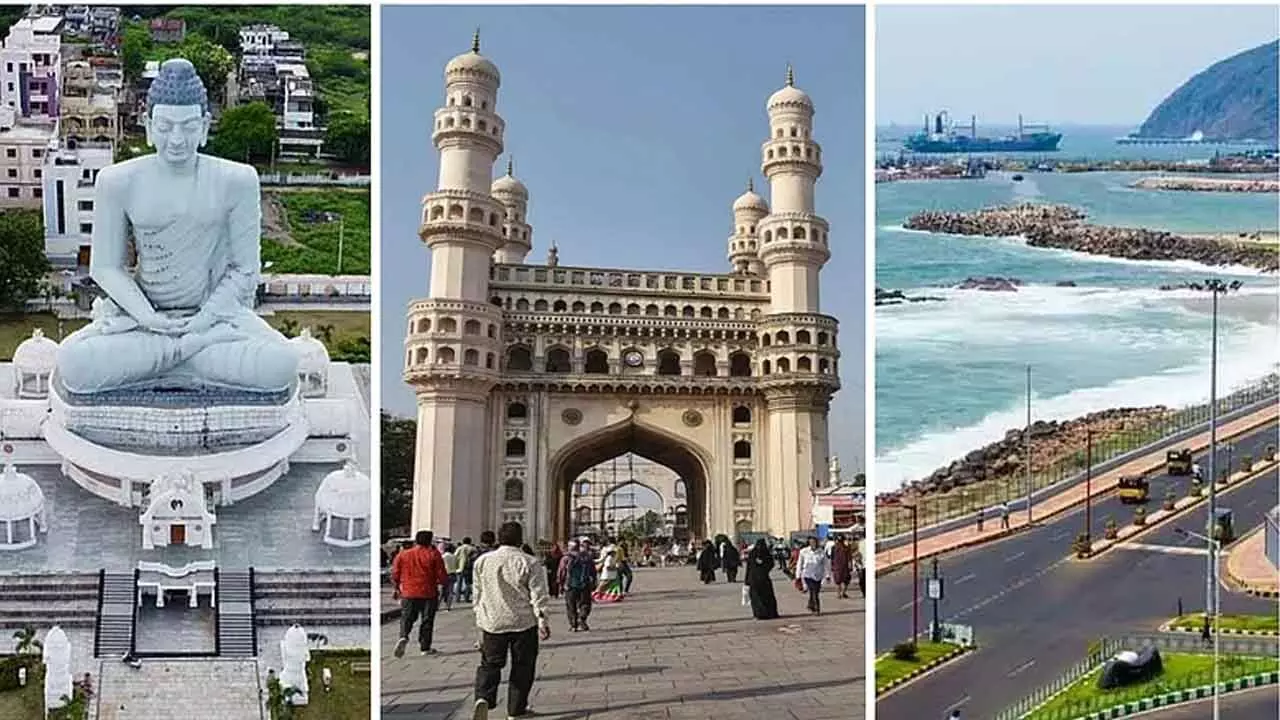
Hyderabad remains among the strongest candidates. Its central location, well-developed infrastructure, technology ecosystem, and stable climate make it a serious contender. The city’s rich multicultural fabric and administrative depth provide a foundation for a federal enclave. Reviving Ambedkar’s proposal today would not merely honour history — it would align with environmental, geopolitical, and administrative logic.
Andhra Pradesh holds extraordinary potential. With Amaravati still in the evolving stage, Chief Minister N Chandrababu Naidu has a once-in-a-century opportunity. If Amaravati is executed with global standards in sustainability, mobility, and governance architecture, it can serve dual missions: the capital of Andhra Pradesh and a future national administrative centre. This dual-purpose model could become one of India’s most ambitious urban projects since Chandigarh.
Besides, Donakonda in Andhra Pradesh, with vast tracts of government land and greenfield potential, is another remarkable option. Both Telangana and Andhra Pradesh stand at the threshold of unprecedented national relevance. Their ability to articulate a forward-looking proposal could shape India’s administrative geography for the next century.
Beyond Telugu states
Tamil Nadu presents strong candidates such as Coimbatore and Tiruchirapalli. Coimbatore’s enviable air quality, industrial diversity, and excellent connectivity offer a stable foundation for a federal administrative enclave. Tiruchirapalli can also support a sustainable administrative ecosystem with long-term environmental stability.
Karnataka, too, is well-positioned. Bengaluru, despite congestion issues, is India’s technology capital and hosts countless national institutions. With targeted planning — such as developing a dedicated administrative zone — it could become a viable seasonal capital. Mysuru, with its clean environment, cultural heritage, and long-standing administrative culture, stands out as one of the most balanced options in southern India.
Kerala may not be the first state that comes to mind, but Thiruvananthapuram offers something few cities do: a well-educated workforce, research institutions, and low pollution levels. Its coastal winds provide natural ventilation, making it resilient to winter pollution cycles. Kochi, as an emerging maritime and logistics hub with modern infrastructure, also presents a compelling long-term possibility.
The way forward: A federal corrective
A southern capital would not diminish Delhi; it would relieve it, allowing the NCR to rebuild sustainably. It would also recalibrate India’s federal balance, ensuring that national power is not geographically confined. The shift would symbolise India’s transition from a centralised colonial-era legacy to a distributed, climate-conscious administrative model.
The Union Government could adopt a two-track approach. First, appoint a committee of senior civil servants, architects, environmental scientists, and planners to study potential locations based on climate resilience, geography, infrastructure, and strategic concerns. Second, convene a committee of Chief Ministers to evaluate the findings and build consensus through cooperative federalism. Relocation need not be abrupt. A phased, hybrid model like South Africa’s multi-capital system could ensure smooth transition.
A capital city, in the Indian civilizational imagination, is not merely an administrative centre but a moral commitment.
Delhi’s worsening ecological distress challenges this foundational ethic. A climate-resilient Dakshinprastha, therefore, is not just a technocratic idea but a return to this civilizational duty: a capital designed to safeguard health, nurture happiness, and secure prosperity for the generations to come. In this sense, the shift is not a rejection of heritage but a reaffirmation of India’s deepest ethical tradition.
Renaming Delhi as Indraprastha may honour ancient memory, but it does not secure the future. India faces a choice between symbolism and survival. A capital that struggles to protect its residents from toxic air cannot safeguard the nation’s long-term governance needs.
India deserves a capital built for the next hundred years — a capital that breathes, that represents climate wisdom, and that strengthens federal unity. That capital is Dakshinprastha.
(The writer is Assistant Professor, Department of Sociology, Banaras Hindu University, Varanasi)