Operation Sindoor tests Bharat’s strategic doctrine at its core


We had the Pakistani Army by their nose—and the squeeze was getting tighter. Just when they were about to scream, Bharat loosened the grip. That, in a nutshell, is how one can describe the less-than-a-week-long Bharat-Pakistan standoff. While New Delhi has clearly won on the military front, the neighbour walked away with a win in the battle of narratives.
Now, the question on everyone’s mind is: why didn’t we go the full distance in this conflict? Bharat had an all-around advantage. Very early into the standoff, we had already established military and strategic superiority—be it in tactics, resources, or the pace of escalation.
Pakistan had nothing going for it. Internationally, it stood isolated. Except for China and Turkey, no country even bothered to show up for them. Its military leadership was reportedly resorting to reading the Kalama from the Quran to boost troop morale. Its economy has become a global case study in what not to do. Its political class is fractured, and it faces a looming breakup on its western front with Balochistan and Khyber Pakhtunkhwa boiling. And yet—we let it slip away.
The real question is: does New Delhi know something that the public—and most commentators—don’t? Time will tell. For now, let’s focus on what Bharat gained from the conflict.
Why is a ceasefire always untenable?
In simple terms, a ceasefire happens when both sides in a conflict agree to stop fighting, usually after signing some sort of agreement.
In the ongoing Operation Sindoor, Bharat and Pakistan haven’t signed any formal agreement. What they’ve agreed to—over a phone call between the Director Generals of Military Operations (DGMOs) of both nations—is simply to pause military action. Thus, this doesn’t mean peace has been achieved—it just means that they’re hitting pause while waiting for negotiations to start.
Military history shows that during the pause, warring sides generally use it to reassess their positions, stock up on supplies, review their strategies, and basically prepare for what might come next. It’s also a phase when the weaker side often tries to regroup and, in some cases, breaks the ceasefire, hoping to gain a quick military advantage that can be used as leverage in negotiations.
That’s why, in many conflicts, the cycle keeps repeating itself until one side is completely defeated or wiped out. Only then do serious negotiations or a peace treaty have a chance to hold.
This has been the pattern in most global conflicts. Take the ongoing Russia-Ukraine war, for instance—over a dozen ceasefire attempts have been announced since 2022, especially for humanitarian corridors, and almost every single one has been violated within hours or days. The same has been witnessed in the Israel-Hamas conflict, where ceasefires are frequently declared and just as frequently broken.
Coming to the Bharat-Pakistan context, the story is no different. There has been a consistent pattern of ceasefire violations in the past decades, from the Pakistani side along the Line of Control (LoC), often as a cover to push in terrorists and jihadists. Given this history, it should come as no surprise if the latest ceasefire, which the Foreign Secretary Vikram Misri referred to as “understanding”, also fails to hold.
The war of narrative:
Throughout Operation Sindoor, Pakistan was ahead in the war of narratives - its Prime Minister, Defence Minister, military commanders, and parliamentarians all peddled fake news. Their storyline was that Pakistan stood up to a militarily superior Bharat despite its limited resources. In contrast, New Delhi maintained a professional, restrained approach. Many felt that we deliberately downplayed our battlefield successes. As a result, Pakistan, its allies, and a section of Bharat’s internal enemies will spin the ceasefire—either as a victory for Islamabad or as a stalemate- to argue that New Delhi failed to achieve a decisive win despite overwhelming resources.
What did Bharat gain from the conflict?
Though Operation Sindoor was launched to avenge the killing of innocent tourists—and it delivered on that front—the real gain was far broader and deeper. Bharat walked away from this conflict with three significant takeaways that will shape its journey to becoming a global power. Our civil-military leadership, strategic thinkers, and intelligence community have been sharpening their doctrines for a much larger adversary—China. This brief military standoff has helped Bharat in three vital areas to rethink, refine, and reinforce its future strategy.
New Delhi tested its military doctrines:
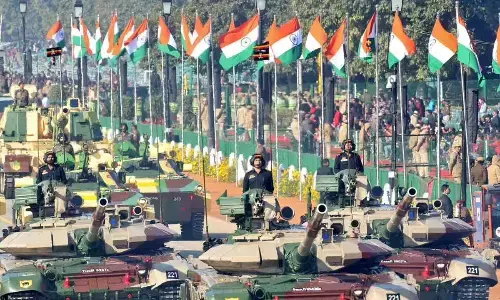
Bharat had a rare opportunity to test the effectiveness of its military doctrine, battlefield tactics, and training practices under real combat conditions. This was also the first time the theatre command structure under the Chief of Defence Staff (CDS) was implemented in a live operational scenario—an invaluable experience.
We saw how Make in India’s defence assets held up in actual combat. The ability to deploy integrated weapon systems from diverse sources (both domestic and foreign) was put to the test—and delivered.
Tested geopolitical matrix:
Geopolitically, this conflict served as a litmus test for our diplomatic relationships. While there was limited communication from the EU, QUAD, or other global partnerships we’ve cultivated since PM Modi took office, this silence was itself revealing. It has likely given the MEA and PMO a clearer understanding of where Bharat truly stands in the global diplomatic matrix. These insights will be crucial in recalibrating our future foreign policy and strategic alignments.
Preparing intelligence for the future:
For our intelligence agencies, this operation was a field test. Every target hit by our military was pre-identified by our intelligence network—something that is only possible when the groundwork has been meticulous. This conflict gave our intelligence community the chance to verify source credibility, refine networks, and eliminate dead weight. This cleansing will serve us well in future operations.
Strategic and perception gains:
Let Pakistan make all the noise it wants. Let it crow about a “victory” in front of its own citizens or international media houses willing to echo its tune.
The reality is this: Bharat’s response, doctrine, and the civil-military leadership model during the conflict will be dissected threadbare by both adversaries and allies. This is where Bharat’s image will be forged—not in TV studios, not on social media, not through hashtags, but in the strategic war rooms of the world.
This less-than-week-long conflict will become a case study in professional military forums, among generals, strategic analysts, and global war colleges. There, Bharat will be assessed and respected as a military power—not just an economic one.
That’s where the true recognition of Bharat’s modern military superiority—its tactics, command structures, and resource application—will be born. That’s where it will be feared by adversaries and admired by allies.
Next Story