Resurrection of extinct species; The way forward

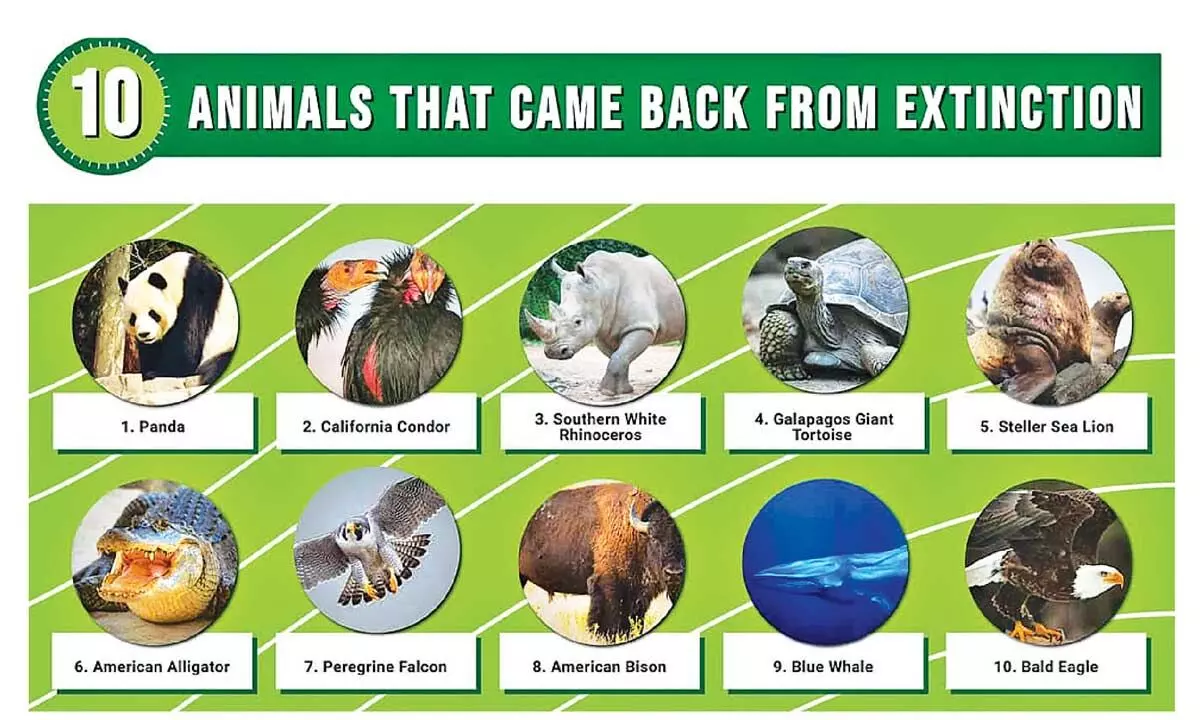
India primarily focused on reintroduction of Asiatic Cheetah, which was declared extinct in 1952
De-extinction measures would initially be necessary to reintroduce a species into the ecosystem - till the revived population can sustain itself in the wild. This reintroduction could improve the ecosystem which has been destroyed by human development
Resurrection, generally known as de-extinction of animal species, reverses their extinction, by creating new versions of lost species, with a goal to create functional equivalents of extinct species, resulting in ecological enrichment, restoring biodiversity, to produce healthy ecosystems and restoring ecosystem functions lost through extinction. To put it simply resurrection science aims to one day literally revive, now-extinct species from the dead.
How does it work?
It works using mainly three technologies viz cloning, genome editing and back breeding. Cloning involves, extracting DNA from preserved remains of an extinct species - as fossils or museum specimens, and inserting it into the egg cells of a closely related species. This so modified embryo is then transplanted into a surrogate mother, which gives birth to an organism genetically identical to the extinct species.
Genome editing has been the advancing technique with the help of Clustered Regularly Interspaced Short Palindromic Repeats (CRISPR) to alter the DNA of living species by introducing genes from an extinct species. Back breeding involves breeding animals for an external characteristic that may not be seen throughout the species. This method can recreate the traits of the extinct species.
Species for resurrection:
There are some of the creatures that researchers are trying to bring back them to life and one they have already revived.
1. Dire wolf: The first animal to have been successfully resurrected, was announced by George Church, founder of Colossal Biosciences, Laboratories, USA in April 2025. It announced the successful birth of three dire wolf pups. This groundbreaking achievement established Dire Wolves as the first successfully de-extinct species - a historic milestone in conservation science. The researchers obtained genetic material from dire wolf fossils, including a 13,000- year-old tooth and a 72,000-year-old skull. From these remains, scientists sequenced and deciphered the dire wolf genome (complete set of DNA).
Later, using CRISPR genome editing, George Church edited living cells from modern Grey Wolf (dire wolf's closest living relative), to carry dire wolf genes. Subsequently, by applying CRISPR gene editing installed dire wolf variant. These edited cells were used to create embryos through cloning techniques - Somatic Cell Nuclear Transfer, replacing the genetic material in donor egg cells, with the edited dire wolf DNA. The viable embryos were implanted into domestic dog surrogates, resulting in the birth of three healthy dire wolf pups; two males (Romulus and Remus) and one female (Khaleesi).
These pups already exhibit classic dire wolf traits - thick white fur, broad heads and hefty builds-and display wild lupine instinct unlike domestic dogs. This initiative strictly adhered to IUCN guidelines on creating proxies of extinct species for conservation benefits.
•Other species: George Church asserts that another disruptive conservation project aims to introduce Woolly mammoth gene into Asiatic elephant for conservation purpose as a prime example. There is possibility that species like Woolly mammoth, Passenger pigeon, Dodo, Quagga and Aurochs etc, with well-preserved DNA samples available, might once again be seen roaming freely upon our planet.
De-extinction in India:
The de-extinction efforts in India are primarily focused on reintroduction of Asiatic Cheetah which was declared extinct in 1952. While there are no other projects explicitly targeting the resurrection of extinct species using advanced technology like CRISPR. The possibility is being explored particularly in the context of the Lazarus project, which collaborates with Indian researchers on reviving the extinct Himalayan quail using DNA from museum specimens.
De-extinction and conservation:
Conservationists frame de-extinction as 'deep ecological enrichment' or restoring ecosystem functions lost, through extinction. Because releasing resurrected animals into suitable habitats increases biodiversity and ecosystem resilience.
For instance, Woolly mammoths were the dominant herbivores of 'mammoth steppe' in the far north, once the largest biome on Earth. In their absence, the grasslands they helped sustain were replaced by species poor tundra and boreal forest. Their return to the north world bring back carbon- fixing grass and reduce greenhouse gas releasing tundra thus combating climate change. Similarly, the European aurochs (extinct since 1627) helped to keep forests across all of Europe and Asia mixed with biodiverse meadows and grasslands.
De-extinction measures would initially be necessary to reintroduce a species into the ecosystem - till the revived population can sustain itself in the wild. This reintroduction could improve the ecosystem which has been destroyed by human development.
Advantages of de-extinction:
Development of technologies for de-extinction could lead to large advances in genetic technologies - used to improve cloning process for de-extinction and thereby preventing endangered species from becoming extinct; Cure to diseases could be discovered, by studying revived previously extinct species; Revived species may support conservation initiatives by acting as 'flagship species' to generate public enthusiasm for conserving entire ecosystem.
De-extinction has helped fuel important progress in science, particularly in development biology and genetics. It has also generated interest in endangered species with many of the tools of de-extinction also being applicable to conservation of endangered species. The reconstruction of extinct genes could be used, to restore genetic diversity in threatened species.
Disadvantages:
The reintroduction of the resurrected species could have negative impact on existing species and ecosystem as these may act as invasive species there. In addition, the environment they are introduced could be not suitable for them to survive.
Ethical ramifications:
These are powerful technologies with significant ramifications. The de-extinction provides an opportunity for humans to rectify past harms inflicted on other species. But many extinct species were driven out of existence due to habitat loss- resulting in dramatic alteration. In addition, the resurrected species would be considered endangered and would require proper conservation. Further concerns could be, whether the resurrected species would be able to adapt to the current environmental conditions and whether they would be able to produce viable offsprings.
De-extinction is a powerful tool and not a substitute for current conservation efforts. It could be a way to potentially repair damaged ecosystems by reintroducing species with crucial ecological roles. It can help restore the lost biodiversity and improve damaged ecosystems. It may be a complement to, the ongoing imperative to prevent further species loss and conserve our planet's remaining biodiversity. We need to further a robust scientific evaluation of de-extinction to ensure this powerful technology is used for the greater betterment of the planet's ecosystems and, in turn, the world in its entirety.
(The writer is a retired IFS officer based in Hanumakonda)