The placebo effect of clichés
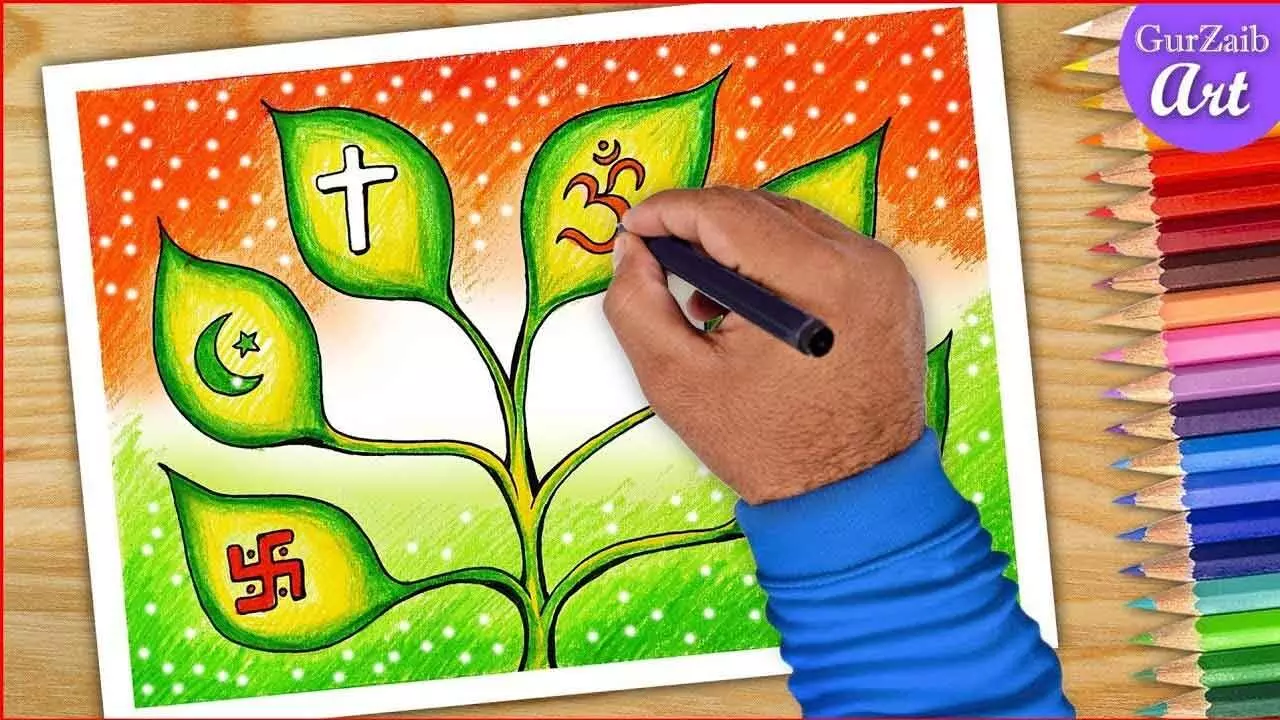
Take for instance, the expression ‘unity in diversity’, often used to describe the mind-boggling number of religions, races, creed, languages, and cultures that India is home to. From the Union Cabinet to the country‘s cricket team, through such diverse realms of human endeavour, as the movie world, one sees a most gratifying, and rich, harmony and seamless coexistence of these factors. Far from being barriers, that divide people into silos, they have, in the case of India, at least until recently, served as mutually reinforcing and complementary fibres, which, when woven together, present the single, and strong, fabric that is India.
The commitment of the Indian psyche to a secular way of life is vividly reflected in the lyrics of the song - “Tu hindu banega na Musalaman banegaa, Insaan ki aulad hai insaan banega” penned by the inimitable Sahir Ludhianvi from the 1959 movie, ‘Dhool ka Phool’.
A sentiment whose mood is reiterated in the lyrics of another memorable song from the Hindi movie, ‘Chaliya’ of 1960 vintage, the lyrics of which this time the lyricist being another all-time favourite of the Hindi movie aficionados, Qamar Jalalabadi. And the words go, “……… Hindu, Muslim, Sikh, Isai Sabko Mera Salaam.”
Much berated though they are, as cynical descriptions of worn out, and over used, expressions that betray lack of original thought, clichés remain treasure houses, of distilled wisdom and experience.
Take for instance, the expression ‘unity in diversity’, often used to describe the mind-boggling number of religions, races, creed, languages, and cultures that India is home to. From the Union Cabinet to the country‘s cricket team, through such diverse realms of human endeavour, as the movie world, one sees a most gratifying, and rich, harmony and seamless coexistence of these factors.
Far from being barriers, that divide people into silos, they have, in the case of India, at least until recently, served as mutually reinforcing and complementary fibres, which, when woven together, present the single, and strong, fabric that is India.
In the case of India’s freedom movement, for example, it was Annie Besant, a Christian, British socialist and women’s rights and Home Rule activist, who became the first female President of the Indian National Congress in 1917. When the Constitution of India was being written, the Chairman of the drafting committee of that historic document was Dr. B.R. Ambedkar, not only a Hindu by birth who embraced Buddhism, but also hailing from a so called ‘untouchable’ caste.
Then the country had Zakir Hussain, the first Muslim to become the President of India. And, many years later Giani Zail Singh, had the honour of becoming the first person, from the Sikh community, to adorn the highest office of the country.
The role played by General Sam Manekshaw, a Parsi, and the officer of the Indian Army to achieve the rank of Field Marshal, whose spectacular role in the historic Indo-Pakistan war in 1971, which led to the formation of Bangladesh, will remain forever, etched in golden letters, in the history of our country.
Turning to the arena of sports and games, who can forget the ever smiling, perfect Hyderabadi gentleman, the legendary Ghulam Ahmed, who led the Indian cricket team with grace and charm? Incidentally, it was Ghulam Saab, my hero worship of whom, led to my being unable turn down a request from him, to become the President of Hyderabad Cricket Association.
Equally unforgettable were the swashbuckling buckling and debonair Mushtaq Ali, whose exploits as a batsman had the country enthralled and the ‘Barkis is willing’ type Roger Binny, who was willing to bat, bowl or field and be the Captain’s Man Friday at all time
Likewise, when we turn to tennis, we had the star from Hyderabad, Ghouse Mohammed Khan, a Muslim, and the first Indian to reach the quarterfinals at Wimbledon in 1939. The game also saw the memorable exploits of the father and son combination, Ramanathan Krishnan and Ramesh Krishnan
While the father rose to the World Number 3 status in tennis and was the first Indian ever to reach the semifinals in Wimbledon, the son proved to be a worthy chip of the old block by winning both the Wimbledon and the French Open tennis titles at the junior level and was India’s Davis cup Captain subsequently.
And Vijay Amritraj, a Christian, honoured with the Padmashri award and inducted into the International Tennis Hall of Fame in Rhode Island. His brilliant career included leading the India squad to the final of the Davis Cup in 1974 and 1987 and tea the quarter-finals of the US open and Wimbledon tournaments in 1973. When I learnt to play the game for a short while, I remember the excellent training imparted by Farkhunda Ali Khan tennis coach at the Lady Hydari Club in Hyderabad in the 1960s.
The movie field is another area where all identities relating to a faith, region or culture are totally relegated to the background. In the days when the Hindi cinema was in its infancy, stalwart artists, such as Dilip Kumar (Muhammad Yusuf Khan), Raj Kapoor, Ashok Kumar, Madhubala (Mumtaz Jehan Begum Dehlavi), Nargis and Meena Kumari (Mahjabeen Bano) dominated ‘Bollywood’, Other actors of later eras included the world famous Amitabh Bachchan or ‘Big B’, Dev Anand, Manoj Kumar, Dharmendra, Rajesh Khanna and John Abraham.
Those who played the roles of villains include the unforgettable Pran and other talented actors such as Amrish Puri, Amjad Khan and K.N. Singh. Comedians like the inimitable Johnny Walker (Badruddin Jamaluddin Kazi), and Om Prakash will forever remain fresh in the memories of film lovers.
So will some of the greatest script writers of all time, such as Wajahat Mirza, K.A. Abbas, Gulshan Nanda and Gulzar. And lyricists par excellence such as Hasrat Jaipuri, Sahir Ludhaianvi and Majnu Sultanpuri. Bollywood also boasts of a galaxy of crooners whose melodious voices will bring happiness to music lovers,.
The glittering array includes the ever green K.L. Sehgal, Pankaj Mullick, Mohammed Rafi, Mukesh and Kishore Kumar, and the unforgettable ‘Bharat Ratna’, Lata Mangeshkar (whose deeply moving rendition of ‘ ai mere watan ke logon’ once famously made Jawaharlal Nehru burst into tears, Asha Bhosle and Geeta Dutt, So will the lilting melodies composed by all-time grades such as the C. Ramchand, Shankar - Jai Kishen duo, Laxmikant – Pyare Lal duo, Naushad, and Madan Mohan. People such as Amitabh Bachchan, Vinod Khanna, Sunil Dutt, ‘Dream Girl’ Hema Malini and Jayaprada entered the field of politics and made a name for themselves.
While, in the initial days, Bollywood was the cradle of the movie industry, it is in the Southern states, such as Tamil Nadu, Kerala, Karnataka and Andhra Pradesh, that it flourished subsequently and blossomed into a major industry. Historical figures, such as M.G. Ramachandran, Jayalalitha, N.T. Rama Rao and Rajkumar, strode like colossuses across the movie field and carved out a permanent niche for themselves in the history of the country, both in the movie field and in politics.
So much is a secular approach, a part of the Indian way of life, that even the celebrated Amitabh Bachchan begins his legendary ‘ Kaun Banega Crorepati’ show with a set of welcome expressions that includes a good evening, a namastey, a vanakkam , a sat sri akal and an aadab arz hai! The city in which I live, Hyderabad is a classic example of the secular spirit of India, which we have been discussing.
So much so that it has been said that the city is the paradise for a person who loves celebrations. Come the annual festivals of Diwali, Christmas, and Ramzan, Hindus, Muslims, and Christians join in the celebration of the festivals with a sense of togetherness which is so touching as to bring tears to one’s eyes. So strong and determined are the people to celebrate that someone was constrained to the mark that if one lives in Hyderabad it is difficult to find a day on which one can go to work!
(The writer was formerly Chief Secretary, Government of Andhra Pradesh) w