Building inclusive futures in higher education

A five-day workshop explores strategies for accessibility, equity, and digital integration in South Asia’s academic landscape
A five-day “Train the Trainer Workshop for Inclusive Higher Education” was conducted under the EU-funded Project AIDEdu at Birla Institute of Management Technology (BIMTECH), bringing together participants from Spain, Austria, Latvia, Nepal, and India. The programme sought to strengthen understanding, strategies, and practical tools to advance inclusivity and accessibility in higher education, with discussions aligned to the Sustainable Development Goals (SDG) on education, equality, and partnerships.
The workshop explored a wide range of themes. Sessions addressed “Understanding Disability and Inclusion,” “Constitutional Values and Duties for Inclusion,” and the “Convention on the Rights of Persons with Disabilities,” alongside focused discussions on inclusion practices in higher education institutions in India and Nepal. Experts guided participants through strategies for developing inclusive education competencies, designing universally accessible learning models, and harnessing digital platforms to improve equity and participation.
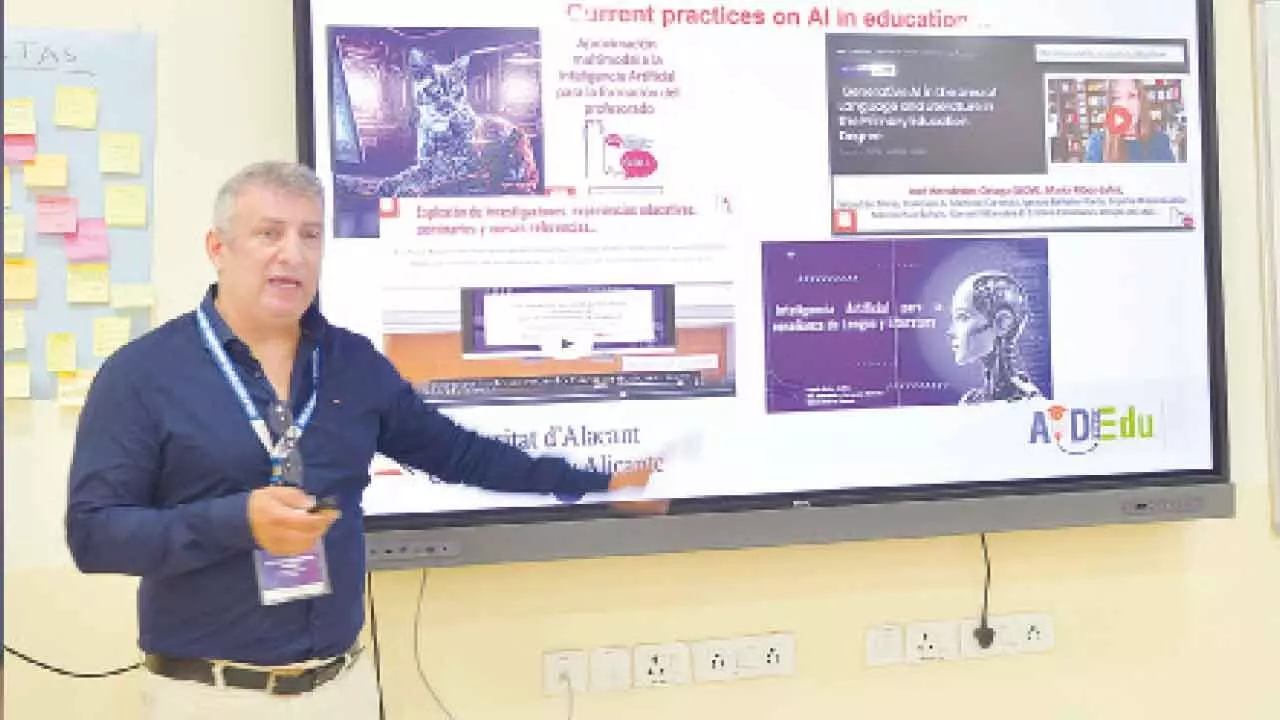
A distinctive feature of the programme was the focus on Universal Design for Learning (UDL). Facilitators highlighted how UDL principles can be contextualized in South Asian higher education systems to provide equitable access to students from diverse backgrounds. In addition, a dedicated session on Generative AI in teaching and learning examined how new technologies can be applied responsibly to enhance inclusion, accessibility, and student engagement.
Learning from international examples played a key role in the workshop. Best practices from Spain and other EU countries were presented, prompting discussions on their adaptability within the Indian and Nepali academic contexts.
The workshop also highlighted data-driven insights into existing diversity, equity, and accessibility conditions in higher education, underscoring both challenges and opportunities.
Across five days, the sessions combined conceptual understanding with practical approaches, encouraging collaboration among educators, researchers, and practitioners. By emphasizing capacity building, digital innovation, and the integration of inclusive pedagogical tools, the workshop underscored the importance of reshaping higher education into a more accessible and equitable space for all learners.