Brahmachari Suraj Initiated as Munisri 108 Sayammsagara in a Sacred Digambara Jain Ceremony

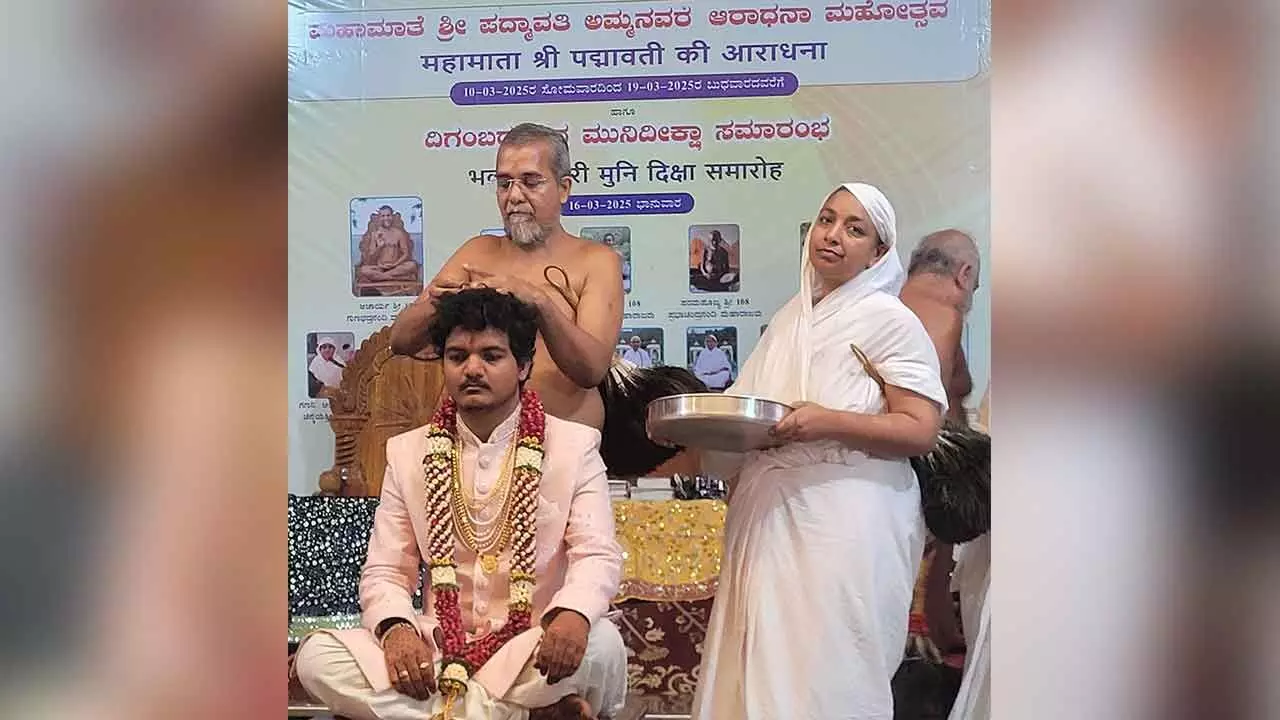
Hombuja (Shivamogga district): In a solemn and spiritually profound ceremony, Brahmachari Suraj embraced full monastic life in the Digambara Jain tradition, taking Muni Deeksha to become Munisri 108 Sayammsagara. The sacred initiation was performed by Munisri 108 Kunthusagara Maharaj Ghanadharacharya, with the participation of eminent Jain monks and scholars.
The event was marked by the chanting of Jain Agamic scriptures, symbolizing the transition from a life of worldly existence to one of complete renunciation. The rituals were conducted with meticulous adherence to Digambara Jain traditions, reinforcing the path of absolute detachment, self-discipline, and unwavering spiritual pursuit.
A Historic Moment in Jain Monastic Tradition
The initiation ceremony took place under the auspices of Dr. Devendrakirti Bhattaraka Mahaswamiji of Hombuja, who emphasized the profound significance of Jain asceticism. He elaborated on the spiritual discipline required of Digambara monks, who renounce all material possessions, including clothing, and dedicate themselves entirely to the pursuit of moksha (liberation).
The event was further graced by Swastisri Dharmasena Bhattaraka of Varur and Swastisri Lakshmisena Bhattaraka Swamiji of Kolhapur, alongside a congregation of Jain scholars, ascetics (arjikas), and devotees.
Reflecting on his own spiritual journey, Munisri 108 Kunthusagara recalled his deeksha at the sacred Sri Parshwanatha Tirtha in Hombuja in 1967, a momentous step that laid the foundation for his lifelong dedication to the Digambara order. Now, Brahmachari Suraj, who took preliminary vows as a brahmachari in 2023, has taken the final and most significant step—becoming a Digambara Jain monk.
The Rigorous Path of a Digambara Muni
The Digambara Jain tradition, one of the most austere and ancient ascetic orders, demands complete renunciation of material life. Monks walk barefoot, wear no clothing as a symbol of absolute detachment, and live on alms (gochari), consuming only what is voluntarily offered by householders.
A Digambara Muni follows the five great vows (Mahavratas):
Ahimsa (Non-Violence): Absolute non-harm towards all living beings, even microscopic life.
Satya (Truthfulness): Speaking only the truth and avoiding falsehood in any form.
Asteya (Non-Stealing): Not taking anything that is not willingly given.
Brahmacharya (Celibacy): Complete renunciation of any form of physical attachment.
Aparigraha (Non-Possession): Absolute detachment from worldly possessions, including clothes, shelter, or personal belongings.
The life of a Digambara monk is one of intense meditation, spiritual study, and penance. They do not cook their food, own any material goods, or stay in one place for long periods. Instead, they travel barefoot from village to village, spreading the teachings of Jina Dharma (Jain principles) and guiding devotees on the path of righteousness.
A Life Dedicated to Spiritual Enlightenment and Service
With his initiation, Munisri 108 Sayammsagara has now entered the sacred lineage of Jain ascetics who dedicate their lives to the propagation of ahimsa (non-violence), ethical living, and environmental conservation. As a Digambara monk, he will undertake the noble responsibility of imparting Jain teachings and guiding devotees towards a life of self-purification and spiritual awakening.
At present, there are over 700 Digambara Jain monks across India, upholding the age-old traditions of their faith and inspiring countless followers with their unwavering commitment to spiritual enlightenment.
The deeksha of Munisri 108 Sayammsagara marks not only a personal spiritual milestone but also reinforces the enduring legacy of Jain ascetic traditions that have been preserved for over two millennia.