Farmers in Ballary distressed over falling paddy prices after double crop yield

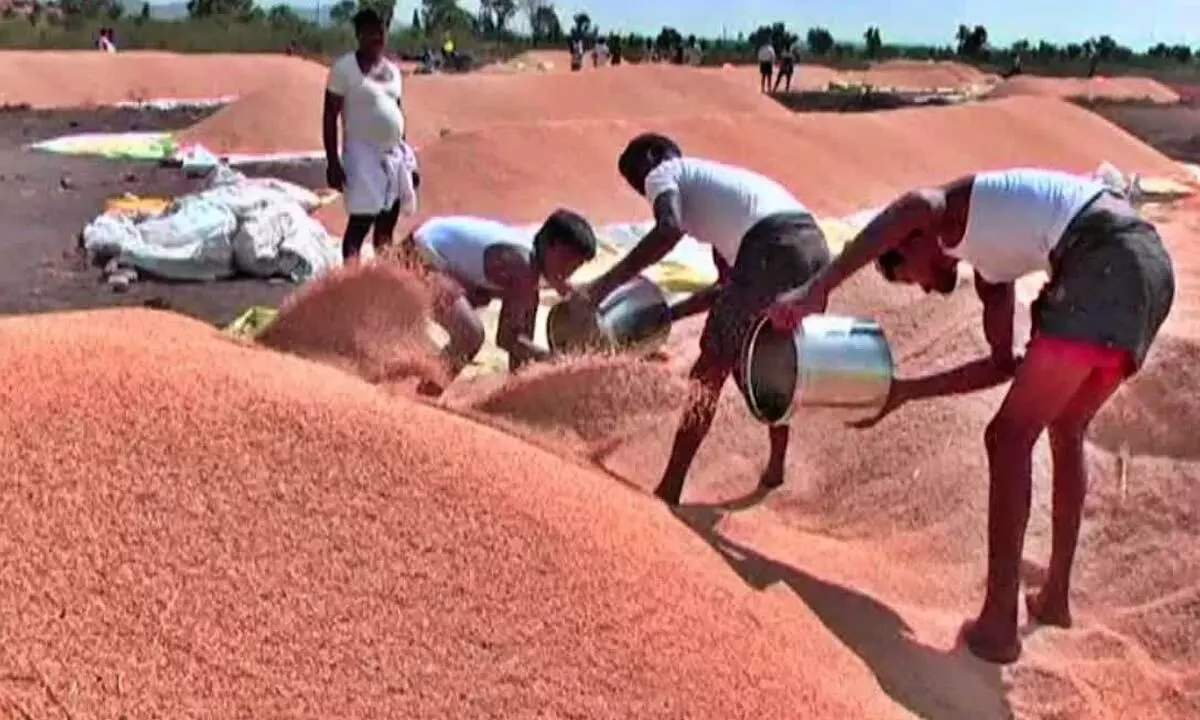
Farmers in Bellary, who initially celebrated the success of their double paddy harvest due to the abundant water supply from the Tungabhadra reservoir, are now facing se-vere disappointment as paddy prices plummet.
Ballari: Farmers in Bellary, who initially celebrated the success of their double paddy harvest due to the abundant water supply from the Tungabhadra reservoir, are now facing se-vere disappointment as paddy prices plummet.
This year, farmers cultivated two crops of paddy, anticipating generous returns for their hard work. However, unfavourable conditions in international export markets and increased imports from neighbouring states have caused a significant drop in pric-es. Last year, farmers harvested a single paddy crop and received favourable market prices. This year, however, those who grew two crops were hopeful for better profits, but the current market conditions have left them anxious and frustrated.
In early March, the price for RNR variety paddy was Rs2,800 per quintal, while Sona Masoori was priced at Rs2,600. Currently, RNR is selling for Rs1,600 per quintal, short RNR at Rs1,550, and Ganga Kaveri at Rs1,400.
The situation has been compounded by U.S. President Donald Trump’s tariff policies, which include a 26% tariff on rice exports from India. Though this tariff has been sus-pended for 90 days, it has already disrupted international rice trade. India’s rice is shipped to many countries, including the U.S., and market analysts believe that the tariffs have negatively impacted the export sector.
The filling of the Tungabhadra reservoir has led to similar crop yields in neighbouring states like Andhra Pradesh and Telangana, increasing rice availability and driving prices down. Farmers are now overwhelmed with excess stock that is flooding the market, causing prices to dip further.
Farmer Hanumanthappa expressed his frustration about the declining support prices for the second crop, stating that farmers are crucial to the nation’s economy but feel neglected by government policies. “The government needs to declare a support price and address the injustices faced by farmers,” he asserted. Another farmer, Sridhar Gowda, lamented that there are no buyers for the crop, which is not even being safe-guarded. With cultivation costs reaching up to Rs35,000 per acre, yielding only 40 bags per acre, he criticized the government’s failure to open purchase centres as promised. “The expected support price was Rs2,300, but now it has decreased by Rs1,000. We are in deep trouble,” he said. As farmers continue to grapple with these challenges, calls for government interven-tion and a fair pricing policy grow louder, emphasizing the urgent need to support those who feed the nation.