Mangaluru Congress Leader Donates Prime Land Worth Over ₹8 Crore for Haj Bhavan

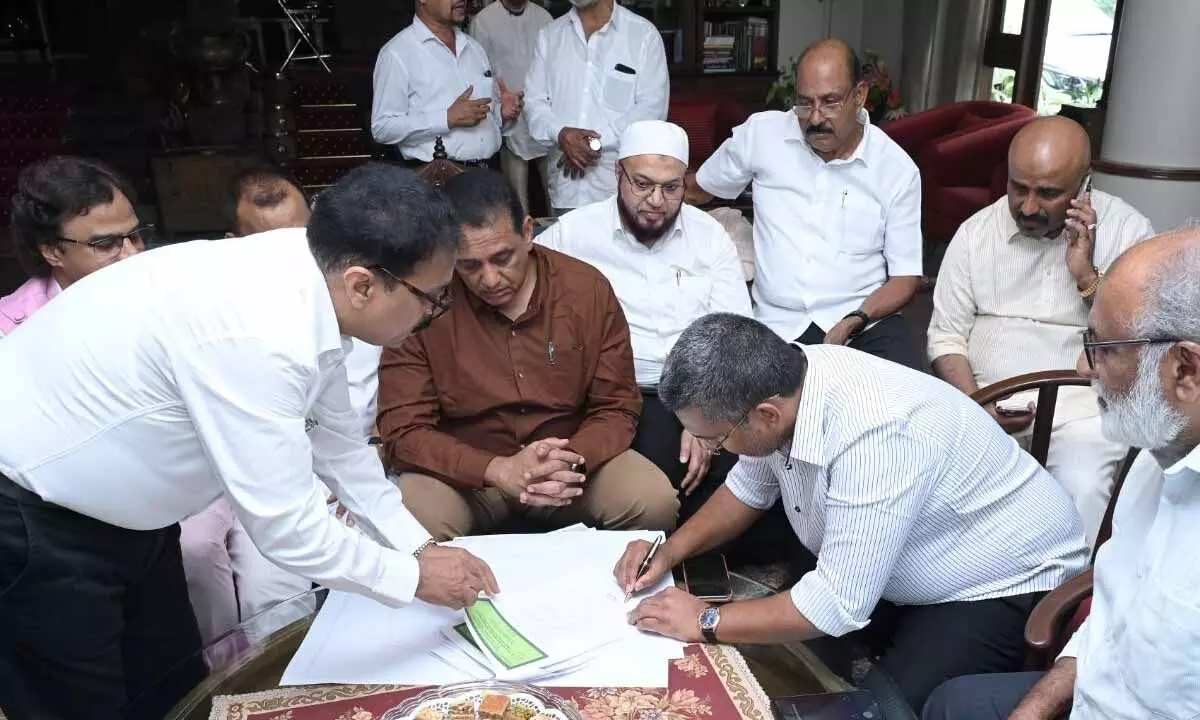
In a significant gesture of philanthropy, senior Congress leader Inayat Ali has donated approximately 1.5 acres of prime land in the heart of Mangaluru city for the construction of a Haj Bhavan.
Mangaluru: In a significant gesture of philanthropy, senior Congress leader Inayat Ali has donated approximately 1.5 acres of prime land in the heart of Mangaluru city for the construction of a Haj Bhavan. The donation was made earlier this week and has drawn attention for both its scale and intent. This development paves a new path for the right understanding of the spirit behind Wakf, just when the country is still debating the Wakf Act which was passed in the Parliament three days back.
The land, located just 1.5 kilometres from the Mangaluru International Airport and adjacent to a major road, is estimated to be worth over ₹8 crore. According to sources, the proposed Haj Bhavan will include a mosque and facilities to assist pilgrims travelling to Mecca, including training and orientation services.
What has particularly drawn public admiration is that Inayat Ali, neither a high-profile industrialist nor a real estate magnate, has relinquished all rights to the donated land. Under Islamic endowment (waqf) principles, once a property is donated, not even the donor—or their descendants—can reclaim or commercially benefit from it.
The development comes at a time when debates surrounding waqf properties have intensified across the country. In recent times, there have been claims that waqf lands were historically acquired from members of other communities or have expanded disproportionately since independence. The donation by Ali has sparked conversations aimed at shedding light on the true nature and spiritual ethos of waqf within the Muslim community.
Waqf, an established tradition in Islamic culture, involves permanently dedicating property for religious or charitable purposes. From prominent businesspersons to ordinary individuals, Muslims have historically donated land for building mosques, madrasas, cemeteries, and other welfare activities. Such donations are believed to bring spiritual benefit to the donor in both this life and the hereafter say elders in the Muslim community on the coast.
Against this backdrop, Inayat Ali’s act stands as an example of the continuity of this centuries-old tradition. His decision has been widely appreciated within the local community, particularly as discussions around waqf properties continue to make headlines.(eom)