Gud vs Mishri: Health Benefits, Uses, and Key Differences

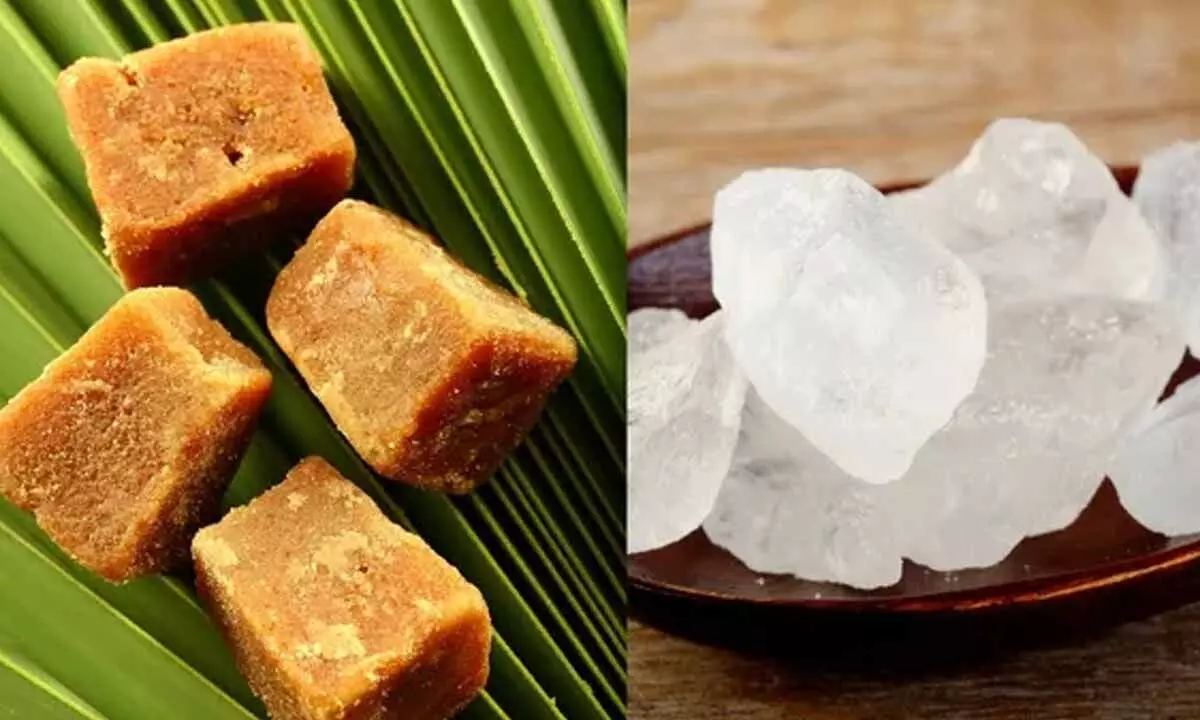
Discover the health benefits, culinary uses, and unique properties of gud (jaggery) and mishri (rock sugar) to make informed choices.
Indian cuisine features a wide range of sweeteners, each with its distinct qualities and benefits. Among these, gud (jaggery) and mishri (rock sugar) hold a special place due to their natural origins and significant use in Ayurvedic practices. While both add sweetness to dishes, they have unique properties that set them apart. Understanding their differences can help in making healthier dietary choices.
Appearance and Composition
Gud (Jaggery):
Jaggery is primarily extracted from sugarcane juice or palm sap. Unlike refined sugar, it undergoes minimal processing, preserving essential minerals like iron, magnesium, and potassium. Its colour varies from golden brown to dark brown, depending on the source and method of production. The process involves boiling sugarcane juice until it thickens and then setting it into solid blocks. Jaggery is known for its slightly alkaline nature.
Mishri (Rock Sugar):
Mishri, on the other hand, is produced by crystallizing pure sugar syrup. It forms large, transparent, sparkling crystals with an elongated shape. Compared to jaggery, mishri undergoes a more refined process, resulting in a purer form of sugar.
Health Benefits and Usage
Gud (Jaggery):
- Ayurvedic experts recommend jaggery for its warming properties, making it ideal for winter consumption.
- It is rich in minerals that support digestion, improve iron levels, and boost energy.
- Due to its heavy digestive nature, it is best consumed earlier in the day.
- Commonly added to spiced herbal drinks (kadha), sweets, and even some savoury dishes.
Mishri (Rock Sugar):
- Mishri is known for its cooling effect, making it suitable for summer consumption.
- It is easily digestible, making it ideal for people with sensitive stomachs.
- Often recommended for soothing sore throats and used in refreshing drinks.
- Consumed on an empty stomach by dissolving in water to support digestion and hydration.
Culinary Applications
Gud (Jaggery):
Jaggery enhances both sweet and savoury dishes with its deep, complex flavour. It is an essential ingredient in traditional Indian sweets like til gud laddoo, pithe, and gud ki roti. It also plays a role in making chutneys and spiced preparations.
Mishri (Rock Sugar):
Mishri’s light and pure sweetness makes it a preferred choice for delicate desserts and religious offerings. It is commonly used in milk-based sweets, refreshing beverages like thandai, and evening desserts.
Conclusion
Both gud and mishri have unique properties, making them valuable additions to a balanced diet. While jaggery provides warmth and essential minerals, rock sugar offers cooling effects and easy digestibility. Choosing between the two depends on individual dietary needs, seasonal preferences, and intended culinary use.