Basant Panchami 2026: Welcoming Spring with Learning and Renewal

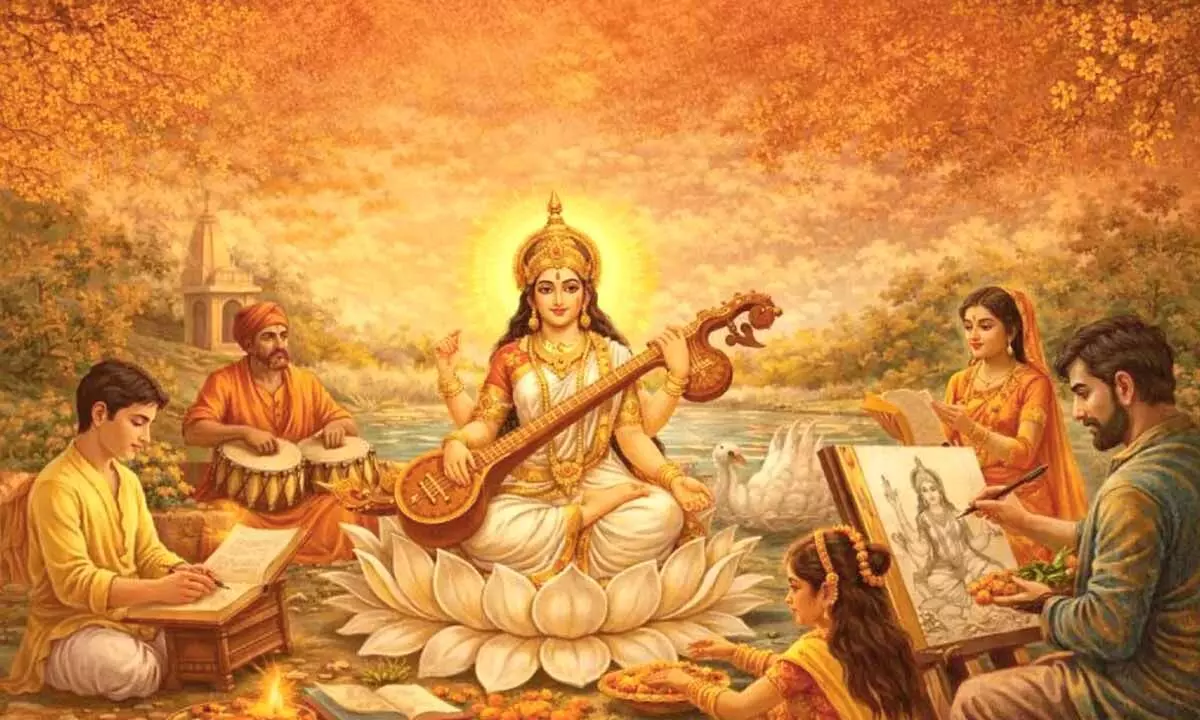
Basant Panchami, also known as Vasant Panchami or Saraswati Puja, marks the arrival of spring and celebrates the pursuit of knowledge and creativity. Dedicated to Goddess Saraswati, the festival holds special significance for students, educators, artists and scholars. Observed across India with devotion and colour, it symbolises renewal, learning and fresh beginnings
Basant Panchami, also known as Vasant Panchami or Saraswati Puja, marks a significant cultural and spiritual milestone in India, symbolising the arrival of spring and the celebration of knowledge, creativity and renewal. Dedicated to Goddess Saraswati, the deity of wisdom, learning, music and the arts, the festival is observed with devotion and optimism across the country.
A festival that ushers in spring and learning
Celebrated during the early days of spring, Basant Panchami reflects nature’s transition from the cold stillness of winter to a season of growth and vibrancy. Fields begin to bloom, particularly with mustard flowers, and the environment mirrors the festival’s core message of fresh beginnings and intellectual awakening.
Basant Panchami 2026: Date, tithi and auspicious timings
In 2026, Basant Panchami will be observed on Friday, January 23. According to the Hindu lunar calendar, the Panchami Tithi begins at 2:28 am on January 23 and concludes at 1:46 am on January 24. The most favourable period for performing Saraswati Puja is during the morning and early afternoon, from 7:13 am to 12:33 pm, with Madhyahna at 12:33 pm. This time is traditionally considered ideal for prayers, learning-related rituals and cultural observances.
Why Goddess Saraswati holds special significance on this day
Goddess Saraswati represents clarity of thought, eloquence, education and artistic excellence. Basant Panchami is regarded as an especially auspicious occasion for students, teachers, scholars, writers and artists to seek her blessings. The day reinforces the belief that knowledge and creativity are sacred pursuits and essential for personal and societal progress.
An auspicious occasion for new beginnings
Basant Panchami is widely regarded as an Abujha Muhurat, meaning it is inherently auspicious. On such days, important activities such as starting formal education, launching a business or undertaking new projects can be initiated without consulting specific astrological timings. This belief enhances the festival’s relevance as a day of opportunity and renewal.
Traditional rituals and symbolic customs
Rituals associated with Saraswati Puja reflect reverence for learning and culture. Devotees place books, notebooks, pens, laptops and musical instruments near the idol or image of the goddess, symbolically offering their tools of knowledge for divine blessings. Homes and educational institutions often organise prayers, recitations and cultural programmes to mark the occasion.
The prominence of yellow and seasonal celebrations
Yellow is the defining colour of Basant Panchami, representing energy, prosperity and the brightness of spring. Many people wear yellow or white clothing and prepare festive dishes infused with turmeric or saffron. Floral decorations, particularly marigolds, are commonly used to enhance the celebratory atmosphere.
Regional variations in Basant Panchami celebrations
The festival is observed differently across India, shaped by regional traditions. In parts of North India, especially Punjab and Haryana, kite flying is a popular activity, filling the skies with colour and excitement. The practice is seen as a joyful expression of welcoming spring.
Saraswati Puja in eastern India and academic spaces
In states such as West Bengal, Bihar and Odisha, Saraswati Puja is marked with elaborate community celebrations. Educational institutions play a central role, with students organising pandals, cultural performances and collective worship. The festival holds particular importance for young learners and is often associated with academic aspirations.
Observances in southern states
In southern India, Basant Panchami is observed as Sri Panchami, with special prayers conducted in temples. While Saraswati worship is more prominently associated with Navratri in these regions, the festival still carries spiritual significance and is observed with devotion.
From religious ritual to cultural lifestyle festival
Over time, Basant Panchami has evolved beyond a purely religious observance into a broader cultural and lifestyle celebration. It highlights the enduring importance of education, creativity and self-improvement. For many families, the festival serves as a reminder to pause, reflect and recommit to learning and personal growth as the season of spring begins.