Architecting Intelligent Healthcare: Innovation with Purpose

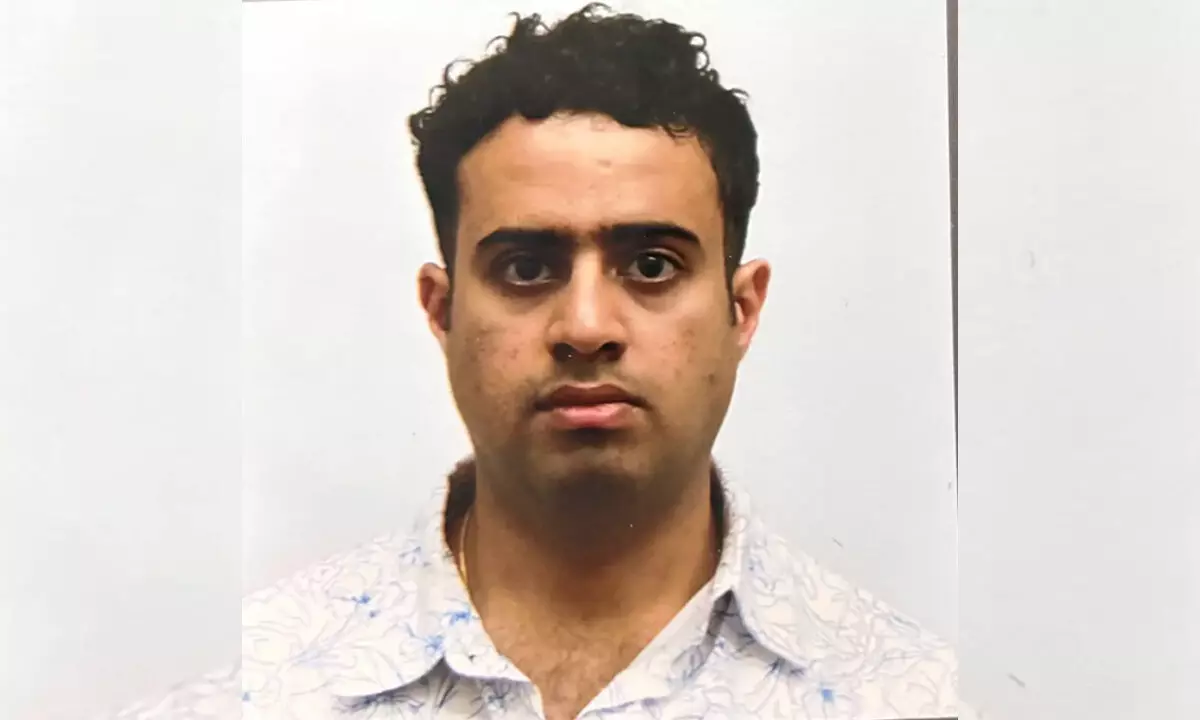
Bringing together advanced analytics and medical expertise, Abhijeet Sudhakar spoke about balancing innovation with regulatory rigor while ensuring AI delivers measurable improvements in patient outcomes. He emphasized the importance of collaboration, transparency, and real-world impact in shaping the future of healthcare technology.
In the rapidly advancing world of healthcare technology, few voices capture the balance between innovation and responsibility as clearly as Abhijeet Sudhakar, an NLP Data Scientist specializing in healthcare artificial intelligence. With a Master of Professional Studies in Analytics from Northeastern University and a Bachelor’s in Electronics and Telecommunications from the University of Mumbai, Sudhakar blends deep technical expertise with a strong sense of purpose.
“For me, healthcare AI isn’t just about algorithms or models,” he reflects. “It’s about finding ways technology can directly improve patient care and outcomes while reducing inefficiencies that burden healthcare systems.”
Sudhakar’s career has been defined by bridging the gap between theory and practice. His projects span natural language processing for clinical text, computer-assisted coding, medical image analysis, and even multi-omics feature extraction. Each initiative, he explains, begins with a structured process. “I always start by understanding the business needs and the regulatory constraints. From there, I design architectures that are scalable, secure, and reliable. Breaking complex AI projects into manageable components allows for innovation without losing sight of deliverables.”
Regulation is one of the field’s greatest hurdles, and Sudhakar takes it seriously. “Healthcare AI cannot afford mistakes. Compliance with HIPAA and other healthcare data standards must be built into systems from day one,” he emphasizes. “Equally important is handling medical terminology with precision. Inaccurate interpretations in clinical contexts are simply not acceptable.”
Measuring success, for Sudhakar, goes beyond technical metrics. While F1 scores, precision, and recall remain crucial, he pays close attention to real-world impact. “If we can reduce medical record processing times by 40% or lower manual error rates, that’s where the real value emerges. Ultimately, success means clinicians trust the system and patients benefit from it.”
Innovation drives his approach. He actively experiments with new technologies such as transformer architectures, ensemble models, and medical large language models like LLAMA. “Not every emerging framework proves valuable in practice,” he notes. “But hands-on experimentation helps me identify which innovations can genuinely solve healthcare challenges while meeting the accuracy standards the sector demands.”
Collaboration across disciplines is another cornerstone of his work. “No one builds healthcare AI in isolation,” he says. “Working with doctors, compliance experts, engineers, and business leaders ensures the solutions are clinically meaningful, technically robust, and aligned with organizational goals.”
Looking ahead, Sudhakar sees promise in explainable AI and multi-modal approaches that integrate text, imaging, and structured data. “The next wave will be about transparency, accountability, and seamless integration into healthcare infrastructure,” he predicts.
For Sudhakar, the journey is ongoing but always anchored in a simple conviction: “AI should never be about replacing humans—it should be about empowering healthcare professionals to deliver better, faster, and more accurate care.”