Florida removes over 1,000 Burmese pythons in Everglades conservation drive

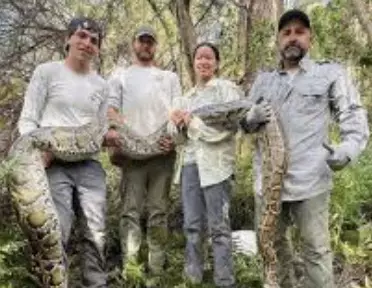
Florida's python removal efforts hit 1,000+ snakes, aiming to protect the Everglades' native species from the invasive Burmese python's growing threat.
Florida’s war against the invasive Burmese python has reached a new milestone: more than 1,000 snakes have been captured and humanely euthanized since 2013 by the Conservancy of Southwest Florida. Weighing nearly 20 tons in total, these removals are part of a broader initiative to protect the Everglades from ecological collapse.
Originally introduced through the exotic pet trade in the 1970s, Burmese pythons—native to Southeast Asia—have since exploded in population. They now prey on over 85 native species including birds, mammals, and reptiles, threatening biodiversity across South Florida.
Record Breeding Season and New Strategies
The most recent breeding season, between November and April, saw over 6,300 pounds of python removed from a 200-square-mile area. Some snakes weighed over 215 pounds and measured nearly 18 feet in length. Many females were euthanized before laying eggs—preventing the potential birth of 20,000 more snakes.
One innovative method involves tracking “scout snakes”—radio-tagged males released during mating season. These scouts lead researchers to hidden nests of breeding females, dramatically improving capture efficiency.
Signs of Progress, But Challenges Remain
While sightings continue to spread northward, even reaching Lake Okeechobee, some encouraging signs suggest python numbers may be stabilizing. Scout snakes are now locating fewer and smaller females, hinting at population stress. In rare instances, native predators like bobcats and the endangered eastern indigo snake have been seen preying on young pythons—a positive sign of nature beginning to fight back.
A Collaborative Conservation Mission
This massive removal project is a joint effort involving the Conservancy of Southwest Florida, U.S. Geological Survey, University of Florida, National Park Service, and Florida Fish and Wildlife Commission. While total eradication remains unlikely, the shared goal is long-term population control—to give native species a fighting chance in one of Earth’s most fragile and extraordinary ecosystems.