Supreme Court Stays Mumbai Train Blasts Acquittal Order But Refuses Re-Arrest Of Accused

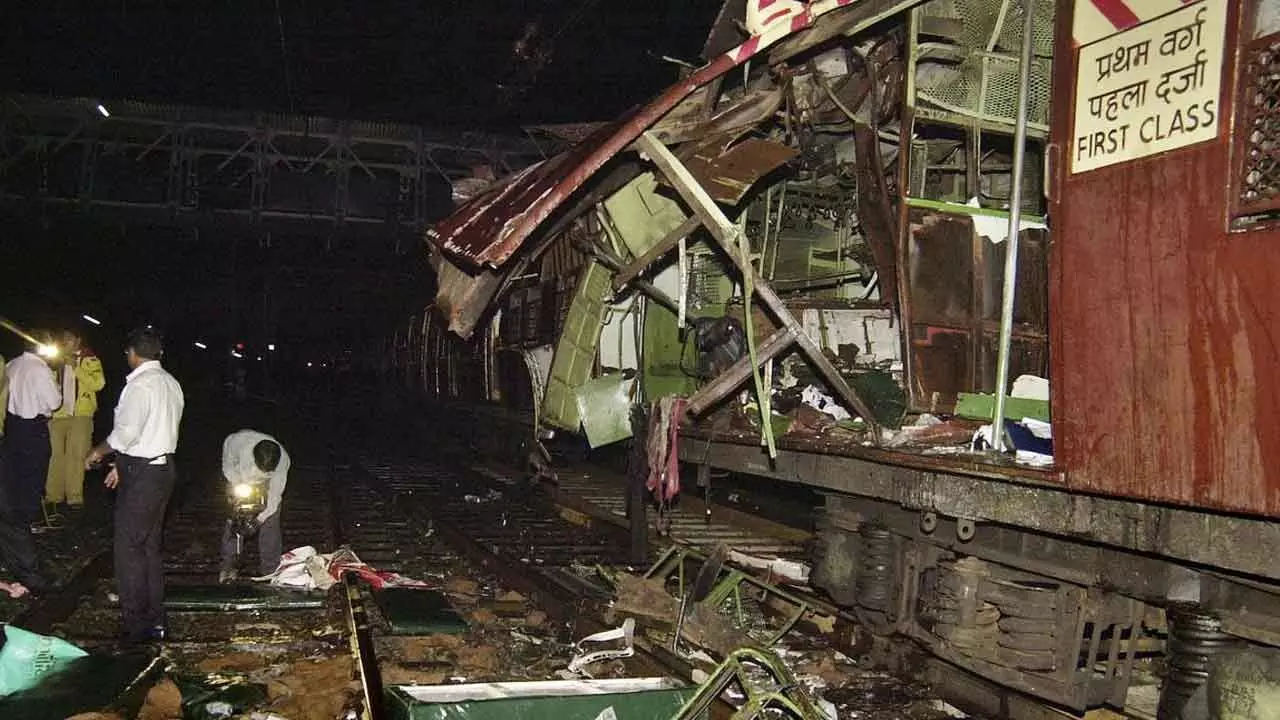
- Supreme Court halts Bombay High Court's acquittal judgment in 2006 Mumbai train bombings case, declaring it should not serve as legal precedent.
- All 12 accused remain free from custody.
The Supreme Court delivered a nuanced ruling on Thursday regarding the controversial acquittal of all accused in the devastating 2006 Mumbai train bombings, choosing to suspend the Bombay High Court's judgment while ensuring the 12 individuals involved would not face re-arrest.
The apex court's decision came in response to the Maharashtra government's challenge against the High Court's Monday verdict that had cleared all defendants in the case. While staying the lower court's order, the Supreme Court emphasized that the acquittal judgment should not establish any legal precedent for future cases under similar circumstances.
The court clarified its position by stating that since all respondents had already been released following their acquittal, there was no justification for returning them to prison. However, on matters of legal interpretation, the Supreme Court determined that the contested judgment must not influence other judicial proceedings.
This intervention followed concerns raised by Solicitor General Tushar Mehta, representing Maharashtra, who argued that the High Court's reasoning could potentially undermine other ongoing trials conducted under the Maharashtra Control of Organised Crime Act. The Supreme Court acknowledged these concerns by issuing notices to all accused parties regarding the state government's petition.
The original tragedy occurred on July 11, 2006, when coordinated explosions tore through seven Mumbai local train coaches during the evening rush hour, resulting in 189 fatalities and leaving 824 people injured. The attacks targeted the city's lifeline railway network, creating widespread panic and devastation.
The case had undergone extensive legal proceedings over nearly two decades. In 2015, a special court had delivered severe punishments, awarding death sentences to five of the 13 convicted individuals while sentencing seven others to life imprisonment. One accused had been acquitted during the initial trial, and tragically, one of those sentenced to death succumbed to Covid-19 in 2021.
The Bombay High Court's recent decision to overturn these convictions came after Justices Anil Kilor and Shyam Chandak conducted a thorough review of the case. The bench concluded that the prosecution had fundamentally failed to establish guilt beyond reasonable doubt for any of the accused individuals.
The High Court's critique of the investigation process was particularly scathing, with the judges finding fault with the Maharashtra Anti-Terrorism Squad's probe methodology. The court determined that statements from nearly all witnesses lacked reliability and credibility. Additionally, the prosecution's inability to definitively identify the specific type of explosive devices used in the attacks was highlighted as a critical failure.
These investigative shortcomings ultimately led the High Court to conclude that the evidence presented was insufficient to sustain the convictions that had been handed down by the special court nearly a decade earlier.
The Supreme Court's Wednesday observation that staying an acquittal would constitute a "rarest of rare" occurrence underscored the exceptional nature of the current intervention. This approach reflects the court's attempt to balance the principles of double jeopardy protection with concerns about potential legal precedents that could affect similar terrorism-related prosecutions.
The case continues to represent one of the most significant terrorism-related legal battles in recent Indian judicial history, highlighting ongoing challenges in prosecuting complex terror cases while maintaining rigorous standards of evidence and due process.RetryClaude can make mistakes. Please double-check responses.