UIDAI Chief Clarifies Aadhaar's Role As Opposition Mounts Over Bihar Voter List Exclusion

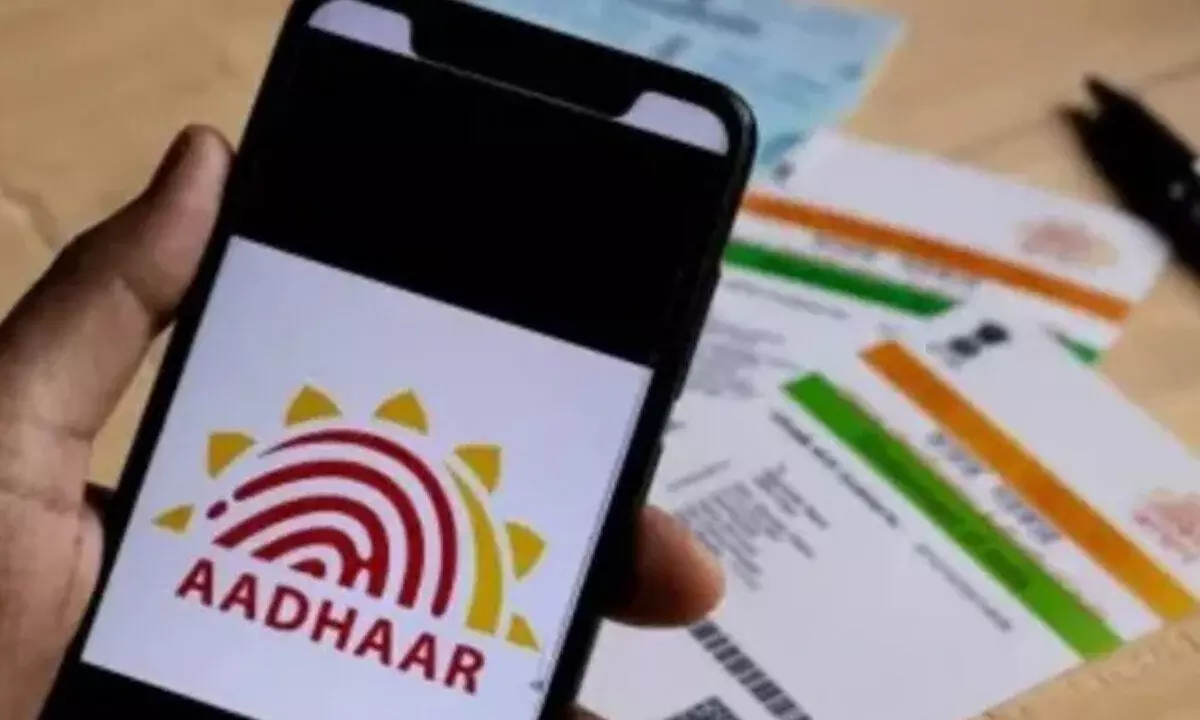
UIDAI CEO Bhuvnesh Kumar states Aadhaar is "never the first identity" amid Bihar protests over electoral roll revision excluding Aadhaar cards from acceptable ID documents list.
The head of India's Unique Identification Authority has defended the exclusion of Aadhaar cards from Bihar's electoral revision process, stating that Aadhaar documentation should never serve as primary identification proof. UIDAI CEO Bhuvnesh Kumar made these remarks as political opposition intensifies over the state's Special Intensive Revision of electoral rolls, which has notably omitted Aadhaar cards from its list of acceptable identity documents.
Speaking in an exclusive interview, Kumar emphasized the authority's continuous efforts to combat fraudulent Aadhaar card production, highlighting built-in security features designed to verify authenticity. He explained that all newly issued Aadhaar cards contain QR codes that can be scanned using UIDAI's specialized application to verify credential accuracy against embedded data. This system enables immediate detection of counterfeit documents, as fake cards cannot replicate the authentic QR code verification process.
The UIDAI chief acknowledged that some individuals create fraudulent documents using photo editing software or printed templates, but clarified that these fabricated items do not constitute legitimate Aadhaar cards. Kumar revealed that the authority is developing an advanced Aadhaar application currently in final development stages, which will enable seamless digital identity sharing with user consent while eliminating the need for physical document distribution.
This upcoming application will feature masked sharing capabilities, allowing users to control whether they share complete or partially concealed Aadhaar information based on their preferences and specific requirements. The digital platform aims to enhance security while providing greater user control over personal data sharing.
The controversy centers around Bihar's electoral roll revision process, which aims to verify nearly eight crore voters by July 25 to remove ineligible names and ensure only qualified citizens remain registered. The Election Commission has maintained that the revision proceeds smoothly at ground level with no changes to existing instructions, despite mounting political pressure.
Rashtriya Janata Dal leader Tejashwi Yadav has demanded suspension of the revision exercise until state assembly elections, arguing that voters face unnecessary inconvenience due to the exclusion of commonly held documents like Aadhaar and MNREGA job cards. Yadav expressed confusion over rejecting Aadhaar cards, which undergo biometric verification and which the Election Commission intends to link with voter identification cards.
The opposition leader questioned why this revision occurs exclusively in Bihar, unlike the nationwide electoral roll revision conducted in 2003. He demanded transparency regarding daily voter coverage statistics and disclosure of volunteer identities and criteria for those assisting booth-level officers during the data collection process.
According to official notifications, the revision accepts eleven specific document types including government employee identity cards, pre-1987 government certificates, birth certificates, passports, educational certificates, caste and residence documentation, NRC papers, forest rights certificates, family registers, and property allotment certificates. The list specifically excludes commonly used identification documents such as Aadhaar cards, PAN cards, and driving licenses.
This exclusion has sparked significant debate given these documents' widespread acceptance across India for various official purposes. The controversy highlights broader questions about document hierarchy, verification standards, and the practical challenges faced by citizens navigating bureaucratic requirements for fundamental democratic participation.
The Election Commission's stance reflects strict adherence to specified documentation requirements, while opposition parties argue for more inclusive approaches that recognize commonly held identity proofs. The situation continues to evolve as political parties mobilize supporters and challenge the revision process through various channels.RetryClaude can make mistakes. Please double-check responses. Sonnet 4