So how did the Arunachal Pradesh crisis begin?

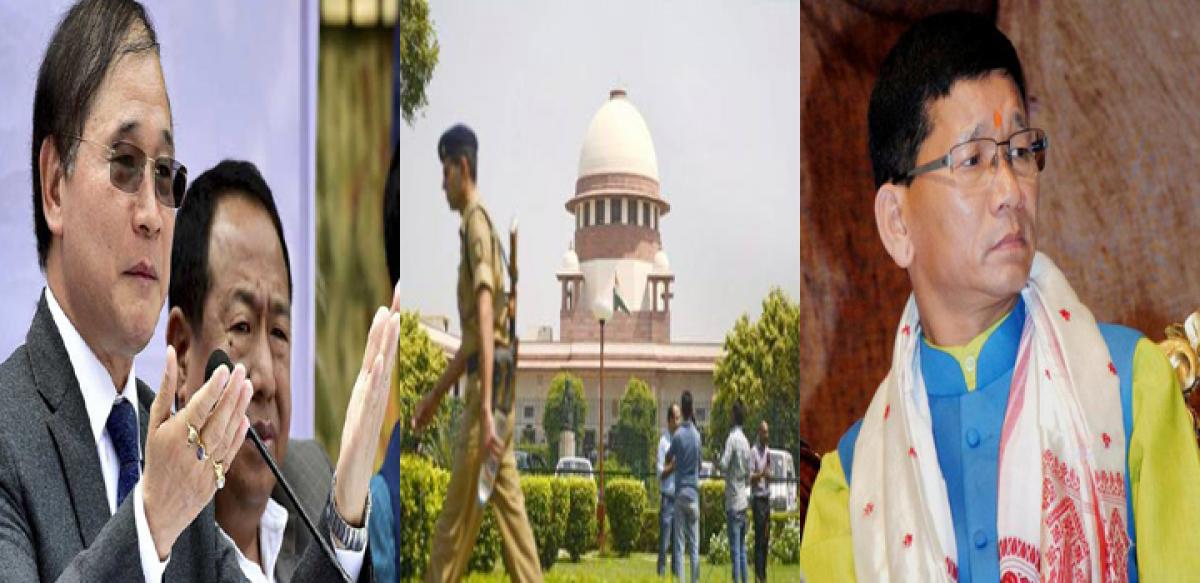
It started on December 9, when a group of rebel Congress MLAs approached Governor JP Rajkhowa seeking to impeach Speaker Nabam Rebia.
December 9, 2015 – It started on December 9, when a group of rebel Congress MLAs approached Governor JP Rajkhowa seeking to impeach Speaker Nabam Rebia.
January 5, 2016 – The Gauhati High Court stayed the disqualification of the Congress MLAs and the Speaker’s plea was turned down.
January 15, 2016 – SC referred the entire batch of petitions filed by the Speaker to a constitution bench
January 29, 2016 – CM Nabam Tuki filed a fresh petition in the Supreme Court challenging the imposition of President”s Rule
January 30, 2016 – The Centre justified the imposition of President’s Rule citing complete breakdown of law and order.
February 2, 2016 – Governor Rajkhowa said the President’s rule in the state was temporary and that a new elected government would soon be formed in its place.
February 4, 2016 –SC took strong note of a submission that all decisions of the Governor are not open to judicial review.
February 10, 2016 – The top court rejected the pleas of the rebel Congress MLAs against the Speaker.
February 19, 2016 – President’s Rule lifted in the state.
February 20, 2016 – Dissident leader Kalikho Pul was sworn in ninth CM with the support of 18 rebel Congress MLAs.
February 23, 2016 – SC observed that it was empowered to “set the clock back” if there were constitutional violations.
February 25, 2016 – Pul won the vote of confidence without any opposition on the first day of the state assembly session.
March 3, 2016 – 30 rebel Congress MLAs merged with People’s Party of Arunachal leaving no scope for Cong to take any legal action.
July 13, 2016 – SC turned the clock back and restored the Congress government in the state.