
Google Enables AirDrop File Sharing on Android Without Apple’s Help

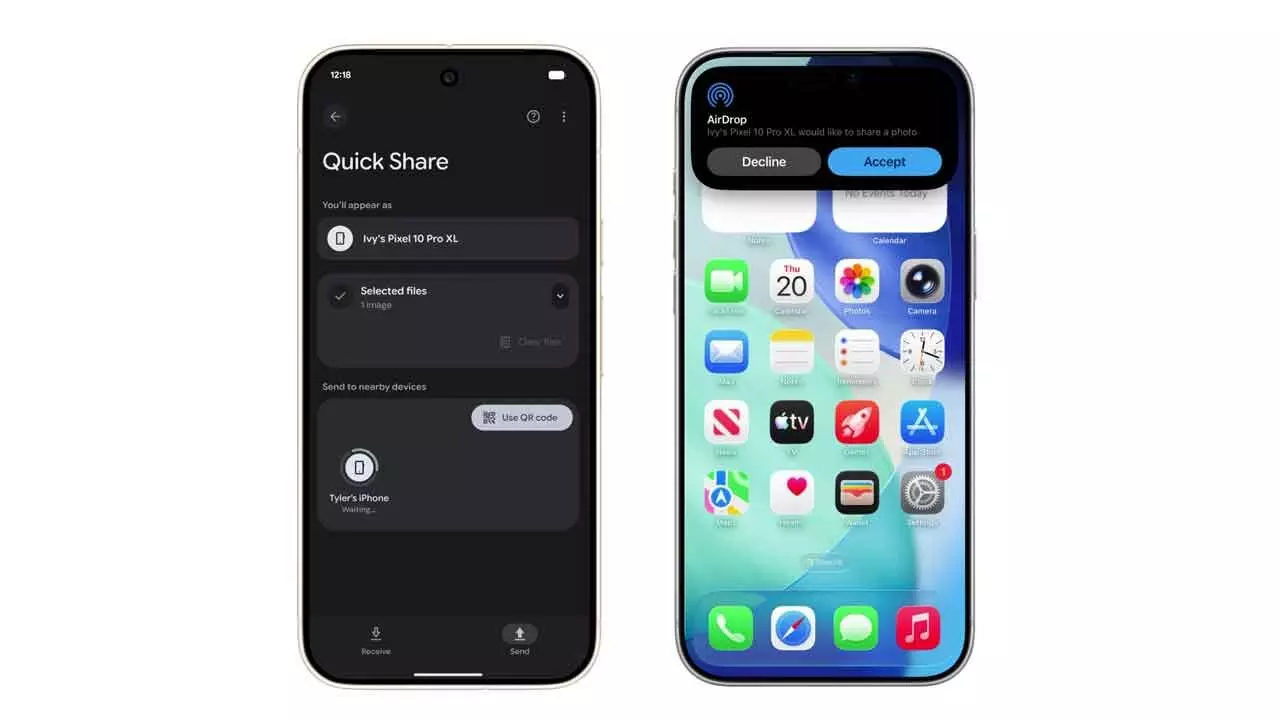
Google’s new Quick Share update lets Pixel 10 users send and receive AirDrop files with iPhones, marking a major cross-platform breakthrough.
Google has taken a bold step toward bridging one of the biggest gaps between Android and Apple devices. The company has announced that Android phones—starting with the newly launched Pixel 10 series—can now share files directly with iPhones using Apple’s AirDrop protocol. What makes this announcement even more surprising is Google’s claim that it achieved this interoperability entirely on its own, without any contribution from Apple.
For years, AirDrop has been one of Apple’s strongest ecosystem advantages, offering fast, seamless file transfers between iPhones, iPads, and Macs. Android users, meanwhile, relied on Google’s Quick Share or third-party apps, none of which provided the same effortless cross-platform experience. With this latest enhancement, Google is attempting to level that playing field.
In a detailed blog post, Google confirmed that Quick Share has been upgraded to communicate with Apple’s AirDrop, enabling Android users to send photos, documents, and other media directly to iPhones, iPads, and Macs. The feature is launching first on Pixel 10 devices, with Google planning to expand support to more Android models in the near future.
Using the feature is surprisingly straightforward. Pixel 10 users trying to send a file to an iPhone will simply need the iPhone user to set their AirDrop visibility to “Everyone.” Once the iPhone becomes discoverable, it appears within Quick Share on the Pixel device just like any other supported device. The file transfer then proceeds using the familiar AirDrop interface on the iPhone side. The reverse process also works: if an iPhone user wants to send a file to an Android device, the Pixel owner just needs to make their phone discoverable via Quick Share.
Perhaps the most intriguing detail is that this wasn’t a collaborative project between the two tech giants. Google spokesperson Alex Moriconi confirmed to The Verge, “We accomplished this through our own implementation.” He also noted that Google remains open to working with Apple on improving interoperability, adding, “We always welcome collaboration opportunities to address interoperability issues between iOS and Android.”
Despite initial concerns about security or the possibility of workaround-based hacks, Google insists the feature is fully secure. In a security blog post, the company emphasized that the system has undergone extensive testing, stating, “This feature does not use a workaround; the connection is direct and peer-to-peer, meaning your data is never routed through a server, shared content is never logged, and no extra data is shared.”
Apple has not yet issued a statement on Google’s implementation of AirDrop compatibility, leaving questions about its long-term stance on cross-platform sharing. It also remains to be seen how quickly other Android manufacturers will adopt the upgraded Quick Share technology.
Still, Google’s move marks a major milestone in breaking down long-standing barriers between the two mobile ecosystems, giving users more flexibility—and fewer excuses—to switch or share across platforms.


