China Unveils Mini SSDs That Fit Like SIM Cards, Debut in Strix Halo Gaming Devices

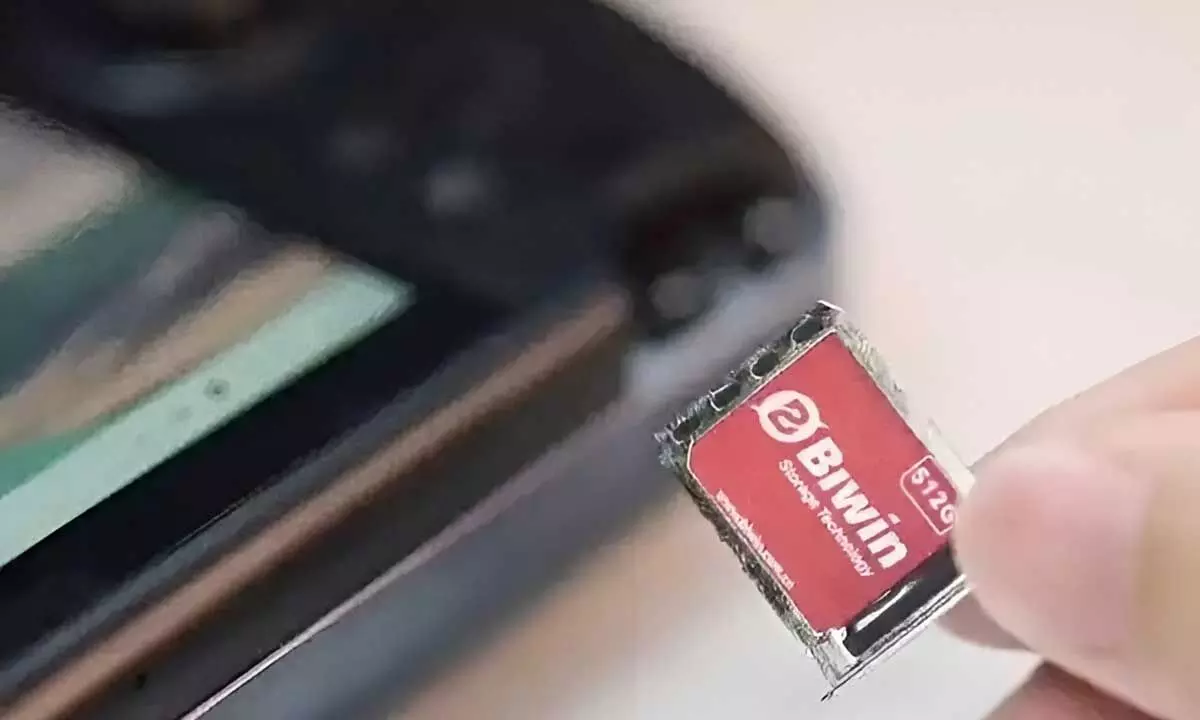
China’s new Mini SSD offers blazing 3,700MB/s speeds in SIM card size, launching first in Strix Halo-powered gaming portables.
China is introducing a storage breakthrough that could reshape how we think about portable device memory. Chinese storage manufacturer Biwin has revealed its “Mini SSD”—also known as the “1517”—a storage device so compact that it inserts just like a smartphone SIM card. Measuring only 15mm x 17mm x 1.4mm, it’s smaller than a U.S. penny and only slightly larger than a MicroSD card, yet it delivers the kind of performance typically reserved for larger, enclosed drives.
The Mini SSD promises sequential read speeds of up to 3,700MB/s and write speeds of 3,400MB/s via a PCIe 4x2 connection. Capacities include 512GB, 1TB, and 2TB. For comparison, even the latest MicroSD Express cards—compatible with the upcoming Nintendo Switch 2—max out at a theoretical 985MB/s. While a full-size SD Express card could narrowly beat Biwin’s Mini SSD in speed, it’s nearly double the size.
Designed with versatility in mind, the Mini SSD will feature a dedicated slot similar to SIM card trays—just insert a pin to pop it out. It’s aimed at laptops, tablets, smartphones, cameras, and more, and boasts IP68 water and dust resistance along with the ability to survive drops from up to three meters.
The first devices to feature this innovation are already confirmed. Two Strix Halo-powered gaming portables—revealed at ChinaJoy—will debut with Mini SSD support. The GPD Win 5, known for its huge battery backpack, will house the SSD in a dedicated slot, as shown in demonstration videos. The OneNetbook OneXPlayer Super X, a hybrid laptop-tablet with the same Strix Halo chip, will also ship with a “card slot” for the new storage format.
It remains unclear if Biwin’s Mini SSD will become a universal standard that other manufacturers can adopt. Pricing and global availability details are yet to be announced, and no retail listings have surfaced. However, with its combination of extreme portability, impressive speed, and durability, this innovation could redefine how storage is integrated into next-generation portable gaming and computing devices.
If the technology gains traction, the days of bulky storage upgrades for handhelds, tablets, and ultralight laptops might soon be behind us. For now, all eyes are on the upcoming Strix Halo devices to see the Mini SSD in action.