Satya Nadella Hands Over Sales Duties to Double Down on AI and Data Centres at Microsoft

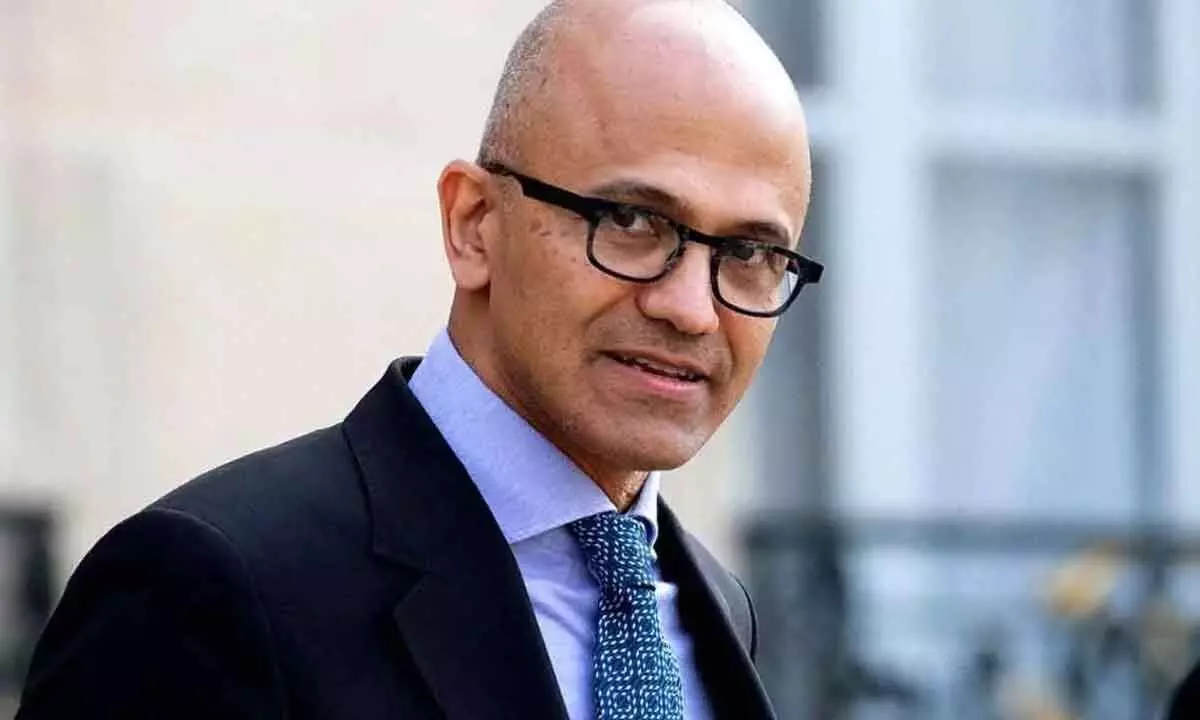
Satya Nadella shifts focus to AI, product innovation, and massive data centres as Microsoft undergoes major restructuring amid global layoffs.
Microsoft is entering a critical new phase under CEO Satya Nadella’s leadership, with the company announcing sweeping internal changes designed to prioritize artificial intelligence (AI), innovation, and data centre expansion. Nadella has stepped back from directly overseeing sales and marketing operations, handing those responsibilities to long-time executive Judson Althoff, while he concentrates on shaping Microsoft’s technical future.
In a note to employees, Nadella confirmed that Althoff, who has successfully led Microsoft’s sales efforts for over a decade, will now become CEO of the commercial business. This restructured role will give Althoff oversight of not just sales, but also marketing and operations, with Chief Marketing Officer Takeshi Numoto reporting into his group. Nadella explained that this leadership shuffle is intended to free up his time and that of Microsoft’s engineering leaders to double down on AI-driven product development and infrastructure.
This move comes as Microsoft doubles its investments in AI and cloud infrastructure. A July report by the BBC revealed that the company is spending nearly $80 billion on building massive data centres worldwide—an effort Nadella sees as crucial for staying competitive in the global AI race. Over the past two years, Microsoft has aggressively integrated generative AI into its flagship products such as Office and Windows, powered by its deep partnership with OpenAI.
However, the shift in priorities has not been without hardship. Microsoft has laid off more than 15,000 employees in 2025, including a staggering 9,000 in July alone. Addressing the cuts, Nadella acknowledged the emotional toll they’ve taken on staff: “Before anything else, I want to speak to what’s been weighing heavily on me, and what I know many of you are thinking about: the recent job eliminations.” He noted that despite the layoffs, Microsoft’s workforce remains steady at about 228,000, roughly the same as last year.
For investors, Nadella’s strategy appears to be paying off. Microsoft’s stock hit a milestone in July, crossing the $500 mark for the first time following the layoffs. The market response highlights growing confidence in the company’s AI-first approach. Reflecting on the challenges and opportunities ahead, Nadella wrote: “This is the enigma of success in an industry that has no franchise value. Progress isn’t linear. It’s dynamic, sometimes dissonant, and always demanding. But it’s also a new opportunity for us to shape, lead through, and have greater impact than ever before.”
At the same time, Nadella has openly shared his personal anxieties about the company’s ability to navigate the AI era. In a recent employee town hall, he admitted being “haunted” by the thought of Microsoft failing to keep pace with technological change. Drawing a sobering comparison, he recalled the fate of Digital Equipment Corporation (DEC), a once-dominant tech company that collapsed in the 1990s: “Our industry is full of case studies of companies that were great once, that just disappeared. I’m haunted by one particular one called DEC.”
The reorganisation underscores the urgency Nadella feels in steering Microsoft through this disruptive era. With a sharpened focus on AI innovation and an $80 billion investment in data centres, Microsoft is betting big on building the infrastructure and intelligence needed to stay at the forefront of the technology industry.