Organizers’ Web of Deceit: Farmers in Jogulamba Gadwal District Face Deep Crisis

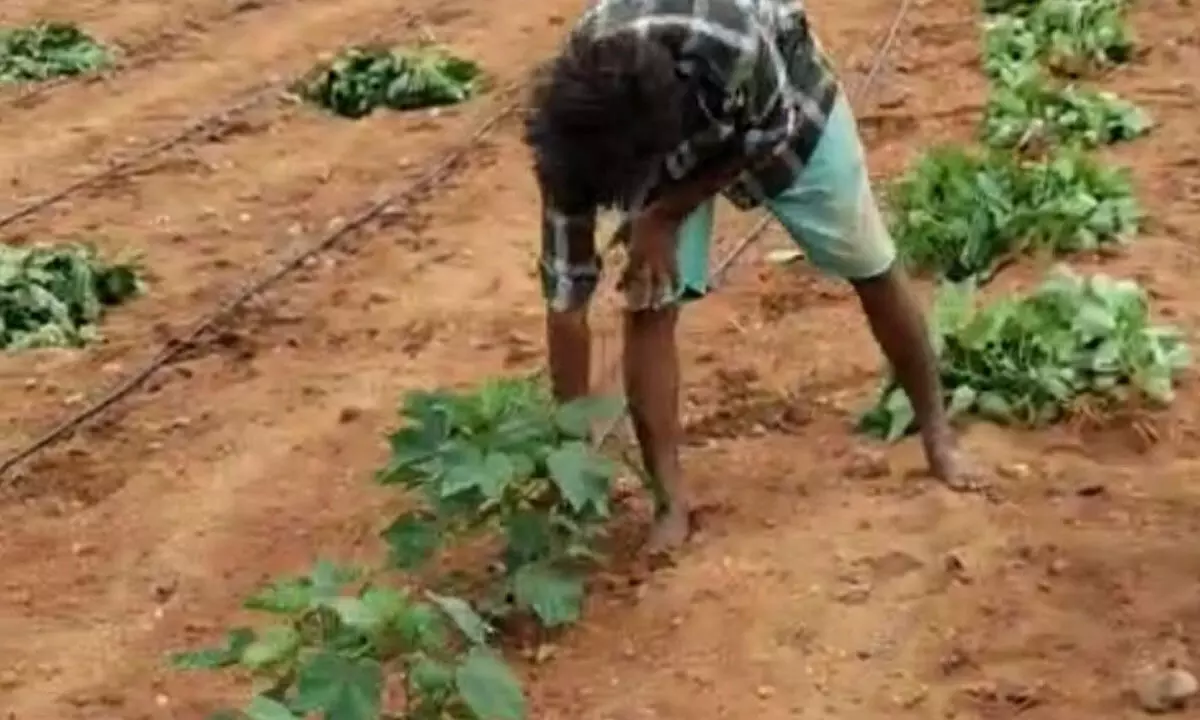
Gadwal: Farmers in several villages of Jogulamba Gadwal district, including Peddagoflapur, Ittikala, and Mangaldhinna, have been pushed into a state of distress and helplessness due to the alleged betrayal by seed companies and their agents. The companies, which initially supplied seeds without any conditions, have now issued last-minute directives to destroy large portions of the cotton crop, claiming they will only purchase a limited quantity.
Despite a good growing season with timely rainfall and favorable weather conditions, which helped crops flourish and reach the flowering stage, seed companies have now backed out, stating they will purchase only 150 packets worth of produce per farmer. The rest, they insist, must be removed or destroyed — a move enforced through pressure by seed organizers (local intermediaries or agents).
Farmers' Despair and Anger
The sudden reversal has left farmers devastated. Many of them took loans to cultivate seed cotton, investing heavily with the hope of recovering costs and making a small profit. Now, they are faced with the traumatic decision of cutting down healthy crops that are on the verge of harvest — not due to natural calamities, but because of corporate decisions.
“I borrowed heavily, nurtured the crop carefully, and just as it’s ready to yield, they are asking me to destroy it. Where were these conditions when they gave me the seeds?” laments one of the affected farmers.
The companies are reportedly offering a compensation of just ₹10,000 per acre for the destroyed crop — an amount that barely scratches the surface of actual investments. The farmers, however, argue that this is an unfair trade-off, as many of them spent far more on fertilizers, pesticides, and labor.
Organizers Under Fire
Organizers, who act as intermediaries between companies and farmers, are facing sharp criticism for allegedly siding with the companies. These organizers are the same individuals who initially supplied seeds and money to the farmers without mentioning any contractual limitations or conditions.
“Are these organizers working for farmers or are they just puppets of the companies?” questioned a farmer in frustration.
This exploitative middleman system has been prevalent in the region for several years, but this latest incident has exposed the manipulative grip companies and their agents have over local agricultural practices.
Demands for Action
Farmers are now demanding immediate intervention from government officials and elected representatives. They seek not only fair compensation but also strict regulations and legal safeguards to prevent companies from issuing such abrupt and destructive orders in the future.
“The fault lies with the companies and their agents. Why should innocent farmers bear the brunt?” asked one elderly farmer, whose livelihood now hangs in the balance.
This incident has once again spotlighted the power imbalance between corporate agriculture entities and vulnerable farmers, and raised serious questions about regulatory oversight in the seed industry.
Unless swift action is taken, this crisis could set a dangerous precedent for contract farming practices and deepen rural distress in one of Telangana’s most agriculture-dependent districts.
Seed companies ordered the destruction of cotton fields at the flowering stage.
Only 150 packets of seed crop will be procured per farmer.
Farmers are being pressured to remove the rest of the crop.
Companies propose a compensation of ₹10,000 per acre.
Organizers (middlemen) are facing backlash for acting on behalf of companies.
Farmers claim there were no pre-agreed terms at the time of seed distribution.
Massive investments made through loans now hang in uncertainty.
Farmers demand government intervention and justice.
Conclusion: The cotton seed farming model in Telangana, which heavily relies on corporate companies and their local agents, is under scrutiny. What began as a hopeful agricultural season is now unfolding into a crisis that could leave many families in debt and despair — unless accountability is ensured and protections for farmers are urgently enacted.