Backward Classes Welfare Schemes Drive Inclusive Growth Under Cm Yogi’s Leadership In Uttar Pradesh

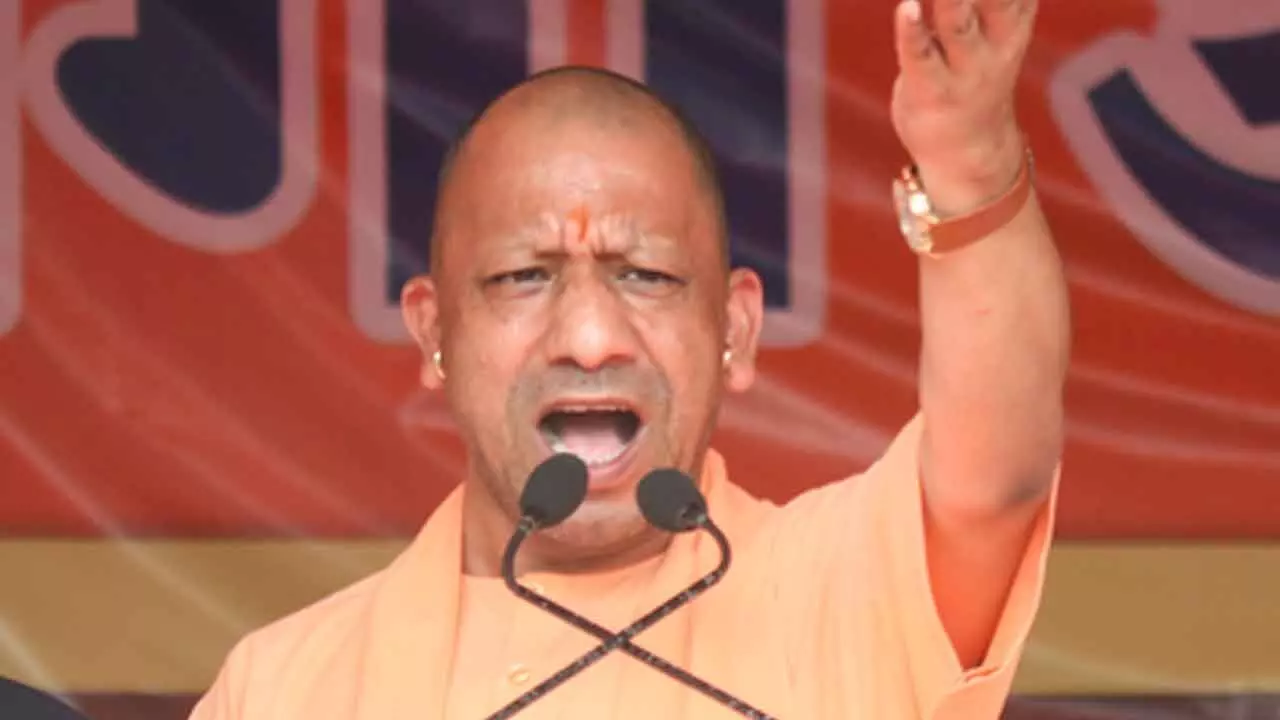
Under Cm Yogi Adityanath’s Leadership, Uttar Pradesh Expanded Backward Classes Welfare Schemes In 2025 With Scholarships, Marriage Grants, Computer Training, And Dbt, Promoting Education, Social Security, And Digital Empowerment.
Backward Classes Welfare Schemes script a new chapter of inclusive development under CM Yogi’s Leadership
Scholarships and fee reimbursement provided large-scale educational support to students from Backward Classes
Marriage Grant Scheme strengthened social security and dignity of underprivileged daughters
Computer training initiatives created pathways for skills and employment among youth
Direct Benefit Transfer (DBT) enhanced transparency and reduced leakages
Lucknow, December 29
Under the leadership of Chief Minister Yogi Adityanath, the Uttar Pradesh government significantly advanced welfare initiatives for Backward Classes in 2025. The year witnessed sustained implementation and expansion of schemes focused on education, social security, and digital empowerment. Official data from the Backward Classes Welfare Department indicate that these policy interventions reached beneficiaries at the grassroots level, reinforcing the government’s commitment to inclusive and outcome-oriented governance. The welfare framework extended beyond financial assistance, enabling empowerment through education, dignity, and skill development.
During 2025–26, the Pre-Matric Scholarship Scheme supported 690,349 students with financial assistance amounting to ₹147.75 crore. Under the Post-Matric Scholarship Scheme, 585,954 students received ₹175.54 crore. In total, 1,276,303 students were provided direct assistance of ₹323.29 crore in 2025 alone.
Over the past nine years, the state government has extended scholarship support to 22,029,760 students, with total disbursement reaching ₹13,858.62 crore.
The Marriage Grant Scheme reflected the government’s focus on social protection. During 2025–26 (up to December 23, 2025), financial assistance amounting to ₹144.59 crore was provided to 72,296 daughters from Backward Classes. In both 2019–20 and 2024–25, one lakh beneficiaries each received assistance totaling ₹200 crore per year.
Cumulatively, over nine years, 647,863 beneficiaries were supported under the scheme, with total expenditure of ₹1,295.72 crore. The scheme covers eligible families from urban and rural areas with an annual income ceiling of ₹1 lakh, subject to the minimum age requirement of 18 years for the bride and 21 years for the groom.
The Computer Training Scheme continued to play a key role in skill development. During 2025–26 (up to December 23, 2025), 22,392 youths including 18,159 males and 4,233 females—received training at a cost of ₹19.18 crore.
Over nine years, a total of 162,046 youths were digitally trained at an expenditure of ₹154.56 crore. Among them, 101,139 trainees pursued O-Level certification, while 60,907 completed CCC certification.
All benefits under these schemes were disbursed through Direct Benefit Transfer (DBT), ensuring transparency, accountability, and minimisation of corruption.