Centre to tighten private bus permit rules to curb cross-state misuse

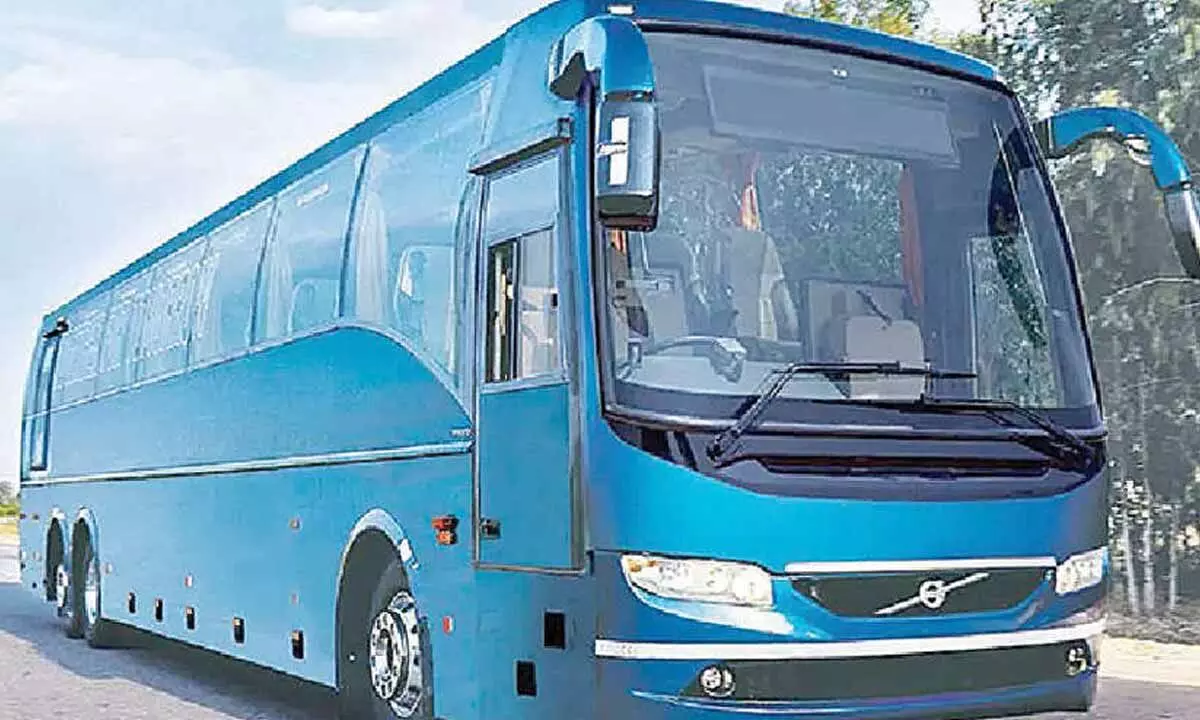
Amaravati: The Central government has moved to tighten the rules governing private bus registrations following mounting complaints over misuse of national permits and large-scale irregularities in inter-state tourist vehicle operations. The Ministry of Road Transport and Highways (MoRTH) is taking steps to amend the All India Tourist Vehicles (Permit) Rules, 2023.
The 2023 framework, which came into force on May 1 that year, allowed operators to register their vehicles in any State by paying a one-time permit fee of around Rs 3 lakh. “The rule soon became a gateway for operators to register buses in low-fee States such as Nagaland or Daman and Diu, while actually running services in States such as Andhra Pradesh, Telangana, or Karnataka. This practice deprived several States of revenue and enabled rampant conversion of seater buses into sleeper coaches without proper safety compliance,” retired additional commissioner of AP Transport department Prasada Rao said.
The probe into the Kurnool accident revealed that the ill-fated bus was originally registered in 2018 as a 53-seater, later re-registered in Daman and Diu as a 43-berth sleeper bus, and again in Odisha earlier this year.
Transport department officials found that operators had converted seater buses into sleeper coaches without ensuring safety compliance or adequate spacing, prioritising profit over passenger safety.
Prasada Rao said that operators were showing buses as “seaters” in documents to evade higher sleeper tax rates, while physically modifying interiors for sleeper configuration. Many such buses lacked fire safety tools, emergency exits, or proper ventilation.
Now, the Centre has initiated an amendment process that seeks to restore stronger control to the States where the vehicles are registered. Under the proposed amendments to All India Tourist Vehicles (Permit) Amendment Rules, 2025, applications for tourist permits must now be filed only with the transport authority of the State where the vehicle is registered.
The amendments also define “home State” as the one that issued the permit, placing accountability and oversight squarely with that jurisdiction. A key provision restricts tourist vehicles from remaining outside their home state for more than 45 days, with monitoring to be enforced through vehicle-tracking systems and State command centres.
The proposed rules also bar operators from using these vehicles as stage carriages or picking up passengers outside the approved tourist list. Operators must now upload journey details, origin, destination, and route, on the Vahan portal at least 24 hours before each trip.
The amendment further tightens compliance by mandating that vehicles be fitted with location tracking devices and emergency buttons, while ensuring no pending challans remain unpaid beyond 30 days. The ministry has also proposed extending permit validity from 12 to 15 years and explicitly including “seating or sleeper capacity” under registration categories, a move expected to curb unauthorized seat-to-sleeper conversions.
Officials said the changes are intended to plug tax leakages, enhance safety, and ensure greater transparency in the movement of tourist vehicles across states. The misuse of national permits has allowed several operators to bypass state taxes and fitness norms, often at the cost of passenger safety.
According to data, Nagaland, despite its small size, issued over 1.36 lakh national tourist permits this year, far higher than large States such as Kerala (14,573) or Karnataka etc. Once finalised, the revised framework is expected to bring back tighter State-level oversight, aligning registration, taxation, and safety norms to curb the unchecked expansion of inter-State tourist bus operations.