Mission to save indigenous seeds in Andhra Pradesh
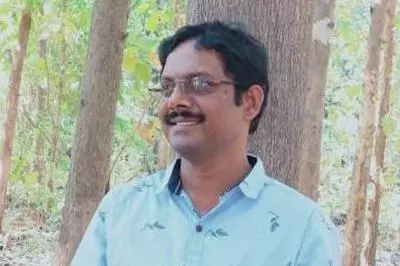
Hailing from Alluri district, Devullu stands as a beacon for sustainable farming
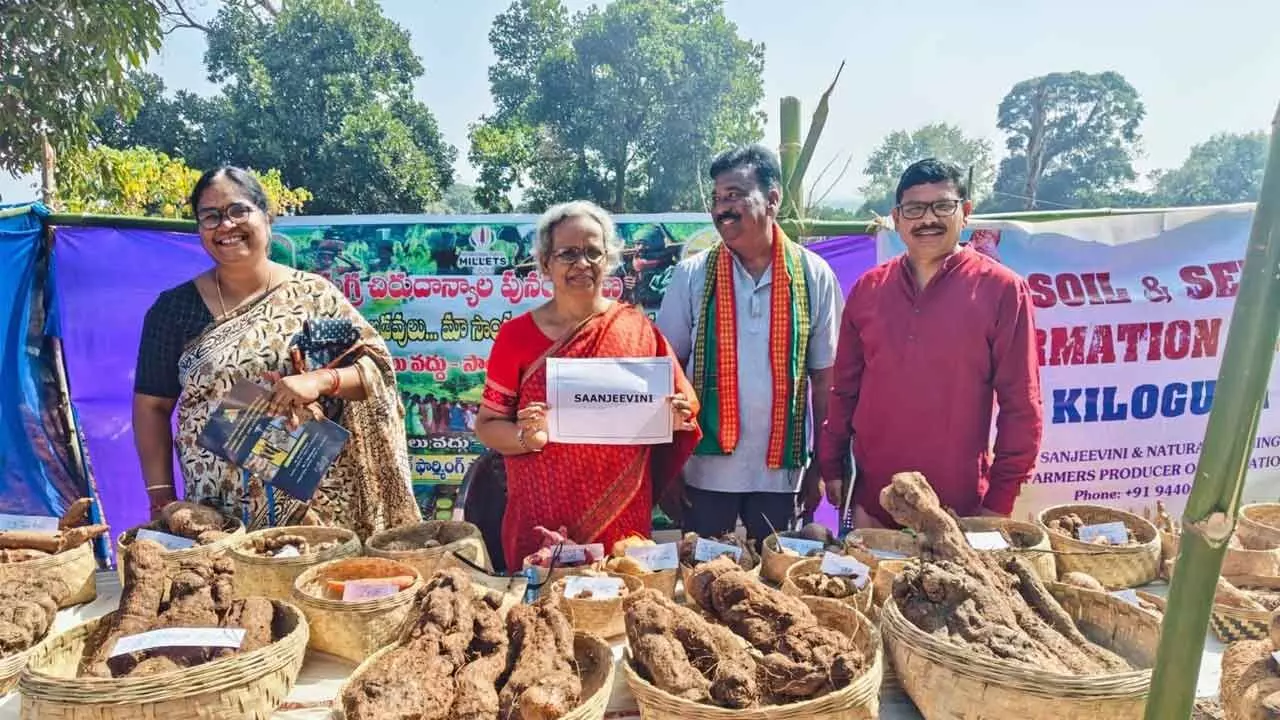
Devullu actively engages with tribal farmers in the state organizing seed festivals and workshops to raise awareness about the importance of traditional seed varieties
Vizianagaram: In the heart of Andhra Pradesh's tribal regions, where agriculture is both a livelihood and a cultural cornerstone, one man's dedication stands as a beacon for biodiversity and sustainable farming. Pachari Devullu, an expert in tribal agriculture and founder of the Sanjeevani Rural Development Society, has committed his life to preserving indigenous seed varieties that are at risk of disappearing.
Operating from Killoguda village in Dumbriguda, Alluri Seetharama Raju district, Devullu's mission extends across areas like Visakhapatnam, Vizianagaram, Srikakulam, and parts of East and West Godavari. These regions are home to tribal communities that have cultivated a rich diversity of crops for generations. "Our ancestors grew numerous paddy and millet varieties that could withstand even the harshest conditions," he notes. "Today, these resilient seeds are endangered by the spread of hybrid varieties that compromise soil health and diminish biodiversity."
Devullu's seed bank is a testament to this agricultural heritage, housing over 300 varieties of desi seeds. His collection includes an impressive array of millets such as ragi, guli ragi, foxtail, jowar, and pearl millets. Additionally, he preserves 33 distinct paddy varieties, with evocative names like Isuka Ravvalu, Mamidi Biyyam, Pasupu Sannalu, and Erra Sannalu, reflecting the region's rich agricultural legacy. Even banana seeds, capable of yielding crops during famines with minimal water, find a cherished place in his collection.
Beyond mere preservation, Devullu actively engages with tribal farmers throughout Andhra Pradesh. He organizes seed festivals and workshops to raise awareness about the importance of traditional seed varieties. His extensive travels through remote villages allow him to share his expertise and absorb invaluable local knowledge.
Farmers from neighboring states like Odisha and Chhattisgarh often visit his expansive seed bank, marveling at the vibrant display of ancient varieties—from vegetables like brinjal and tomato to tuber crops and uniquely shaped bottle gourds—that adorn every corner of his farmhouse.
Devullu views his efforts as an act of cultural conservation. "I am not just saving seeds," he asserts, adding: "I am preserving the legacy and heritage of our tribal communities." His relentless commitment has not gone unnoticed.
In 2011, the Andhra Pradesh government honored him with a Biodiversity Award. The following year, the Union Government's Department of Agriculture recognized his outstanding contributions with the Plant Genome Saviour Community Award and a cash prize.
As we reflect on the importance of resilience and tradition in agriculture, Devullu's work serves as a rallying cry for sustainable practices.
His dedication reminds us that preserving native seed varieties is not only about protecting crops—it’s about nurturing a legacy that bridges the wisdom of our past with the promise of a sustainable future.