SIT links Jogi to fake liquor plot in chargesheet

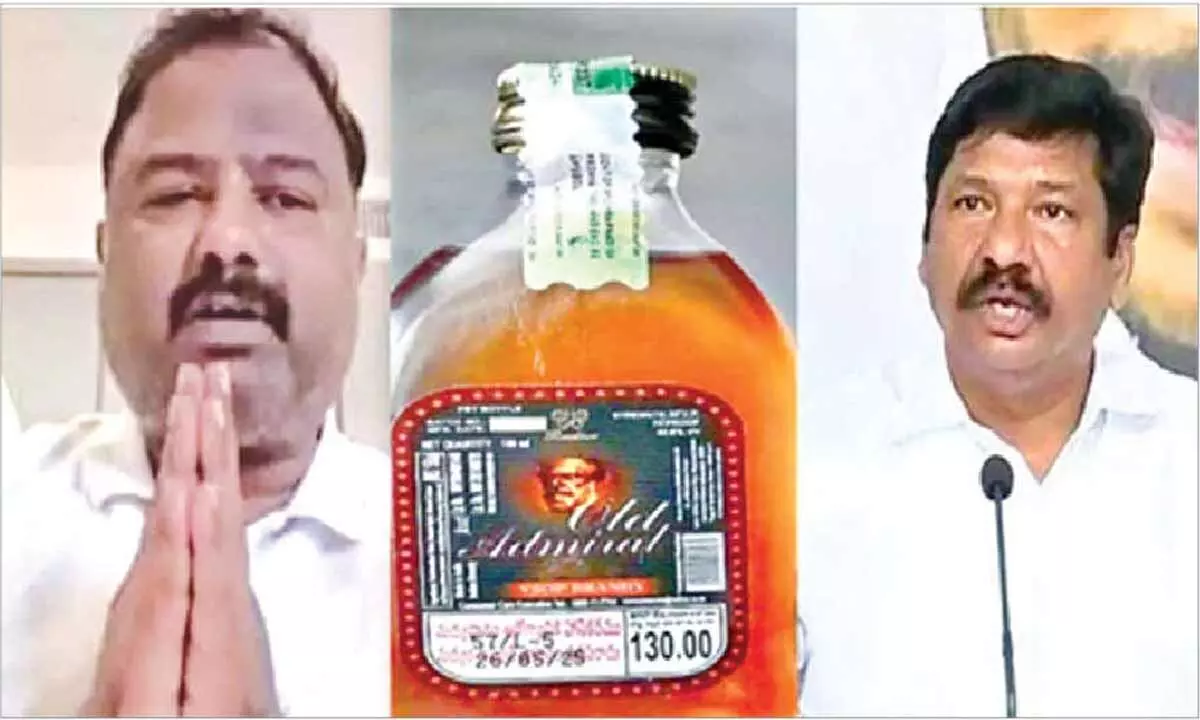
- ts chargesheet alleges a counterfeit liquor racket in Ibrahimpatnam led by Addepalli Janardhana Rao with backing from former minister Jogi Ramesh
- Eight accused named, with investigators outlining financial transactions and long-standing ties between the key accused and Ramesh
- Probe maps the network’s manufacturing units, political links and the operation’s attempt to influence perceptions about the current NDA govt
Vijayawada: The Special Investigation Team (SIT) has filed a chargesheet alleging that a fake liquor racket operated in Ibrahimpatnam under the leadership of Addepalli Janardhana Rao and with the support of former minister Jogi Ramesh, marking a significant escalation in the Vijayawada counterfeit liquor case.
According to the SIT, Janardhana Rao and his associates set up an illicit liquor manufacturing unit in Mulakalacheruvu with the political backing of Jogi Ramesh. Police say the operation was designed not only to churn out counterfeit stock but also to create an impression that fake liquor was proliferating under the present NDA coalition government.
The chargesheet, filed before the excise court, names eight accused and outlines what officials describe as an organised network.
The SIT reports that Janardhana Rao (A1) and his brother Jaganmohan Rao (A2) supervised the manufacture of counterfeit liquor through multiple units established in Ibrahimpatnam.
SIT alleged that the brothers provided between Rs 3 lakh and Rs 5 lakh every two to three months to Ramesh and another associate, Jogi Ramesh, as part of the arrangement. In some instances, officials say Janardhana Rao handed over cash directly.
The chargesheet states that Ramesh and Janardhana Rao maintained close personal ties for more than a decade, from 2006 to 2019. During this period, Ramesh and Ramu were partners in Swarna Bar, later renamed Cherry Bar in 2019, and played a central role in the Ibrahimpatnam bar syndicate in 2017, according to the SIT.
The SIT said its investigation has mapped the structure of the illegal liquor network, the alleged financial transactions, and the operational links between political actors and manufacturing units.