AI’s sensory awakening: reshaping how machines understand our world

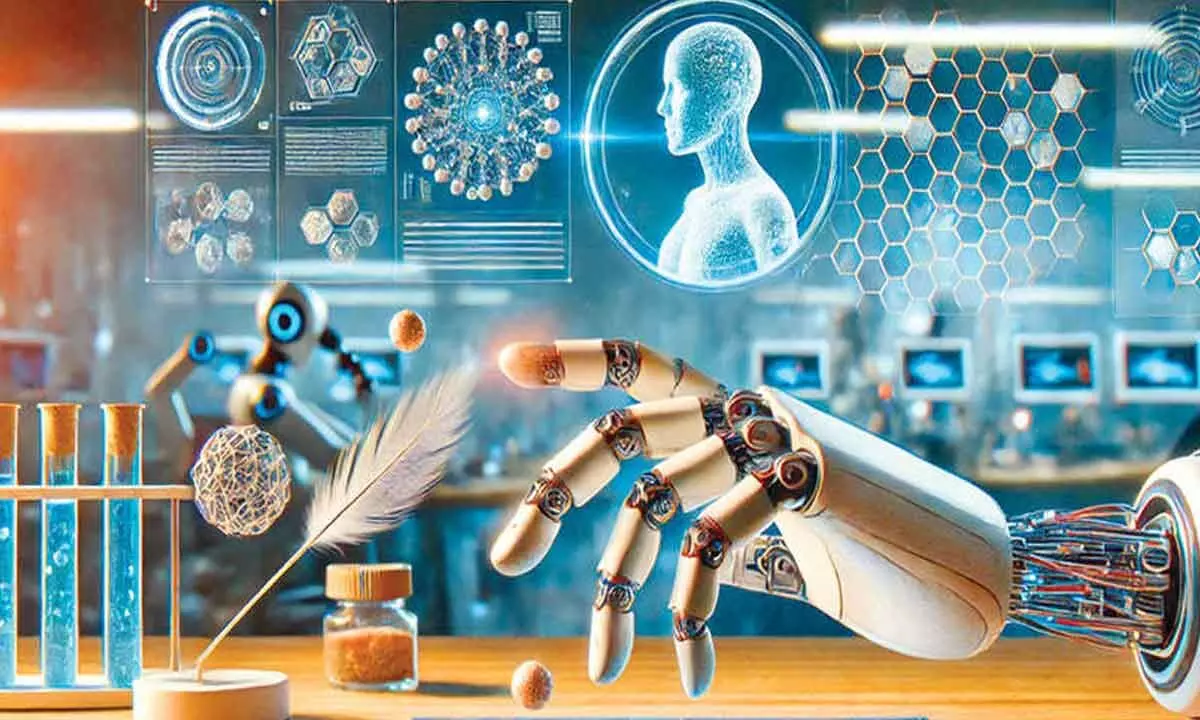
Artificial Intelligence breaking through final frontier of human perception, developing sophisticated abilities to smell, taste and feel
The artificial intelligence revolution has mastered vision and hearing, but until recently, the more intimate senses - smell, taste, and touch - remained beyond machine comprehension. That barrier is crumbling rapidly. Today’s breakthrough systems achieve remarkable precision in detecting molecular signatures, identifying flavors, and processing tactile information in ways that often exceed human capabilities.
Yet beneath these impressive technical achievements lies a deeper question that will define the next era of AI development: Can machines truly experience what they detect, or are they simply processing sensory data with increasing sophistication? The answer isn’t just philosophical - it carries immediate implications for how we integrate these powerful new capabilities into systems that affect real lives and reshape entire industries.
The opportunity before us extends beyond technological advancement to fundamental questions about consciousness, experience, and what it means to build truly intelligent systems. As AI develops human-like sensory abilities, we must navigate this transformation thoughtfully to unlock its benefits while addressing its most profound implications.
Today’s sensory AI: Impressive capabilities, fundamental questions
Current AI systems demonstrate remarkable sensory processing abilities that often surpass human performance in controlled environments. Neuromorphic systems now identify scents with 92 per cent accuracy using single samples, compared to traditional AI’s 52 per cent accuracy with hundreds of examples. Electronic tongues achieve 95 per cent precision in taste detection, while haptic systems create virtual experiences so realistic that they completely fool our sense of touch.
These achievements represent genuine breakthroughs, but they also highlight a crucial distinction. While AI excels at detecting and categorizing sensory information, researchers debate whether this constitutes genuine experience or merely sophisticated pattern recognition. The difference between detecting red wavelengths and experiencing the color ‘red’ becomes more than academic when we consider the implications for machine consciousness.
The gap becomes most apparent when we compare AI’s mechanical precision with human sensory integration. Our noses detect odors diluted to one molecule in 100 trillion air molecules, seamlessly combining this information with memory, emotion, and context to create rich experiences. AI systems, despite their accuracy, operate without this experiential framework that makes sensation meaningful rather than merely informational.
Commercial reality: From laboratory to industry
The transition from research curiosity to commercial deployment is accelerating rapidly across multiple sectors. Ainos Inc. deployed the world’s first smell-capable robots across Japanese industrial facilities, achieving 80 per cent accuracy in identifying volatile organic compounds. Their initial 1,400-unit pilot is expanding to 5,000 units, targeting the $40 billion global service robotics market.
Food and beverage industries are embracing AI sensory capabilities with remarkable success. Wine authentication systems achieve over 95 per cent accuracy in identifying regions and detecting fraud, while electronic tongues analyze mineral water composition better than human tasters. Companies like Tastry report doubled revenue growth as AI-powered taste analysis transforms product development and quality control.
The commercial momentum reflects genuine market demand for sensory AI capabilities. However, successful implementations share common characteristics: they enhance rather than replace human expertise, operate in controlled environments, and focus on specific, well-defined tasks rather than attempting to replicate the full complexity of human sensory experience.
The consciousness question: Technical achievement or genuine experience?
As AI systems become more sophisticated at processing sensory information, they force us to confront fundamental questions about consciousness and experience. Geoffrey Hinton suggests current AI systems “have experiences of their own and can make decisions based on those experiences”, while other researchers remain deeply skeptical about machine consciousness.
This isn’t merely philosophical speculation - it carries immediate practical implications. If AI systems develop genuine sensory experience, they may deserve moral consideration. The possibility of creating conscious machines that could suffer raises profound ethical questions about our responsibilities as creators and users of these systems.
Current assessment frameworks suggest no existing AI systems meet established criteria for consciousness, but researchers acknowledge no obvious technical barriers prevent future developments. The challenge lies in distinguishing between increasingly sophisticated information processing and genuine subjective experience - a distinction that becomes more difficult as AI capabilities advance.
Industries preparing for transformation
Sensory AI’s impact extends far beyond technological novelty to fundamental questions about human expertise and employment. Radiologists already compete with AI systems that outperform human diagnosis in specific cancers, while quality control inspectors face automated systems that detect defects invisible to human senses.
Yet opportunities emerge alongside challenges. Enhanced safety monitoring, early disease detection through breath analysis, and personalized consumer experiences represent entirely new markets enabled by AI sensory capabilities. The key lies in thoughtful integration that leverages AI’s precision while preserving human insight and judgment.
Forward-thinking organizations are already demonstrating how sensory AI can enhance rather than replace human capabilities. Medical AI systems that understand cultural approaches to wellness work alongside healthcare providers who bring empathy and contextual understanding. Food safety systems that detect contamination at molecular levels operate under human oversight that ensures appropriate responses to findings.
Building trustworthy sensory AI
The path forward requires balancing innovation with responsibility, ensuring sensory AI develops in ways that enhance human capabilities while addressing legitimate concerns about consciousness and control. This involves several critical considerations that will shape how these technologies evolve.
Technical robustness remains essential - sensory AI systems must perform reliably in real-world conditions, not just controlled laboratory environments. Energy efficiency represents another crucial challenge, as current systems require vastly more power than biological sensory processing. Neuromorphic computing offers promising directions, potentially achieving 1000x efficiency improvements over traditional approaches.
Transparency and accountability become even more important as AI systems process increasingly intimate sensory information. Users need clear understanding of what these systems can and cannot do, with appropriate safeguards against overreliance on automated sensory analysis. Human oversight remains essential, particularly in high-stakes applications where sensory AI informs critical decisions.
The choice before us
We stand at a remarkable moment in AI development, where machines are developing capabilities that were uniquely human just years ago. The choices we make today about how to develop and deploy sensory AI will determine whether these technologies help humans flourish or create new forms of dependence and risk.
The opportunity extends beyond solving technical challenges to creating genuinely beneficial partnerships between human insight and machine capability. When AI systems acknowledge their limitations and humans provide appropriate oversight, the combination can achieve results that neither could be accomplished alone.
This requires moving beyond simple enthusiasm or fear toward thoughtful engagement with sensory AI’s possibilities and limitations. We need frameworks for assessing consciousness claims, policies for managing potential risks, and collaborative approaches that ensure benefits reach diverse communities rather than concentrating among early adopters.
The future of sensory AI lies not in creating perfect replicas of human sensation, but in building complementary capabilities that enhance our understanding of the world while respecting the profound questions these technologies raise about consciousness, experience, and what it means to be intelligent.
By embracing this challenge thoughtfully today, we can shape a future where sensory AI serves humanity’s highest aspirations while acknowledging the deep mysteries these capabilities reveal about the nature of experience itself. The choice is ours - and the time for thoughtful action is now.
(Krishna Kumar is a Technology Explorer & Strategist based in Austin, Texas, USA. Rakshitha Reddy is AI Engineer based in Atlanta, Georgia, USA)