From detection to protection — scouting holds the key to pest management in the chilli crop

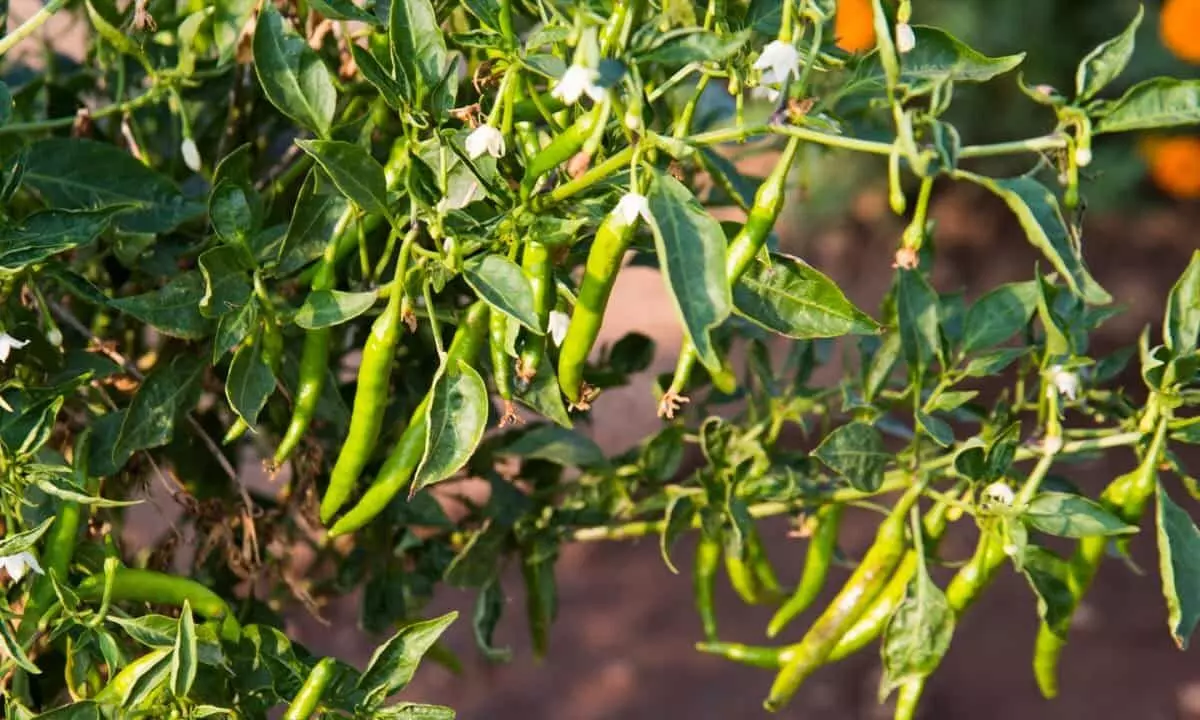
Chilli, once considered a cash crop in India, has witnessed drop in area under cultivation in the leading chilli growing areas. Accounting for nearly a third of global chilli production and forming 30 percent of India’s spice exports, the chilli crop is vital to both India’s economy and food culture. Yet, this dominance is increasingly at risk due to unseasonal rains and pest pressures on farmlands.
Global warming-induced climate change is escalating both the frequency and severity of pest attacks, placing farmers at the mercy of potentially devastating yield losses. Pest infestations in chilli crops can reduce yields by 20-50 percent, with losses surging to 60-90 percent in more severe cases.
The economic impact on farmers is substantial, as seen across major chilli-producing states like Andhra Pradesh, Telangana and Karnataka in 2021, when a black thrips outbreak led to an estimated INR 3,000 – 5,000 crore in losses. Given such stakes, a scientific, multi-layered approach to pest management has become essential to safeguard both crop productivity and farmer livelihoods. And the first, crucial step in this battle against pests is scouting.
The Foundation of Effective Pest Management
In Kharif 2023, over 90% of the chilli growers reported pest attacks in the 50-130 DAT window. Hence, scouting is the cornerstone of an effective pest management strategy, serving as the first line of defence against pest infestations in chilli crops. With the chilli plant susceptible to pests from seedling to harvest, regular monitoring is essential throughout its lifecycle. Early detection through scouting allows for timely intervention, enabling a targeted and sustainable response to pest control.
In traditional pest control approaches, the focus often falls on unregulated pesticide use. Farmers may apply pesticides without scientific guidance on types or quantities, aiming to eliminate pests but inadvertently damaging soil health and reducing yields. This over-reliance on pesticides not only harms the ecosystem but also erodes the long-term sustainability of chilli cultivation.
In contrast, scouting equips farmers to identify the initial signs of pests, diseases, or stress factors, helping them make informed decisions on pesticide application. Scouting further enables precision, allowing farmers to target pests without harming beneficial insects crucial to crop ecosystems.
According to the Food and Agriculture Organization (FAO), early detection of pests can mitigate crop losses by up to 40 percent.
This underscores the vital role of scouting in minimising damage and securing chilli crop productivity. Effective scouting requires a trained eye, and many agricultural communities are now emphasising education and training programs to ensure farmers can accurately recognise early warning signs of pest infestations.
Embracing Technology
The art of scouting has evolved with advances in technology, enabling more refined, efficient monitoring practices. GPS imaging and drones, for example, have revolutionised field observation, allowing for real-time surveillance across large areas. Satellite imaging further enhances the ability to detect and analyse pest presence at a macro level, creating a highly detailed, data-driven picture of the chilli fields’ health and pest status. By detecting pest outbreaks early, these technologies make it possible to contain issues swiftly, reducing both the spread of pests and the need for excessive pesticide application.
These advancements allow farmers to shift from manual scouting methods to more sophisticated, precision-driven solutions. For example, drone surveillance offers high-resolution imagery that can pinpoint pest hotspots, while thermal imaging identifies plants under pest-related stress, flagging affected areas before damage becomes visible to the human eye. Together, these technologies position farmers to better protect their crops, minimise input costs, and ultimately enhance crop yield quality sustainably.
Integrated Pest Management
While scouting is essential, it becomes truly effective when incorporated into a broader Integrated Pest Management (IPM) framework, which combines multiple techniques to keep pest populations below harmful levels. Scouting serves as the foundation of this approach, allowing farmers to monitor and assess pest levels with precision.
Cultural practices are a fundamental aspect of IPM, reducing pest risk by altering the farming environment. Crop rotation, for instance, disrupts pest life cycles by introducing different, non-susceptible plants, helping to reduce the persistence of pest populations. Field sanitation is another essential cultural practice. Removing plant debris and other organic matter deprives pests of potential breeding grounds. Irrigation strategies also play a role—since pests often thrive in humid conditions, optimising moisture levels can make the chilli crop less susceptible to pest outbreaks.
While chemical control at it’s core, remains a vital component of pest management. Scouting plays a vital role, guiding farmers to use pesticides judiciously and only in targeted areas. By using precise amounts only when required, chemical intervention minimises harm to beneficial insects and reduces negative impacts on soil health. This restraint helps protect the environment while ensuring the effectiveness of pest control efforts.
Together, these techniques enable a balanced, sustainable approach to pest management, with scouting as the central, guiding tool. By integrating cultural, biological, and chemical strategies under a cohesive IPM framework, farmers can confidently safeguard their chilli crops, achieve reliable yields, and uphold environmental health.
Strengthening IPM with Advanced Crop Protection Innovation
Building on the foundation of scouting and IPM, the adoption of next-generation crop protection solutions has further strengthened chilli farmers’ resilience. These advanced technologies are specifically designed to deliver targeted control against thrips and mites, two of the most damaging pests for chilli cultivation. Unlike conventional broad-spectrum pesticides, these solutions combine high efficacy with crop safety, ensuring that while pest pressure is effectively reduced, the plant’s health and vigour are preserved. Their novel chemistry and unique modes of action also reduce the risk of resistance build-up, enabling longer-term protection for farmers. Moreover, their ability to safeguard beneficial insects and fit seamlessly into IPM programs makes them a preferred choice for sustainable chilli farming. By integrating such innovations with scouting and other cultural practices, farmers can significantly enhance productivity while reducing environmental impact.
As India’s chilli farmers face an increasingly complex pest landscape, investing in scouting as a pest management technique is no longer a choice – it is a necessity. Scouting offers a proactive, data-backed foundation for pest management, allowing for the early detection that is essential to avoid costly losses. By combining scouting with other IPM strategies, including cultural and biological controls, India’s chilli growers can mitigate pest risks, maintain high-quality yields, and protect their economic well-being.
NK Rajavelu, CEO-Crop Protection Business, Godrej Agrovet Ltd