Gold Purity Standards and Loan Approval Outcomes

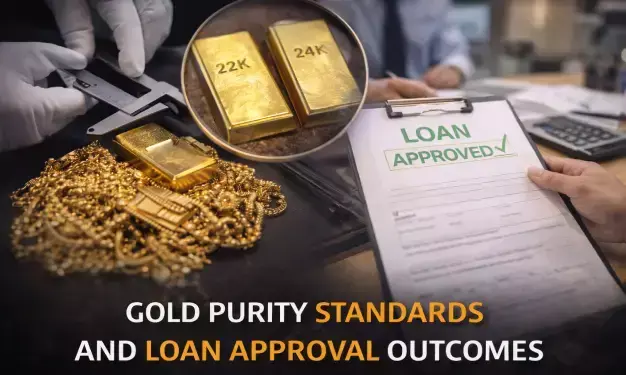
Learn how gold purity standards impact gold loan approval outcomes. Understand how karat value, valuation methods, and lender policies influence loan eligibility, interest rates, and sanctioned amounts.
Gold has served as a reliable financial safety net for centuries. When you need quick access to funds, your jewelry or coins can act as the perfect collateral. However, the amount of money you receive depends heavily on the quality of the metal you provide.
Understanding how lenders view gold purity is essential for anyone looking to leverage their assets. It is not just about the weight of the item. The actual gold content determines the market value and the risk level for the financial institution.
Understanding the Carat System in Lending
The carat system is the universal language of gold purity. It measures the ratio of pure gold to other metal alloys. Pure gold is 24 carats, which means it contains 99.9 percent gold. While this is the most valuable form, it is also very soft. Most jewelry is made from 22 carat or 18 carat gold to ensure durability.
When you seek a loan, the lender must determine exactly how much pure gold is in your item. They do not lend against the weight of the copper, silver, or nickel mixed into the piece. If you bring in a 14 carat ring, the lender will only value the 58.3 percent of the item that is actually gold. This distinction is the primary factor in determining your maximum loan limit.
The Appraisal Process and Purity Verification
Lenders use several methods to verify the quality of your gold. The most common method is the touchstone test. An appraiser rubs the gold against a stone and applies a specific acid. The reaction indicates the purity level. This method is quick and generally accurate for standard jewelry.
More advanced institutions use X-ray Fluorescence machines. these devices can determine the exact elemental composition of an item without causing any damage. This technology provides a high level of precision. It ensures that you get a fair valuation based on the true gold content. If your gold is hallmarked, the process is often faster. A hallmark is an official mark that guarantees the purity of the item.
How Purity Influences the Loan to Value Ratio
The Loan to Value ratio, or LTV, is a critical term in the lending world. It represents the percentage of the gold value that the lender is willing to give you as a cash loan. Regulatory bodies often set a cap on this ratio to protect both the lender and the borrower.
Higher purity gold often leads to a smoother approval process. Because 22 carat gold is easier to value and liquidate, lenders may feel more comfortable offering the maximum allowable LTV. If the gold is of lower purity, the lender might be more conservative. They have to account for the cost of refining the gold if you happen to default on the loan.
Streamlining the Process with a Digital Gold Loan
The financial landscape is changing rapidly. You no longer have to visit multiple physical branches to find the best rates. A digital gold loan allows you to start the process from the comfort of your home. You can use online calculators to estimate your loan amount based on the current market price and the purity of your gold.
These digital platforms often provide a more transparent view of how purity affects your outcome. You enter the weight and the carats, and the system provides an instant estimate. This transparency helps you make an informed decision before you even speak to an appraiser. It removes the guesswork and helps you understand the true worth of your collateral in real time.
Preparing to Gold Loan Apply Successfully
When you are ready to gold loan apply, preparation is key. Start by gathering any invoices or certificates of authenticity you have for your jewelry. These documents can serve as preliminary proof of purity. While the lender will still conduct their own appraisal, having documentation can speed up the administrative side of the application.
Clean your jewelry before taking it in for an appraisal. While dirt does not change the gold content, a clean item is easier to inspect for hallmarks and stamps. You should also stay informed about the daily market price of gold. Since gold prices fluctuate constantly, the timing of your application can impact the final loan amount you are offered.
The Impact of Alloys on Final Valuation
Alloys are necessary for making gold functional, but they complicate the valuation process. Stones, gems, and lac are often found in traditional jewelry. Lenders will subtract the weight of these non-gold elements from the total weight of the item. This is a common point of confusion for many borrowers.
If you have a heavy necklace that is mostly decorative stones, the loan amount might be lower than you expect. The lender is only interested in the net weight of the gold. Understanding this helps you set realistic expectations for your loan approval. It is always better to prioritize items with high gold weight and minimal stone weight when seeking a loan.
Long Term Benefits of High Purity Assets
Holding high purity gold is a smart long term strategy. Not only does it retain value better during inflation, but it also provides the best leverage during financial emergencies. 24 carat coins and 22 carat jewelry are the gold standards for collateral. They are universally accepted and easy to value.
When you maintain a portfolio of high quality gold, your access to credit remains strong. You can secure lower interest rates and higher loan amounts because your collateral is viewed as low risk. Purity is more than just a technical specification. It is a measure of your financial flexibility and your ability to access liquidity whenever you need it most.