The Global Tobacco Supply Chain: Where Does Andhra Stand?

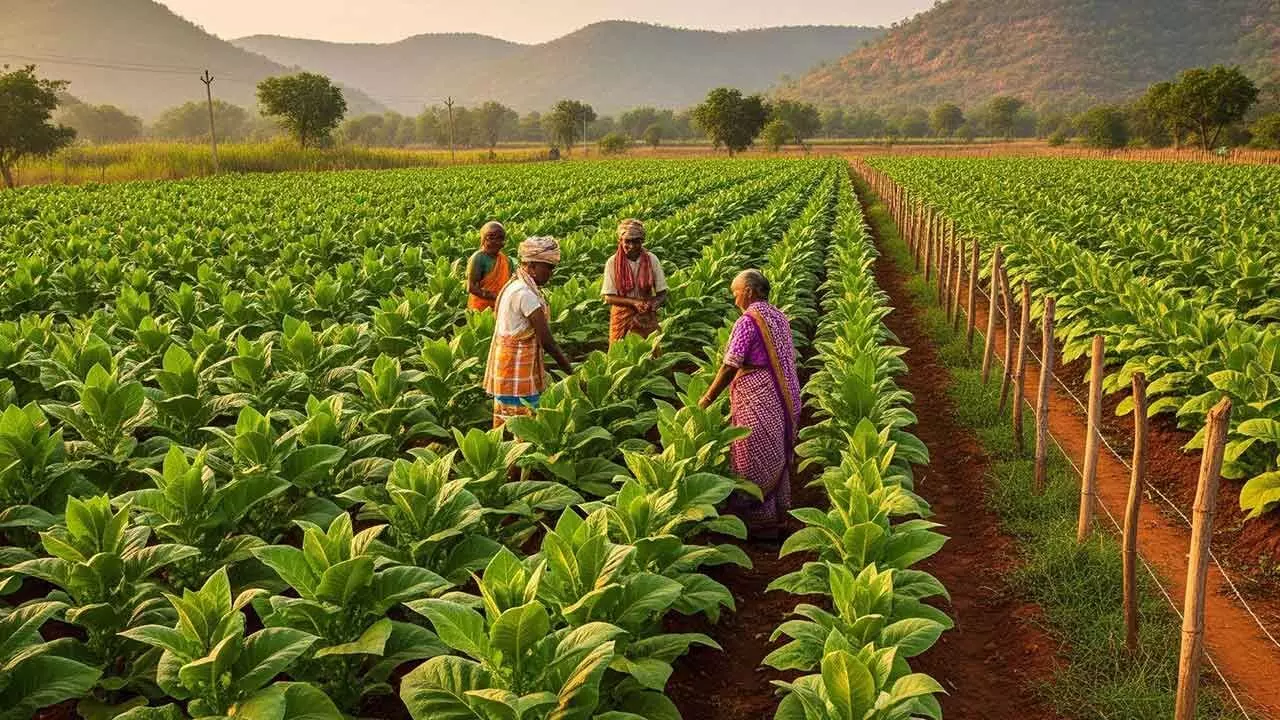
In the global tobacco market, few regions are as influential as Andhra Pradesh. From the Flue-Cured Virginia (FCV) areas of Prakasam, Nellore, and Guntur to the HD Burley fields, the state has been India's tobacco leader for decades. However, Andhra now faces pressing challenges. It deals with a market crisis at home, increasing competition internationally, and the pressing need to redefine its role in the global value chain.
Andhra vs. Global Leaders
Brazil leads global tobacco with early investments in barn modernization, traceability, and quality, helping farmers earn 15–20% above the world average. Zimbabwe rebounded from collapse by diversifying buyers and using state-backed price platforms, while Malawi carved a niche by focusing on select grades and traceability for EU markets.
Andhra matches this with scale and quality, exporting FCV worth over ₹12,000 crore annually. But unlike Brazil’s reforms or Zimbabwe’s resilience, it depends on a narrow buyer base—over half its shipments go to Belgium, the Philippines, and Indonesia, and 60% to the EU, where tightening sustainability and traceability rules pose rising risks.
Speaking on the issue, G. Konda (Siva) Reddy, President, Tobacco Growers Association, Kandukur said, ’’In the Kandukur area, overproduction has been a major concern. Farmers cultivated more than the market could absorb, leading traders to reduce prices, claiming that supply is higher than demand. They also suggested that local cultivation should be reduced because of increased tobacco output in other countries. Unfortunately, farmers are often misled. At the start of the season, traders claim there is too much stock. But by January, they say there is a shortage. Even if purchases begin in March, they often do not start buying seriously until June. When farmers question the delay, they are told that orders have not come in yet.’’
Balancing Gains and Risks
Andhra is among the world’s top producers of FCV tobacco, recognized globally for its scale, consistency, and quality. Prices have doubled in five years, rising from ₹120 per kilo in 2019 to over ₹260 today. Yet, the sharp fall in HD Burley prices this year and dependence on a handful of buyers highlight its vulnerabilities. Outdated barns and limited processing capacity further restrict value creation.
Still, opportunities exist: barn modernization could add ₹20–30 per kilo, and EU compliance could safeguard a quarter of exports. Investments in export-grade processing and packaging could lift earnings by ₹15–20 per kilo. Strategic partnerships and foreign investment would bring modern curing, traceability, and wider market access, making Andhra a premium, compliance-ready hub.
Turning Crisis into Competitiveness
The HD Burley drop is not just a temporary setback—it serves as a warning. Andhra cannot continue with a volume-driven strategy that heightens losses when demand declines. Instead, it must shift to a value-driven approach, similar to what Brazil and Zimbabwe did during their pivotal moments. If Andhra secures even ₹1,000 crore in targeted infrastructure, backed by state and domestic investment, it could increase earnings by 20 to 25% per kilo while protecting itself from global price fluctuations. More importantly, this shift could reposition Andhra as a certified premium source in the global tobacco supply chain—moving it from a bulk supplier to a strategic ally for global markets.
The Road Ahead
Andhra’s tobacco economy is at a critical juncture. To compete with Brazil, Zimbabwe, and Malawi, it needs more than just volume; it needs vision. This vision should create a system that ensures farmer security while meeting global compliance, improving infrastructure, and diversifying markets. The decision is clear: remain exposed to price collapses like that of HD Burley, or evolve into a premium player that achieves stability and respect in the international supply chain.
The chance to act is slim, but if taken, Andhra could secure its spot among the leading global tobacco producers for many years to come.