The Morpho Dimensions Method: How We Marry Data, Design, and Delivery in Office Interiors

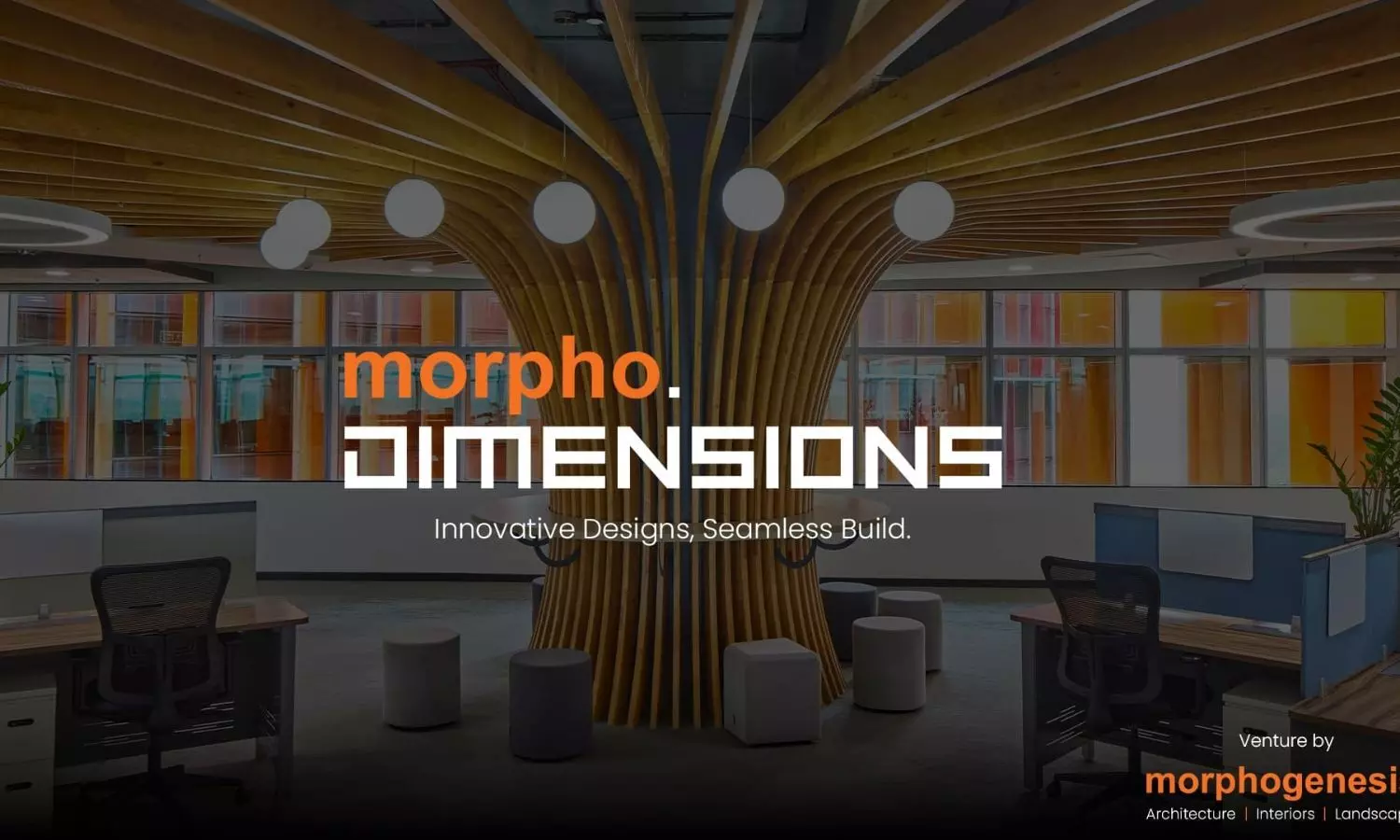
The Morpho Dimensions Method: How We Marry Data, Design, and Delivery in Office Interiors
Post-pandemic hybrid work models have taken hold, with real estate strategies continuing to change.
Workplace design is transitioning into a new age. Post-pandemic hybrid work models have taken hold, with real estate strategies continuing to change. As a result, contemporary office spaces nowadays look forward to deliver purpose, flexibility as well as measurable performance. Moreover, the significance of offices has now shifted from a static environment to a dynamic platform that enables productivity, collaboration and culture.
In this frame of reference, interior design is no more driven by intuition or aesthetics alone. Rather, it has become a strategic tool - guided by data, executed with precision and aligned with business goals. Weighing these aspects, Morpho Dimensions has emerged as the ideal partner for firms seeking to future-proof their offices in 50+ parameters. Driven by its SOUL philosophy (Sustainable, Optimised, Utility-driven and Livable), Morpho Dimensions delivers end-to-end solutions - consistently exceeding international standards for efficiency, productivity and user experience. Additionally, with an integrated, technology-driven and performance-focused approach, Morpho Dimensions is transforming the complex challenges of modern workspace design into environments that drive success for today’s and tomorrow’s workforces.
SOUL Framework: A Foundation for Future-Ready Workspaces
The SOUL philosophy is the cornerstone of practically every project undertaken by one of the leading office interior design firms, Morpho Dimensions. This framework effectively blends the creative and operational aspects of office design while ensuring that spaces are responsive, high-performing and human-centred.
Moreover, the process is entirely end-to-end. From conceptualisation to execution, Morpho Dimensions handles every stage. This leads to preserving design integrity, efficiency and consistency. In addition, projects are managed under a clear triangle of priorities: time, quality, and cost.
What makes this approach distinctive is its iterative and flexible design process. Clients can test evolving design options, visualise possibilities and make even more informed decisions faster. Also, the use of AI automates rule-based tasks, accelerates iteration, enhances detailing precision and frees up bandwidth for creative problem-solving. Considering these benefits, the global AI in the interior design market is estimated to reach USD 7299 million by 2033.
From Concept to Execution: Designing with Data
Effective office interiors not only consider people's expectations but also abide by the patterns. Morpho Dimensions uses a robust suite of tools including climate analysis, traffic and access studies, usage patterns, workplace behaviour insights to uncover how spaces are effectively used. These inputs reveal operational inefficiencies, space preferences and behavioural trends that help shape informed design decisions.
Another key tool - descriptive and inferential analytics - provides a clear picture of workspace performance. On the other hand, predictive and prescriptive models offer pathways to anticipate future needs and optimise spatial planning. For example, if booking data consistently shows a preference for smaller meeting rooms over larger conference spaces, the layout can be adapted to reflect actual demand.
Similarly, employee feedback and behavioural studies help designers tailor spaces to match real-world workflows. This further helps in ensuring that offices don’t just look good on day one but remain relevant over time.
Making Design Grounded in Reality
In recent times, hybrid work models have become the new normal in the corporate landscape. It significantly combines the flexibility of remote work with the benefits of in-office collaboration. Today, about 64 per cent of leaders have reported that their companies use a hybrid model. Nevertheless, designing for hybrid work isn’t about fitting yesterday’s office into the modern schedules. Instead, it’s about acknowledging the wide spectrum of working styles and expectations.
By integrating data, it becomes easier to uncover what hybrid means within a specific organisation. It reveals how often people come in, what types of spaces they use and why. These insights shape smarter zoning, with environments that support both teamwork and individual work.
Consistency, Efficiency and Design Integrity at Every Square Foot
In the modern cost-conscious climate, workplace designs have started functioning under a new mandate: deliver more with less. With most of the large firms planning to reduce office space, every inch is expected to deliver performance. This shift demands a design approach that is outcome-focused rather than appearance-led.
Additionally, design choices ranging from ventilation and lighting to room sizes and configurations can all be guided by performance metrics. The outcome is not just an enhanced employee experience but also operational savings together with reduced environmental impact. Also, modular designs, energy-efficient systems and smart automation have become standard and are no longer optional. Consequently, the global interior design market size is forecasted to reach USD 9656 million by 2030, owing to the novel technological developments in the interior design domain.
In a nutshell, the rise of hybrid work models has transformed office spaces into dynamic as well as flexible environments for meeting both collaboration and individual work requirements. This shift demands workspaces that are adaptable, data-informed and aligned with organisational goals. This is where Morpho Dimensions excels. By leveraging the SOUL framework - Sustainable, Optimised, Utility-driven, and Livable - Morpho Dimensions creates agile, exceptional workspaces that not just address the needs of the modern workforce but also remain relevant as business needs evolve. By leveraging data analytics and design thinking, the SOUL framework ensures that workspaces are functional as well as foster creativity, enhance productivity, and align with corporate objectives.
As the workplace continues to evolve, Morpho Dimensions ensures that office spaces are ready for the future, efficient, adaptable, and strategically aligned with the needs of tomorrow’s workforce.