Vikram Pandit: Everything You Need To Know

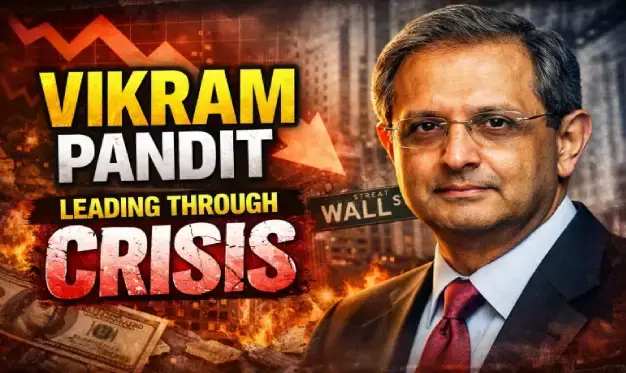
Explore the life and career of Vikram Pandit, former Citigroup CEO, including his early life, education, leadership journey, achievements, and impact on the global banking industry.
If you’ve spent any time studying business leaders who’ve actually been through chaos, not just talked about it, you'll eventually come across Vikram Pandit.
Not the LinkedIn version. Not the polished “lessons from success” version.
The real one.
Because Pandit didn’t just run a company he ran one of the world’s largest financial institutions during one of the worst economic crises in modern history. And that changes how you think, decide, and lead.
But here’s the thing most people get wrong: they focus on his position, not his thinking.
And this article is not about position, it's about THINKING.
From Nagpur to Wall Street:
Pandit’s story doesn’t start in a boardroom. It begins in India, where he was born in Nagpur before moving to the US when he was 16 years old. He would go on to attend Columbia University, where he would not only complete one but four degrees, including a PhD in finance.
Well, that tells you something right there.
He wasn’t built for shortcuts.
Before becoming CEO of Citigroup in 2007, he spent decades at Morgan Stanley, built a hedge fund, and eventually found himself leading a bank right before the 2008 financial crisis hit.
Timing like that isn’t lucky. It’s brutal.
And it forces clarity.
The First Lesson:
In his interview on CEO Insider, Pandit mentions something that most early-stage founders ignore:
“RESPONSIBILITY COMES BEFORE AUTHORITY.”
That sounds simple. Right? But think about it.
Most people wait:
- For a title
- For validation
- For someone to say “you’re ready”
Pandit didn’t.
He was given serious decisions early in his career, and that shaped how he viewed leadership not as power, but as responsibility.
If you’re trying to build an agency, startup, freelance career this hits differently.
Because no one is coming to hand you authority.
You take responsibility first. Authority follows later.
Crisis Doesn’t Build Leaders. It Reveals Them.
When the 2008 financial crisis hit, Citigroup wasn’t just struggling it was fighting for survival.
And this is where Pandit’s mindset becomes interesting.
He says crisis does one thing really well:
It removes noise.
Suddenly:
- You know what matters
- You know what doesn’t
- And you don’t have the time to act
He always talks about staying calm in tough situations and focusing on the core fundamentals. He always trusts in one thing. Doing these will get you out of any situation even when everything around you is unstable.
This is where most people break.
Not because they lack intelligence but because they lack emotional control.
Decision-Making When You Don’t Have Enough Information
Here’s something you won’t hear in most business advice:
You will almost never have complete information.
Pandit puts it bluntly, leaders make decisions knowing they’re incomplete, while people’s livelihoods are on the line.
That’s uncomfortable.
But it’s real.
And if you’ve ever:
- Worked with clients
- Managed a team
- Taken financial risks
You’ve already felt this at a smaller scale.
The difference is, at his level, the consequences are multiplied.
Which is why he emphasizes preparation, principles, and experience over instinct.
Not a gut feeling. Grounded thinking.
Short-Term Thinking
The most practical insight you can get from his interview is “Survive the short term with long term value.”
Most people choose one:
- Either they chase quick wins
- Or they ignore immediate problems for future vision
Pandit’s approach is stricter:
A short term decision should never damage a long term trust.
This is where a lot of us like freelancers, founders etc mess up.
We:
- Overpromise to close deals
- Underdeliver to survive
- And slowly destroy credibility
It works for a while.
Then it doesn’t.
Why Ethics Is Not Optional in Business
Let’s talk about something people like to skip: ethics.
Pandit doesn’t treat ethics like a moral add-on. He treats it like infrastructure.
His reasoning is simple:
Finance runs on trust. And once trust is gone, nothing else works.
That applies beyond banking.
If you’re:
- Building a brand
- Selling services
- Creating content
Trust is your currency.
Break it once, and recovery is expensive.
Sometimes impossible.
Owning Mistakes Without Killing Momentum
Another underrated point he makes:
Leaders must own outcomes, especially the bad ones.
Not deflect. Not explain them away.
Own them.
Because avoiding responsibility doesn’t just damage reputation it weakens internal morale.
This is where most people hesitate.
They think owning mistakes makes them look weak.
In reality, it does the opposite.
It stables the system.
Transparency:
Here’s something that sounds true but isn’t practiced enough:
People can handle bad news better than silence.
Pandit emphasizes transparency during uncertainty because it reduces fear and speculation.
Think about your own experiences.
When communication disappears:
- Anxiety increases
- Assumptions grow
- Trust drops
Whether you’re leading a company or just managing clients, this matters more than you think.
The Two Biggest Mistakes Leaders Make in Crisis
According to Pandit, leaders usually fall into one of two traps:
- Acting too fast without understanding the problem
- Waiting too long, hoping things fix themselves
Both are dangerous.
The balance is harder than it sounds:
- You need analysis
- But you also need decisive execution
That tension never goes away.
You just get better at handling it.
How Trust Is Actually Built (Not Talked About)
A lot of people think trust comes from:
- Charisma
- Communication
- Branding
Pandit disagrees.
He says trust is built through consistency.
That means:
- Doing what you say
- Repeating it over time
- And staying predictable in your values
It’s slower than most people want.
But it’s real.
Culture Over Rules
In complex organizations, rules don’t cover everything.
That’s where culture steps in.
Pandit points out that when systems get complicated, values guide decisions more than policies.
This is why some companies scale smoothly and others collapse under pressure.
Because culture isn’t visible at the start.
But it shows up when things go wrong.
What This Means for You (Even If You’re Not a CEO)
You might be thinking:
“This is all big-company stuff.”
It’s not.
The principles apply at every level:
- Freelancers handling multiple clients
- Creators building audiences
- Founders trying to scale
Because pressure is pressure just at different scales.
Not because it’s inspirational.
But because it’s practical.
The Real Definition of Leadership Success
Pandit’s final idea is probably the most important.
He defines lasting leadership success as leaving institutions stronger than you found them.
Not richer.
Not bigger.
Stronger.
That includes:
- Systems
- People
- Trust
- Culture
And that’s a higher bar than most people set.
Final Thought
There’s a reason leaders like Vikram Pandit stand out.
It’s not because they had easy paths.
It’s because they operated when things were unclear, uncomfortable, and high-stakes.
And they didn’t rely on motivation.
They relied on discipline.
If you’re building anything right now business, career, reputation this is the part worth paying attention to.
Because when things get difficult, strategy matters.
But mindset decides everything.