
Premiumisation in housing not bad but poor should not be ignored

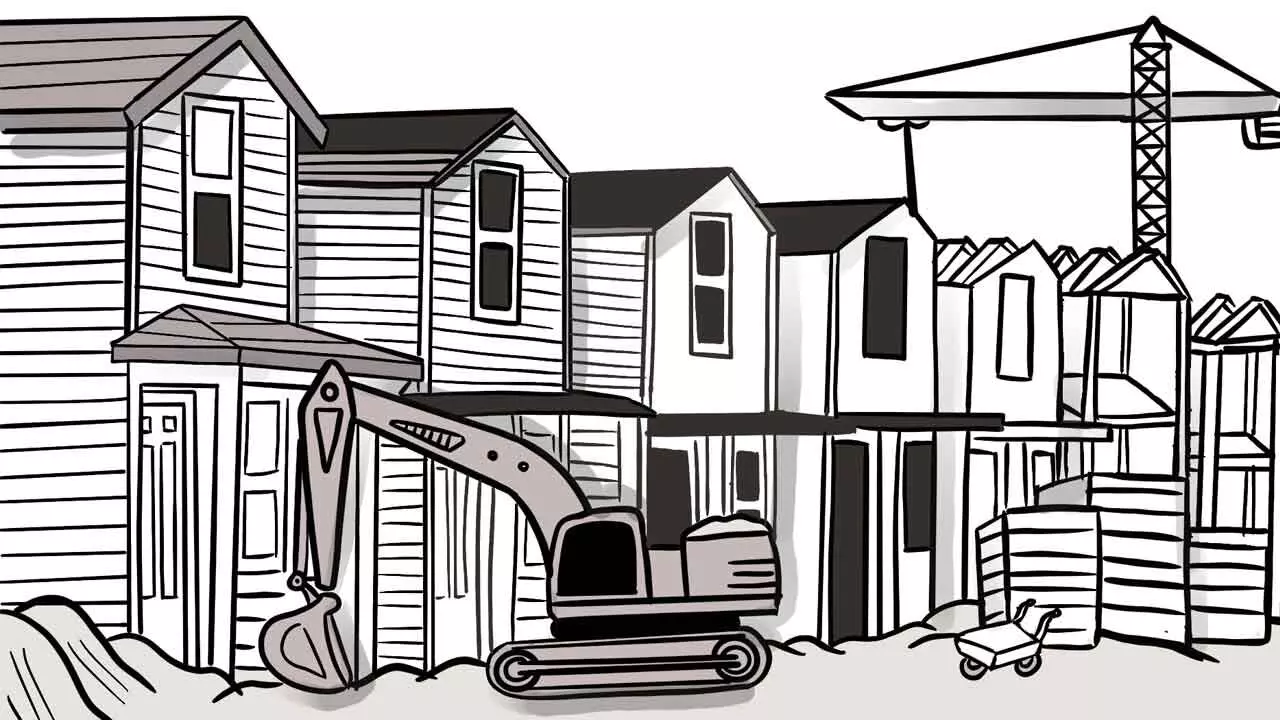
The housing market’s trend towards premiumisation was accentuated in 2025, with demand rising in higher price segments (Rs one crore and above) even as total residential sales fell 11 per cent from 290,000 units in 2024 to 270,323 units in 2025. The trend can be seen as a symptom of growing inequalities. But inequalities per se neither hurt most people nor result in social or political unrest; it is only when those at the bottom of the pyramid find that the going is getting tough.
Conventional wisdom has it that ‘when the going gets tough, the tough get going,’ but the people we are talking about are vulnerable, not tough. The reason is that despite the economy growing at a brisk pace, which is even recognised by global organisations, the government has not been able to translate the high growth rate into large numbers of quality jobs. The concomitant development is the upper echelons of society benefiting disproportionately; this is evidenced also from the impressive growth in top luxury brands. India is entering a new phase of consumption as rising incomes steadily expand the base of premium-ready consumers, a report by SOIC Research said five months ago.
In other words, premiumisation is not exactly unprecedented; it is the inability of the humbler sections of people to augment their incomes that is hurtful. This is reflected in the declining sales of units lower than Rs one crore. The share of these units in the total number of houses sold came down from 47 per cent in 2024 to 37 per cent in 2025.The one factor contributing to the high house prices is expensive land. A 2020 Niti Aayog report points out that “The Indian housing market has, in the past, experienced a skewed demand-supply management. Housing backlogs co-exist with stressed assets and vacant housing stock. The development of affordable housing is constrained by economic and spatial issues.
On the supply side, scarcity of developed and encumbrance-free urban land, increased cost of construction, growing informal housing options, absence of viable rental market and master-plan restraints have lowered the potential growth of formal affordable housing market.” In short, the government knows the problem; what is lacking is not diagnosis but decisive action. Policy responses to housing stress have been fragmented, cautious, and often tilted towards stimulating demand rather than structurally improving supply. Subsidies and interest subventions may help a small segment of buyers, but they do little to address the root causes of unaffordable housing—land scarcity, regulatory bottlenecks, and weak urban governance.
Addressing these challenges requires politically difficult but economically necessary reforms. Urban land markets need unlocking through faster approvals, clearer titles, and large-scale land pooling and redevelopment, especially in inner-city areas. It is essential that zoning laws and floor space index (FSI) norms are rationalised, balancing the need to accommodate growing urban populations with the imperative of safety. Equally important is the creation of a functional rental housing market, which can absorb migrant and low-income workers without forcing them into ownership models they cannot afford.
Beyond housing-specific measures, the deeper issue remains income growth. Without sustained creation of well-paying jobs, especially in manufacturing and modern services, affordable housing will remain a mirage for millions. Skill development, labour-intensive policies, and urban employment generation must complement housing reforms. Otherwise, the market will continue to cater to the needs of the rich.


