Juggi Bhasin on power, politics and perseverance

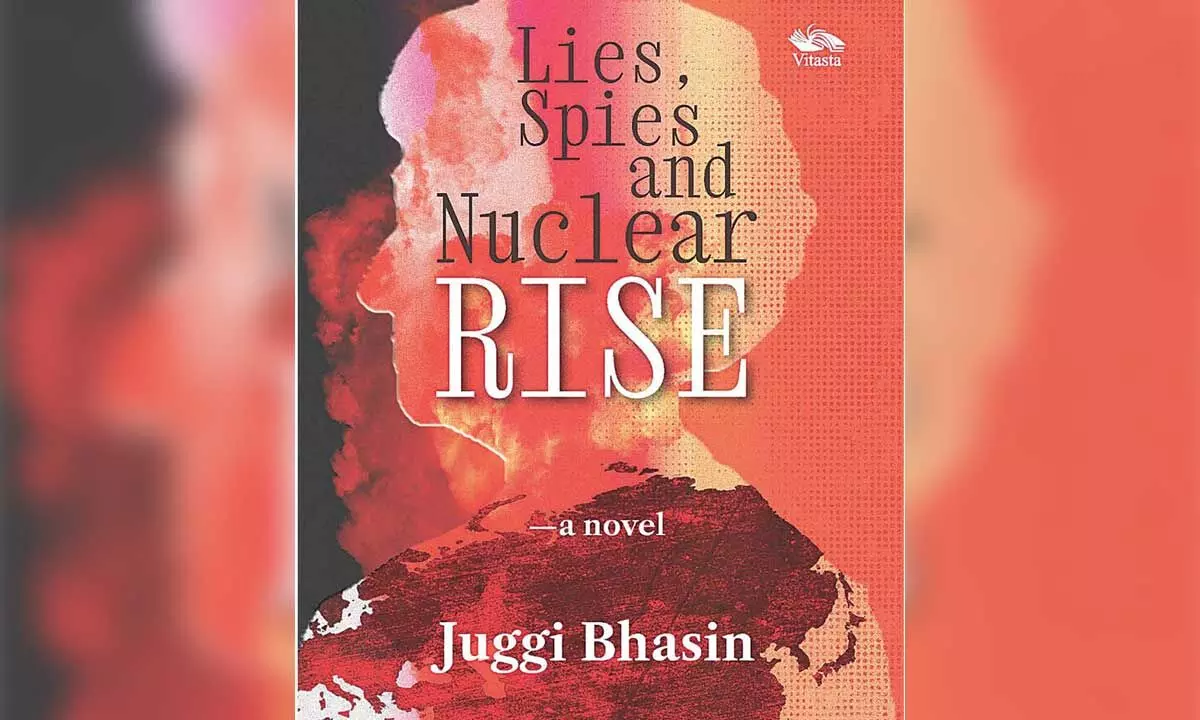
Journalist-turned-author Juggi Bhasin has spent decades covering the highs and lows of geopolitics, witnessing events that many would call stranger than fiction. It is this very reality that inspired his latest novel, ‘Lies, Spies and Nuclear Rise’, a taut political thriller where the boundaries between fact and imagination blur. “In my years of experience in broadcasting and being associated with various creative art forms, one thing I have learnt is that sometimes, if not often, reality can be stranger than fiction,” he reflects. “Keeping that in mind, I wrote this book, and therefore the lines of distinction between fact and fiction are deliberately blurry.”
At the heart of the novel is Prime Minister Priya Kaul, a character whose leadership, pressures, and legacy resonate with history. “Priya Kaul’s character is inspired by Indira Gandhi,” Bhasin notes. “Both the real and fictional character were and are women of substance—determined and gritty in their choices, very complex creatures, sometimes taking terribly wrong decisions but still resolute in what they set out to do.”
The story spans decades of high-stakes diplomacy, nuclear tests, and shadowy intelligence operations. While firmly rooted in history, Bhasin freely employs imagination to drive the narrative. “The foundation of the story is real, but imagination has been used to flesh out the characters, make the plot contemporary, and above all make the novel a page-turner,” he explains. “For instance, the decision to go nuclear in 1974 is a historical fact, but the exact reasons why this decision was taken are still speculative. I’ve used imagination to tell a compelling story.”
Characters like Spymaster Rhino and scientist Dr. Venkat Iyer carry much of the novel’s moral weight. Bhasin admits that while they are not direct representations of real individuals, they are inspired by people he encountered over his journalism career. “Not exactly like them, but yes—I have met people who, in parts, carry the same kind of moral fibre and determination to achieve their goals as these two gentlemen do in the book,” he says.
Looking back on India’s evolution over the last forty years, Bhasin marvels at the country’s ascent on the global stage. “Nobody cared for India in the seventies, and today nobody can stop talking about India,” he observes. “No high table can be set today without India’s participation. The country has changed enormously. India’s economic clout, its demographic dividend, and military might will exponentially increase in the next decade. Once we cross the magic figure of a $10 trillion economy, no country in the world will be able to dictate any terms to India.”
Beyond politics and strategy, ‘Lies, Spies and Nuclear Rise’ explores human vulnerability, ambition, and resilience. “The book should inspire young India that if you are determined to realize your dreams, you can make it happen, come what may—even if the path is rocky and full of pitfalls,” Bhasin emphasizes. “Nothing in life was ever achieved without a struggle. That is the central point of the book.”
Despite the intensity of his reporting career, Bhasin recalls moments in the field that still make him smile. “I was among the few who covered the demolition of the Babri Masjid, which changed the course of Indian history,” he recalls. “I still remember the simple shilanyas performed at the site. Who could have imagined that such a simple ceremony would trigger the biggest sociological and cultural upheaval in post-independent India? It did, and it finally resulted in the construction of the Ram temple.”
With ‘Lies, Spies and Nuclear Rise’, Juggi Bhasin offers more than a thriller—he provides a lens into India’s strategic past, the human stories behind political decisions, and a narrative that challenges readers to consider the thin line between reality and imagination.