New dynamics of success

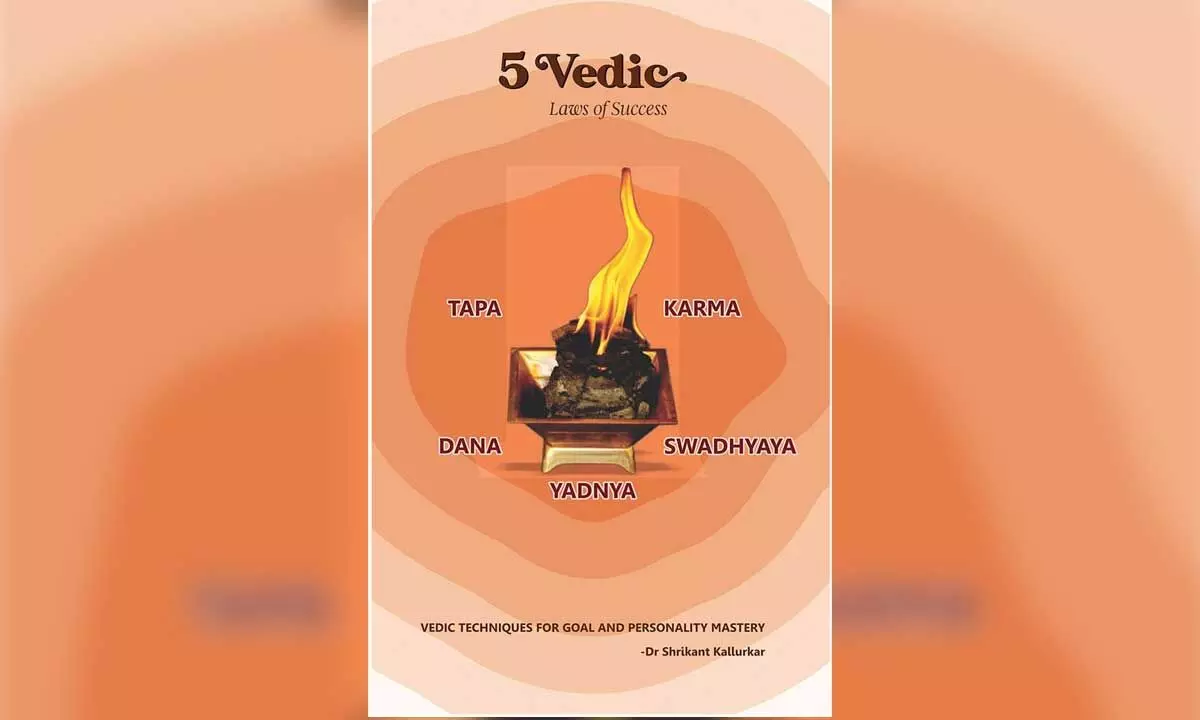
‘5 Vedic Laws of Success’ by Prof. Shrikant Kallurkar is not just another self-help guide—it is a profound synthesis of ancient Vedic wisdom and modern personal development techniques. Unlike typical motivational books that focus only on ambition and productivity, this one emphasises inner discipline, balance, and purpose-driven success. What sets it apart is its rootedness in Indian philosophy, making success not just material but also ethical, spiritual, and sustainable.
The central idea of the book is that true success results from aligning one’s career, personality, and lifestyle with timeless Vedic principles. The author structures the journey through five key laws derived from Yajna (sacrifice), Dana (charity), Tapa (self-restraint), Karma (right action), and Swadhyaya (self-study). Rather than presenting them as religious concepts, he reinterprets them as practical tools for goal setting, stress management, and personality development.
One of the most engaging parts of the book is the section on Choice of Career. The author beautifully illustrates that satisfaction varies from person to person—what brings joy to one may not satisfy another. Through a powerful story of a businessman and a cowherd boy, he highlights that success should be personally defined, not borrowed from societal expectations. This perspective encourages readers to measure success not just by income or prestige but by inner peace and self-alignment.
The chapters on Personality Development stand out due to their depth and structure. The author introduces the Panchakosha theory—Food, Breath, Mind, Knowledge, and Bliss Sheath—to explain that personality is not just appearance or communication, but a combination of body, behavior, thoughts, intellect, and values. Each layer is given practical guidance—diet tips for physical balance, breathing techniques for emotional control, and self-reflection exercises to improve decision-making.
One of the most fascinating practices described is Agnihotra, a Vedic fire-based ritual performed at sunrise and sunset. While it may sound spiritual or ritualistic, the author supports it with scientific observations—such as its effect on stress reduction, improved focus, and environmental purification. Whether one chooses to perform Agnihotra or not, the idea of taking a daily “Creative Pause”—a few minutes of silence for a mental reset—is a valuable takeaway for students and professionals alike.
What makes the book powerful is its real-life practicality. Instead of giving vague advice like “think positive,” it offers structured routines, reflection methods such as five-minute self-study, and behavioral principles like reducing needs, speaking less, avoiding self-praise, and focusing on duty rather than outcome. These teachings are deeply Indian in spirit yet universally relevant.
Overall, ‘5 Vedic Laws of Success’ is a refreshing departure from Western-style hustle culture. It does not teach how to run faster, but rather how to walk steadily without losing direction. The language is simple, the examples are relatable, and the blend of science with spirituality makes it appealing to readers of all backgrounds. It is an ideal read for teenagers deciding careers, professionals seeking clarity, or anyone wanting a disciplined yet peaceful life. In a world obsessed with chasing success, this book gently reminds us—success is not only about achieving more, but about becoming more.