A soul-stirring Bharatanatyam ballet of devotion and deception

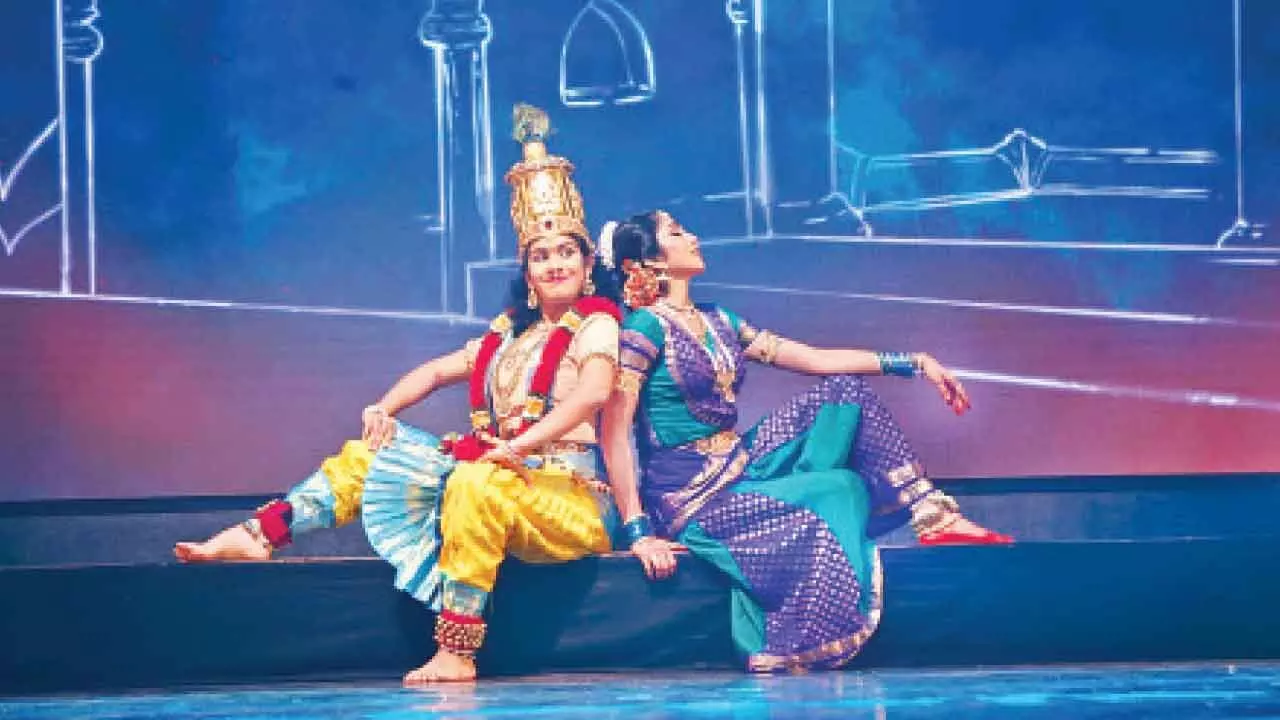
Ravindra Bharathi came alive with the grand premiere of Sirikakolanu Chinnadi, a Bharatanatyam ballet that dazzled with exquisite costumes, jewellery, music, and dialogue. Originally a radio broadcast drama by the famed Veturi Sundararama Murthy, it was the dearest wish of the late Padma Shri Dr. K. Viswanath that the story be transformed into a dance ballet. Although he originally intended it to be a film, circumstances prevented it, and the vision lived on in this evocative new form.
The monumental task of choreographing and creating this ballet was entrusted to Dr. Smitha Madhav, who embraced the challenge with patience, devotion, and years of creative effort. The richly layered narrative, set in the luminous era of Sri Krishnadevaraya, was staged with classical finesse and majestic grandeur.
At the heart of the story is Aliveni, a devadasi of profound devotion to Lord Krishna, caught in a whirlpool of love, deception, divine longing, and social condemnation. Through masterful choreography, soul-stirring music, and deeply expressive abhinaya, the production transported audiences to Sirikakulam—a sacred land envisioned as Vaikuntha itself. The music, composed by maestro Embar S. Kannan, gave the ballet a tonal richness that added to its emotional impact.
The program’s prologue opened with a vibrant homage to Telugu land and the Krishna River. Stunning imagery was projected on a screen, eliminating the need for traditional props. In “Sīrulu Galugu Telugu Thalli,” young dancers in a riot of multicolored costumes celebrated the beauty of the land—said to surpass even Amaravati—setting the sacred tone for the story.
Three noblemen in bright tunics encounter Aliveni, debate her identity, and try to win her over. She, however, remains detached, immersed in her devotion to Krishna. Smitha portrayed this enraptured mood with refined sensitivity. At a grand performance at the Andhra Maha Vishnu Temple, Emperor Krishnadevaraya notices her divine connection and appoints her as the temple devadasi, granting her lands and sacred honors. However, the provincial governor Marthanda becomes infatuated with her.
Smitha’s portrayal of Aliveni offering services to the Lord was marked by reverent, elegant gestures. Back home, tension brews between her and her mother Rangaji—a show-stopping performance by Bhargavi—along with her friends Chanchala (Ananya) and Jalaja (Aditi). Rangaji and Chanchala, driven by greed and cynicism, mock Aliveni’s spiritual path. Jalaja’s innocent questions about Krishna offer a tender moment, with Aliveni responding in the lyrical format of “Nanda Kishorudu,” echoing the yaksha-prashna tradition.
The supporting characters were deeply compelling: Bhargavi as the domineering and exploitative mother, Ananya as her crafty companion, and Aditi as the gentle and innocent Jalaja. These performances showcased abhinaya at its finest. Aliveni counters skepticism with a moving performance of “Raayi Kaade,” declaring the deity as not merely a stone, but a living and loving Lord who resides in her heart.
The narrative intensifies halfway through the 90-minute ballet. In a dream sequence set to “Katthina Silanu,” Krishna appears, responding to Aliveni’s yearning. She proves her devotion through “Kondaneti Dhara.” Rangaji’s fury escalates, and she imprisons her daughter. In the heart-wrenching “Na Jeeva Veena Pai,” Aliveni pleads to Krishna, comparing herself to a silenced veena, desperate and abandoned.
Rangaji, in collusion with Marthanda, plots to deceive Aliveni. Disguised in crown and garments, Marthanda (played with exuberance by guest artiste Hari Mangalampalli) approaches Aliveni pretending to be Krishna. She is deceived. The truth is revealed when Aliveni collapses during a dance performance before Krishnadevaraya, her pregnancy exposing the betrayal.
A vivid courtroom scene follows, rich in drama and eloquence. After Aliveni sings “Brindavaname” in despair, her innocence is proven through Marthanda’s confession and Rangaji’s remorseful admission. The emperor and his court poet Allasani Peddana reflect on the events. Marthanda is punished; Aliveni is spared.
The finale is poignant and unforgettable. A broken-hearted Aliveni walks into the Krishnaveni River, symbolizing her liberation. In a stunning theatrical gesture, the dancer stepped off the stage and walked through the central aisle, dissolving the boundary between performer and audience. This moment marked not just the end of her story, but an immersive experience of spiritual transcendence.
The ballet powerfully explored the eternal tension between worldly desire and divine love. Each scene was sculpted with classical precision—mudras, jatis, and expressions seamlessly aligned with raga and rasa.
Sri. Y Harish Chandra Prasad founder Malaxmi Group presided as Chief Guest.With blessings from Smt.Veturi Seetha Mahalakshmi the ballet was produced by Dr.Smitha Madhav-Director Varna Arts Academy. Presentation was assisted by the Department of Language and Culture, Govt. of Telangana and Raga Saptha Swaram whose convenor Smt. V. S. Rajyalakshmi was indefatigable in her organizational skills to make the recital well attended and appreciated.