Why Preschools Must Teach Children to Express Love and Appreciation

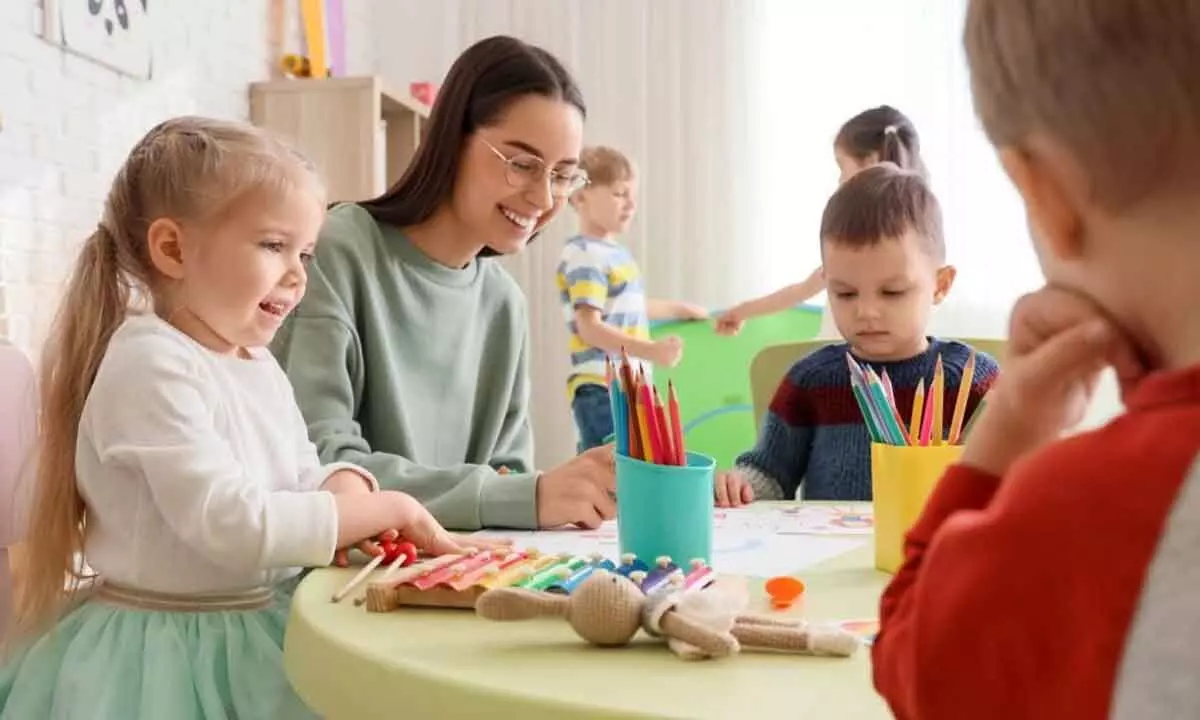
Valentine’s Day is often reduced to roses, cards and romantic symbolism. But if we strip away the commercial wrapping, what remains is something far more fundamental: the human need to express love and appreciation. And that need does not begin in adulthood. It begins in preschool.
In the early years of life, children are not simply learning colors, phonics or numbers. They are forming their first understanding of belonging. They are deciding—often unconsciously—whether the world is a place where they are seen, valued and safe.
Before a child can solve equations or write essays, they must answer a more important question:
Do I belong?
The years between three and eight are foundational not only for cognitive growth but for emotional architecture. During this period, children develop trust—or mistrust. They learn connection—or isolation. They build the emotional reflexes that will shape how they navigate friendships, disagreements and relationships for the rest of their lives.
This is why preschools cannot afford to treat empathy and appreciation as “soft skills.” They are survival skills.
Preschool Is a Child’s First Community
Preschool is often viewed as preparation for formal schooling. In reality, it is preparation for society.
It is the first space where children learn to coexist outside the familiarity of home. It is where they practice sharing, waiting, negotiating, apologizing and forgiving. These are not incidental lessons. They are the foundations of civic life.
Every time a child waits for a turn, they practice patience.
Every time they comfort a crying friend, they practice compassion.
Every time they say “thank you,” they practice gratitude.
These daily interactions build something far more powerful than academic readiness. They build relational intelligence.
When appreciation becomes part of the classroom culture, children internalize an important truth:
I matter. And so do others.
There Is So Much to Love in a Child’s World
Children do not limit their affection to grand gestures. Their love is expansive.
They love their parents and peers.
They adore their teachers.
They bond with pets.
They marvel at insects.
They talk to plants.
They collect fallen flowers as treasures.
In early childhood, the world is alive with connection.
Preschool has the responsibility to expand this perspective—not narrow it. Children must learn that kindness is not selective. It extends to people, animals, plants and the environment. It reflects an understanding that we are part of something larger than ourselves.
When children are guided to appreciate the variety the universe offers—diverse friendships, different abilities, living creatures, changing seasons—they grow up with humility and wonder rather than entitlement.
Appreciation Must Be Taught—Intentionally
In today’s fast-paced, screen-saturated world, children experience constant stimulation. They encounter big emotions but are often not equipped to name them.
Without emotional vocabulary, frustration replaces expression.
A child who cannot say, “I feel left out,” may push instead.
A child who cannot say, “That hurt my feelings,” may withdraw.
Teaching children to articulate appreciation and emotions is not indulgent—it is preventive. It reduces conflict. It builds resilience. It shifts children from reaction to reflection.
When preschools incorporate gratitude circles, emotion check-ins and open conversations about feelings, they are not adding “extra” content. They are strengthening the core of childhood development.
Classrooms Built on Belonging Are Kinder Classrooms
Children behave differently when they feel secure.
In classrooms where belonging is prioritized, competition softens. Conflicts decrease. Peer bonds strengthen. Children are more willing to collaborate and less inclined to dominate.
Why? Because appreciation reduces insecurity.
When children feel valued, they do not need to seek attention through disruption. They extend the same courtesy to others that they experience themselves.
Kindness becomes culture.
Valentine’s Day: A Teachable Moment
In preschool, Valentine’s Day does not need to revolve around gifts or elaborate celebrations. It can be something far more meaningful—a structured opportunity for children to express appreciation openly.
A simple circle where children thank their friends or teachers builds confidence in expressing warmth. It normalizes affection. It teaches that love is not weakness—it is strength.
These lessons must continue at home: discussing what made them smile, thanking community helpers, appreciating grandparents, noticing nature, caring for pets.
Small rituals. Lasting impact.
Preparing Children for Life, Not Just School
As adults, we celebrate grades, degrees and promotions. Yet long-term fulfillment is built on the quality of our relationships.
A child who learns to appreciate grows into an adult who values connection.
A child who learns compassion becomes a leader who builds trust.
A child who learns belonging creates inclusive spaces.
Preschools are not merely preparing children for exams. They are shaping how the next generation will treat one another.
Seen through this lens, Valentine’s Day becomes more than a cultural celebration. It becomes a reminder that love is not something reserved for grand declarations. It is something practiced daily—in words, in gestures, in choices.
If we want a society rooted in trust rather than suspicion, cooperation rather than conflict, and kindness rather than indifference, the work must begin early.
It must begin in preschool.
(The author is Curriculum Development, Kangaroo Kids International Preschool)