Can Telangana expect clarity on ‘SIR’ purification?

Against this backdrop, Telangana’s turn raises fresh questions. Allegations of the ECI yielding to BJP pressure have gained traction nationally, and with Congress in power in Telangana, political confrontation seems inevitable. Hyderabad presents a complex challenge. As a former joint capital and a major urban hub, the city hosts migrants from across Telangana and Andhra Pradesh. Claims persist that some residents retain voter registration in their native districts or former States, creating scope for confusion and contested deletions.
Even in the absence of elections, Telangana appears poised for a fresh spell of political heat. The Election Commission of India’s (ECI) Special Intensive Revision (SIR) of electoral rolls officially described as an exercise in “purification” is set to reach the State, raising apprehensions among political parties and civil society alike.
While the Commission insists that SIR is meant to clean up voter lists, non-NDA parties argue that the process lacks adequate clarity, transparency, and safeguards, turning “purification” into a contentious political flashpoint.
The controversy is not new. After Bihar, where SIR concluded amid intense debate, the exercise is currently underway in 12 other States and Union Territories. With the Chief Election Commissioner announcing that Telangana will soon follow, political tensions in the State are expected to escalate, particularly as the Congress is in power and the BJP has already begun sharpening its narrative.
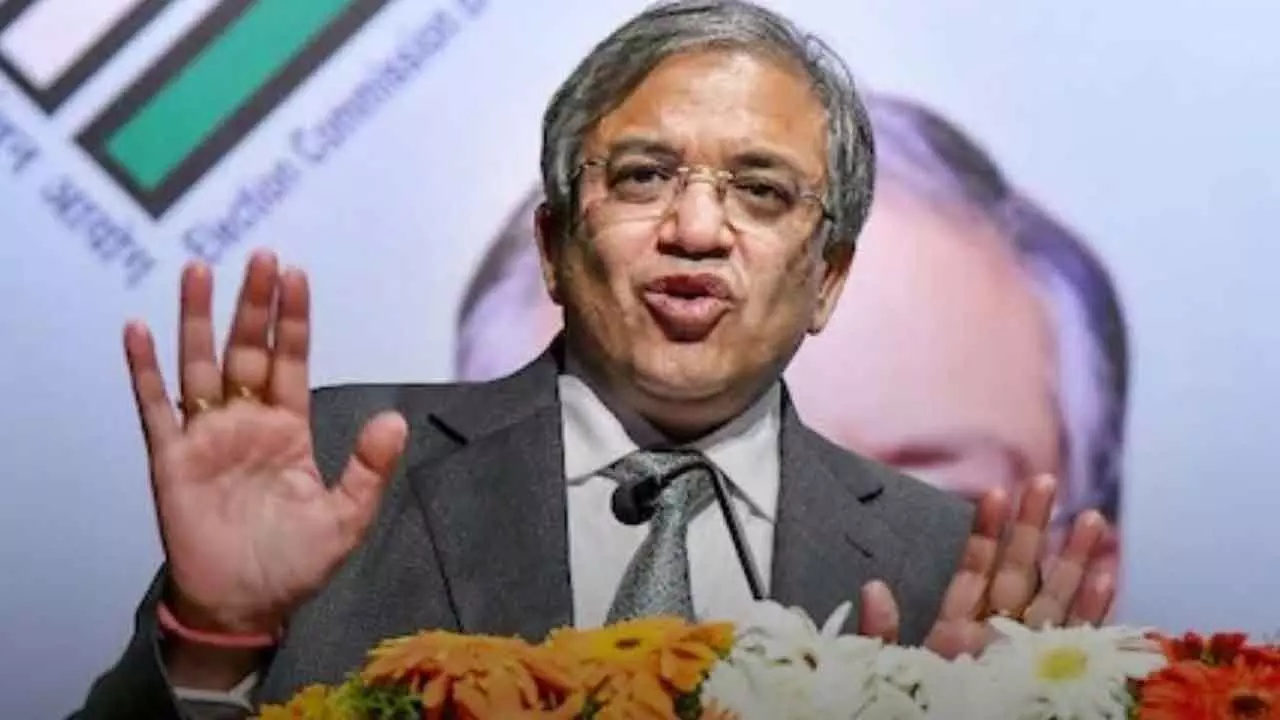
Addressing a meeting of Booth Level Officers (BLOs) in Hyderabad, Chief Election Commissioner Gyanesh Kumar urged collective participation to ensure the success of SIR in Telangana. Citing Bihar as a model, he claimed that the final voter list of 7.42 crore electors was released without a single technical complaint. However, this assertion itself has been widely contested. From Parliament to courtrooms and across national media, Bihar’s SIR has been intensely debated, with critics questioning both its intent and impact.
Though the ECI maintains that no procedural violations occurred in Bihar, political parties and analysts have continued to examine the possible influence of SIR on the subsequent Assembly election results. The fact that an exercise drawing global attention has also triggered divergent opinions within the country remains a blemish on an otherwise constitutional process.
Following Bihar, the ECI initiated SIR in nine States, including Chhattisgarh, Gujarat, Madhya Pradesh, Rajasthan, Uttar Pradesh, West Bengal, Goa, Kerala and Tamil Nadu and three Union Territories: Puducherry, Andaman & Nicobar Islands, and Lakshadweep. Meanwhile, Assam has undertaken a similar exercise under the banner of a Special Revision (SR).
The Supreme Court’s intervention in Bihar underscored the gravity of these apprehensions. Initially, the ECI had declined to recognise Aadhaar as a valid proof. Following judicial intervention, it was directed to accept Aadhaar along with 11 other identification documents. This decision helped ease tensions to an extent. Despite widespread claims that nearly one crore voters would be removed, the final deletions stood at approximately 65 lakh.
Nevertheless, similar controversies have followed SIR into other States. Opposition parties like the Congress, Trinamool Congress, DMK, and Left parties have launched protests and legal challenges. Media reports and draft rolls released by the ECI indicate large-scale deletions, across Tamil Nadu, Gujarat, Rajasthan, Madhya Pradesh, Uttar Pradesh, Goa, Puducherry, and Lakshadweep. While the ECI attributes deletions to deaths, migration, duplication, and invalid documentation, ruling parties in Tamil Nadu and Gujarat allege targeted removal of voters from specific social and political groups.
In Kerala, SIR was temporarily paused due to local body elections, yet reports suggest that around 25 lakh names were removed. In West Bengal and Assam, tensions have been sharper. Allegations of illegal migration from Bangladesh dominate the discourse, with ruling parties and opposition trading accusations. While the former’s ruling Trinamool Congress accuses the ECI and BJP of disenfranchising genuine voters under the pretext of migration, draft data reportedly indicates around 58 lakh deletions. Against this backdrop, Telangana’s turn raises fresh questions. Allegations of the ECI yielding to BJP pressure have gained traction nationally, and with Congress in power in Telangana, political confrontation seems inevitable. Hyderabad presents a complex challenge. As a former joint capital and a major urban hub, the city hosts migrants from across Telangana and Andhra Pradesh. Claims persist that some residents retain voter registration in their native districts or former States, creating scope for confusion and contested deletions.
The BJP has long alleged the presence of illegal immigrants, including Bangladeshis and Rohingyas, with fake identity documents in Hyderabad.
The party is now expected to foreground this issue aggressively, prompting strong resistance from other political parties. As seen elsewhere, this could make the process especially sensitive in urban constituencies.
The ECI notes that each BLO oversees an average of 930 voters, placing them at the heart of the process. However, reports of extreme pressure on BLOs across States cannot be ignored. Media accounts suggest over 15 BLO deaths nationwide during SIR duties, while opposition parties claim the number exceeds 40. The Supreme Court has taken a serious note of these reports. Democracy demands periodic correction of electoral rolls, and any exercise aimed at improving accuracy deserves support. At the same time, if such processes are perceived as politically motivated or discriminatory, they must be scrutinised and challenged.
As Telangana prepares for SIR, both the Election Commission and political parties share the responsibility of ensuring transparency, fairness, and public confidence. Only then can “purification” truly translate into “clarification” for the society at large.