Strive to live a life that is enjoyable, productive and fulfilling
Every early morning rise starts with a glass of warm water with a spoonful of honey and pinches of powdered cinnamon, turmeric, and fenugreek, followed by a cup of Horlicks. Ablutions. Then morning walk is followed by a little bit of stretching, bending and lightweight training, commensurate with one’s age and state of health. It is after a relaxed bath, puja, wholesome breakfast, and while relaxing in one’s favourite armchair and calling the day’s work that the mind goes into a bit of a reverie.
People born in the 1940s, 50s and 60s belong to a generation that has seen through eight different decades, two different centuries, and two different millennia! One which went from the telephone operator, who put through long distance calls, to video calls to anywhere in the world; from slides viewed on a screen using a projector to YouTube; from vinyl gramophone records to online music; from hand written letters to email and WhatsApp; from listening to live cricket match commentary on the radio to television; from getting video cassettes from the store to watching Netflix; from bicycles and motorised two-wheelers, to petrol, diesel and then electric cars. Well, that is a generation that is surely, but gracefully, riding away into the sunset.
A time when people thought of the hunger of others before they ate, who lived in the most congested homes, but with love and affection binding them together; when life was the greatest of the subjects of education and not those leading to degrees; when vast amounts of knowledge were garnered even without the internet; and the most complicated of calculations made without a calculator; the best possible use of time was made even without clocks; when there was no dearth of friendly conversation, though there were no mobile phones; or of entertainment, without the need for the electronic media, when people could reach their destinations accurately, though there was no GPS. A time when joy substituted technology and one slept soundly outdoors, without ACs and coolers.
The days when one enjoyed robust health, without mineral water, and vitamin supplements. When home-made sweet meats, sugar candy, and ‘namkeen’s were more sought after than pizzas and burgers. A time when there was no such thing as school until the age of six, with games and sports alone providing fun and happiness; when children only went to schools where there was no fee at all and the language was the mother tongue; but were brought up in such way as to prove to be great litterateurs in that language as well as English; when relationships and bonds mattered the most and affection was much more important than wealth.
What is more, that was the age of large joint families, living happily together, and people had the wisdom and maturity to sink their differences and travel together. Times when adulteration and contamination were unknown. And good health was the order of the day, when blood pressure and diabetes were rare complaints, thanks to corporate hospitals still being a thing of the future. A generation that sacrificed their own happiness for the future of children. A time when communion with nature was a part of daily life and one did not have to go to a gym or a park for fresh air exercise.
A great life, indeed! Those who had an analog childhood and a digital adulthood. They believe that theirs is a unique generation, unlike any other. But there, as William Shakespeare would have it, lies the rub! A rub which lies in the weakness every generation suffers, of yearning for the so-called good old days, the days of wine and roses; experiencing a nostalgic longing for years gone by, when life was simpler, better or happier than at present. Or, as the beginning stanza of that lilting number from the yesteryear Hindi movie ‘Door Gagan Ki Chaon Mein’ goes, “Koin laute de mujhe mere beethe huey din.”
As Shelley put it, “We look before and after and pine for what is not...”, longing for something unattainable or lost, and feeling sad, a bitter, sweet human condition; a melancholic and persistent desire for things lost.
I remember an occasion when I attended, as a guest of honour, a function marking the inauguration of an exhibition featuring the inimitable Telugu artist Bapu’s paintings and caricatures by Akkineni Nageswara Rao. ANR, as he was fondly known as, was by then diagnosed as suffering from cancer. Addressing the audience, he stated that he was determined to fight the disease, that it mattered little how long he lived but it had to be a quality life. Words which touched me deeply.
A similar sentiment is conveyed by the well-known statement, “It is better to live one day as a lion than 100 years as a jackal”, famously attributed to Tipu Sultan, who pioneered rocket artillery. Even Mahabharata extolls the qualities of bravery, self-respect, and living, authentically. A life characterised by meaningful action and integrity is, after all, superior to a prolonged existence, lacking in purpose or honour.
I have pleasant and joyous memories of many friends who are no longer alive. They fill me with a sense of purpose, and zest for life, even today, as I get on with my day-to-day activities. There are, on the other hand, many others who, as far as I am concerned, may not be alive at all. So empty and purposeless are their lives.
One may live to be a centenarian, as the Hindu blessing always wishes one to, or the Biblical three score and ten years, beyond which the Holy Scripture felt that life may not be worth living; saying, in Psalm 90:10
“Our days may come to 70 years,
or 80, if our strength endures;
yet the best of them are but trouble and sorrow,
for they quickly pass, and we fly away.”
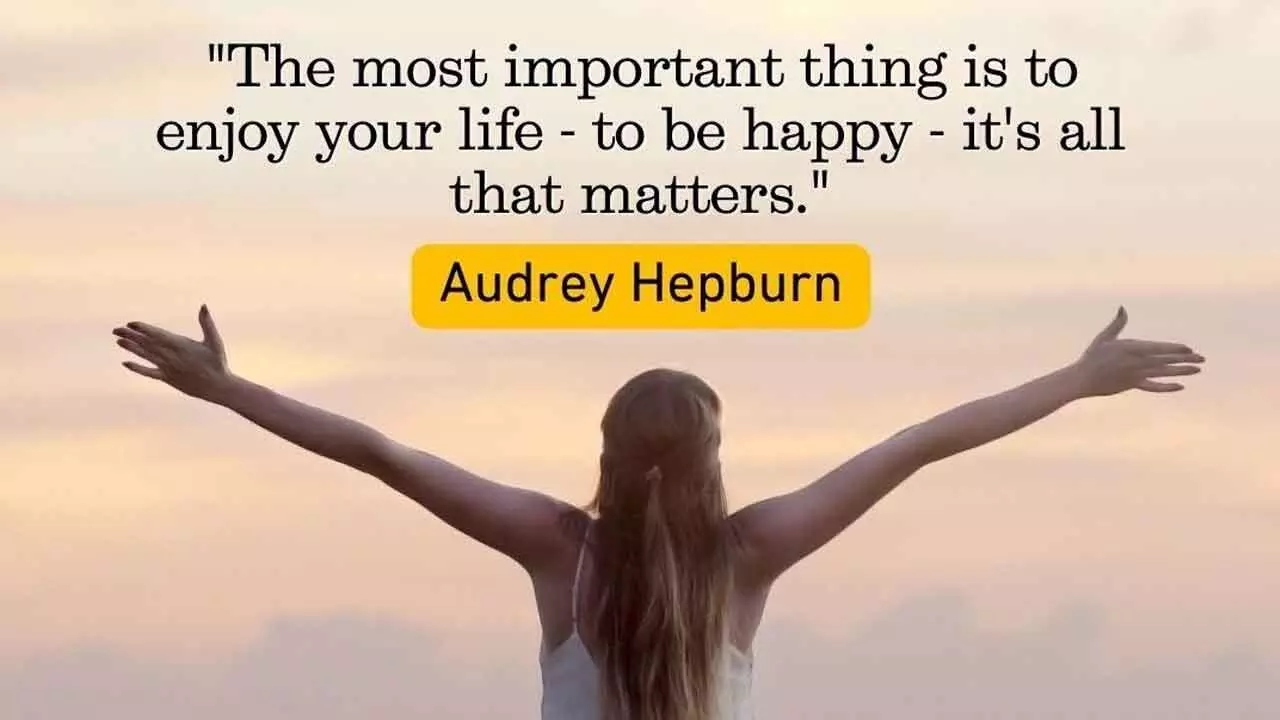
The question, clearly, is one of how one has lived, and not how long. While it is necessary, and even desirable, that one occasionally enjoys the warmth and comfort that memories of days bygone provide, it is necessary for one to learn to enjoy the present as much as possible, savouring the gift that God has given us-to be alive.
Distance, as the worn-out cliché goes, lends enchantment to the view. And, as the Telugu proverb tells you, a distant mountain may appear perfectly smooth. It is only when you are up close that you see the rocks and sparse patches. Those very incidents and memories, which seem so joyous and enjoyable at this distance of time, will, upon delving deeper into the recess of one’s memory, also expose the travails and troubles one endured at those times.
As a stanza from the well-known song from yesteryear’s movie ‘Waqt’ goes,
“Aagey bhi jaane na tu
Peechey bhi jaane na tu
Jo bhi hai bas yehi pal hai
………..
……….
Jeenewaale soch ley,
Yehi waqt hai kar ley puri aarzoo”
I cannot help repeating, in the context under discussion, what my father once said, although I have used it in an earlier article in this column. He once quipped, in response to the question, “How’s life”?, “Better than the alternative!”
Life, thus, should not stop with merely existing or living. One must do everything humanly possible to make it an experience which is enjoyable, productive and fulfilling experience. Even a rock, after all, exists, and a mosquito is alive too!
(The inspiration for this piece comes through a post in Telugu that was received from veteran journalist K Balram Reddy)
(The writer was formerly Chief Secretary, Government of Andhra Pradesh)