The infectious culture of power proximity

Meaningful interactions with people in high offices or iconic public figures were preserved for personal memory, not publicity. Even replies to letters written to a Prime Minister or President by young citizens, often acknowledged promptly, were treasured privately in family albums
Inan age where every handshake becomes a headline and every courtesy visit turns into a photo opportunity, the line between ‘dignity and display’ is blurring alarmingly. What was once a private expression of reverence or respect has now been reduced to a public performance of proximity. From Prime Ministers quietly seeking the blessings of spiritual masters’ in earlier decades, to today’s culture of selfies, orchestrated media coverage, and exaggerated press notes, the society has been witnessing a steady erosion of substance in favour of optics.
This is not just about politics. It pervades bureaucracy, religion, the media, and even intellectual circles. The hunger to be seen with power, rather than to serve meaningfully, has become an infectious cultural trend, one that trickles down from the highest offices to the grassroots. The consequences are more than cosmetic. Perception overtakes principle and validation replaces values. A mature democracy, however, demands humility, restraint, and focus on outcomes, not frames. History remembers what leaders stood for, not who they stood beside.
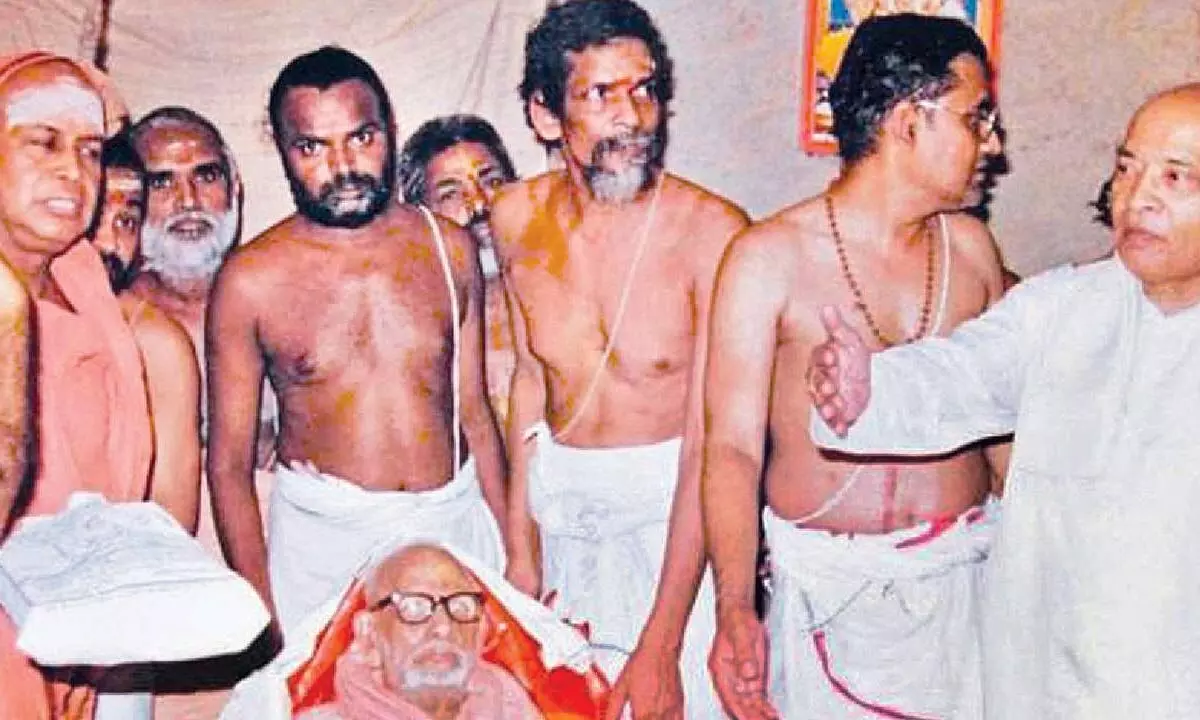
In a telling reflection of how genuine reverence transcends ceremonial optics, The New York Times reported in November 1966 that the then Prime Minister Indira Gandhi and President Sarvepalli Radhakrishnan sat cross-legged before the Sringeri Pontiff, a quiet yet profound gesture of humility. When Indira Gandhi visited Kanchi Kamakoti Peetham for darshan of Jagadguru Chandrasekharendra Saraswati she sat before Him with utmost reverence.
P V Narasimha Rao visited Kanchi and spent time with all three Kanchi Acharyas. Rajiv Gandhi, during his visit, sat with marked reverence. These instances reflect silent dignity untainted by spectacle.
Narendra Modi, as Gujarat Chief Minister, displayed similar grace, standing respectfully beside the Shankaracharya of Kanchi during the inauguration of the Sankara Eye Hospital in October 2008. These encounters were not orchestrated for cameras but affirmed the Pontiffs’ Spiritual Gravitas, where even the highest political figures went to them, for guidance and grace. In contrast, an influential spiritual and humanitarian figure’s meeting with Modi at the latter’s venue recently received wide amplification on television, social and print media. While noble in intent, the event blurred the line between piety and publicity, sanctity, and stagecraft, raising a deeper question: Are we drifting from private reverence toward public performance?
Here, it is significant no note that this contrast becomes more telling, when one recalls how earlier generations valued discretion. Meaningful interactions with people in high office or iconic public figures were preserved for personal memory, not publicity. Even replies to letters to a Prime Minister or President normally by young citizens, which were acknowledged promptly, were treasured privately in family albums. Today, the value of the moment has been replaced by the urge to exhibit it. Gratitude was once private dignity. Now it is diluted by display.
A few Congress Chief Ministers, whom I personally knew in the 1980s, long before social media dictated relevance, were genuinely gratified to receive even a short note from the AICC High Command or the Prime Minister. These were carefully filed but never flaunted. One Chief Minister, to whom I was the PRO, preserved a congratulatory message from RK Karanjia, the legendary Blitz editor. The press release issued at that time touched on Punjab’s critical situation, yet without a photograph or ostentation. It was a time when leaders found satisfaction in the substance of gestures, not their exhibition. We now live in an era where the currency of proximity outweighs the value of principle, where optics dominates over substance.
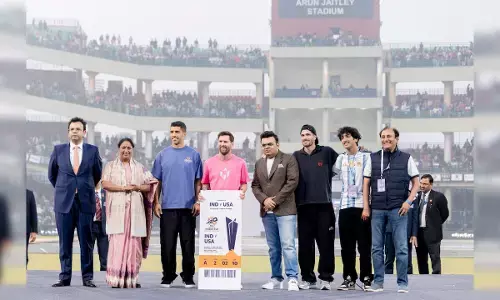
Being seen, even briefly, with a Chief Minister or the Prime Minister has become a prized possession. The handshake, the smile, the framed photograph, all find proudly their way to television channels, newspapers, websites, and social media giving an impression that the person photographed holds special closeness with the high office. The infection has spilled from politics to bureaucracy and even into the religious domain.
What makes this culture truly incomprehensible, and infectious, is its sheer scale. There is nothing inherently wrong in publicizing important meetings when they serve national, administrative, or policy-related interest. The problem begins when this act is done disproportionately and without relevance, merely to exploit the optics.
Ironically, even journalists and intellectuals succumb. Power proximity offers a shortcut to relevance. And in a world where perception outweighs reality, this shortcut becomes addictive, an opiate too tempting to resist. The antidote lies in conscious restraint.
Ultimately, a mature democracy is not just about who is in power, but how power is viewed and handled. It is not about who stood next to whom in a photo, but what they stood for.
True leadership, influence, and grace need a legacy not a frame. When the flash fades and the frame gathers dust, what remains is never the nearness to power, but the distance one wisely kept from vanity, noise, spectacle, and shallow applause.
Printed & Published by K. Hanumanta Rao on behalf of M/s Hyderabad Media House Pvt.Ltd and Printed at Aamoda Press, H.No. 5-9-287/10 & 11, Plot No. 53 & 54, Prashanth Towers, Rajeev Gandhi Nagar, Moosapet, Kukatpally(M), Kukatpally Municipality, Medchal-Malkajgiri District. and published from Hyderabad Media House Ltd, Plot No.1042, Road No. 52, Jubilee Hills, Hyderabad-500033, TELANGANA.Chief Editor:P Madhusudhan Reddy. RNI No: TELENG/2011/38858